Spoiler Warning: This article discusses major plot developments and the ending of the 2007 film The Warlords.
1. Three Brothers, One Oath, and a Tragedy Waiting to Happen
At first glance, The Warlords appears to be a historical war epic about soldiers, rebellion, and the struggle for power.
But beneath its battlefield spectacle lies a much more personal story.
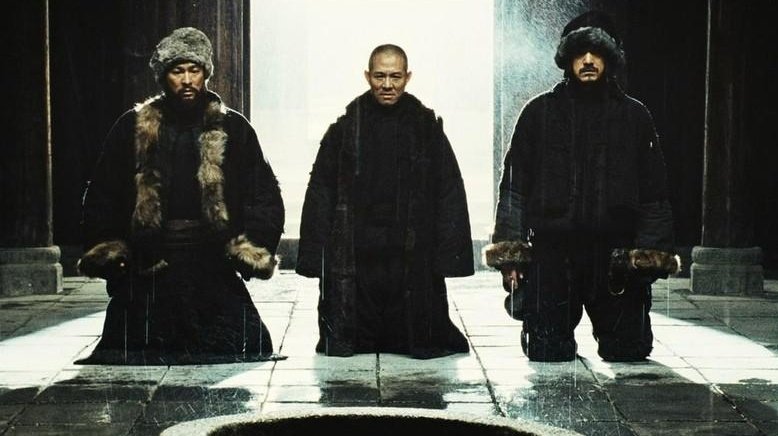
Three men become brothers through a blood oath. They promise to share their lives, their victories, and their deaths. Their relationship begins with trust and a common desire to survive.
Yet the same oath that unites them eventually becomes the foundation of their destruction.
The tragedy is not simply that one brother betrays another.
It is that all three men believe they are protecting something important, even when their choices make it impossible for them to remain brothers.
The film raises a difficult question:
Can a promise made in the name of brotherhood survive when power gives each person a different reason to break it?
2. The Original Title: Why The Warlords Is More Than a War Story
The film’s Chinese title is 投名狀 (Tóumíngzhuàng), commonly associated with a pledge of loyalty made by people entering a dangerous alliance.
The English title, The Warlords, emphasizes military power and political conflict.
But the original title points toward the emotional center of the story: a commitment that binds people together through blood and shared responsibility.
This difference matters.
The movie is not merely asking who will win the war.
It is asking what happens when people who have sworn to die together discover that they no longer agree on what is worth dying for.
The blood oath gives the story its moral structure.
Every later decision is measured against the promise the three men made at the beginning.
3. Pang Qingyun: The Man Who Wants to Turn Survival into Power
Jet Li plays Pang Qingyun, a military commander whose ambition and determination drive much of the story.
He understands that survival requires more than courage.
It requires strategy, discipline, resources, and the ability to make decisions that others may find unacceptable.
Pang is not simply a villain who secretly wants power.
His ambition is connected to his belief that he can create order in a world destroyed by rebellion and political instability.
This is what makes his character interesting.
He can present his choices as necessary sacrifices for a greater objective.
But the more power he gains, the more difficult it becomes to distinguish between serving a cause and serving himself.
Pang’s tragedy is that he gradually begins to treat the people closest to him as pieces in a larger political calculation.
He may believe he is protecting the future.
But he increasingly decides that the people who once stood beside him must accept whatever price he considers necessary.
4. Zhao Erhu: The Brother Who Refuses to Forget the Human Cost
Andy Lau plays Zhao Erhu, whose sense of loyalty is deeply connected to the people around him.
He is not interested in power in quite the same way Pang is.
His understanding of leadership is tied to responsibility, brotherhood, and the lives of ordinary people.
This creates an important contrast between the two men.
Pang increasingly thinks in terms of military objectives and political outcomes.
Erhu remains more sensitive to the human consequences of those decisions.
Neither man exists in a simple moral category.
Erhu is not automatically right because he values loyalty, and Pang is not automatically wrong because he pursues power.
The conflict becomes tragic because the two men begin to define responsibility in incompatible ways.
For Pang, a sacrifice may be necessary to secure a larger victory.
For Erhu, the people being sacrificed are precisely the reason the victory should matter.
5. Jiang Wuyang: The Brother Who Believes the Oath Still Means Something
Takeshi Kaneshiro plays Jiang Wuyang, the third member of the brotherhood.
His relationship with the other two men gives the film another emotional dimension.
While Pang becomes increasingly concerned with power and Erhu struggles to preserve his moral principles, Wuyang remains closely attached to the original bond between the three brothers.
He believes in the promise they made.
But a blood oath cannot guarantee that the people who made it will remain the same.
Wuyang’s position becomes increasingly painful because he is caught between two men whose understanding of brotherhood has changed.
He wants to preserve the relationship.
Yet preserving a relationship becomes impossible when its members no longer share the same values.
Wuyang represents the belief that loyalty can hold people together.
The tragedy is that loyalty alone cannot resolve a conflict over power, justice, and personal ambition.
6. The Blood Oath: A Promise That Becomes a Prison
The oath is initially a symbol of trust.
The three men choose to become brothers in a world where ordinary social structures have failed them.
They believe that their bond will provide the security and purpose they cannot find elsewhere.
But the promise also creates an expectation that becomes increasingly difficult to fulfill.
What does it mean to share life and death when one brother’s decisions put the others in danger?
Does loyalty require obedience?
Can a brother refuse another brother’s order without becoming a traitor?
And if one person believes that a sacrifice is necessary for the greater good, does the original oath require everyone else to accept it?
The film’s central tragedy grows out of these questions.
The oath does not disappear.
Instead, its meaning changes as the brothers’ interests diverge.
What once protected them becomes something they use to judge, accuse, and ultimately destroy one another.
7. The Difference Between Brotherhood and Political Alliance
One of the film’s most important ideas is that personal loyalty and political cooperation are not the same thing.
The three men begin as brothers.
But their military success places them inside a political world where alliances are constantly changing.
They must deal with rulers, armies, officials, competing interests, and decisions that affect thousands of lives.
The more influential they become, the less freedom they have to act only according to personal affection.
Pang increasingly sees the brotherhood through the demands of leadership.
Erhu continues to judge decisions through the responsibilities created by their original promise.
Wuyang struggles to understand how the bond can survive the pressure surrounding them.
Their relationship is therefore transformed by the very success they once pursued together.
They become powerful enough to influence history, but they lose the ability to preserve the personal relationship that gave their struggle meaning.
8. Lian: When Personal Desire Enters the Brotherhood
Lian introduces another source of tension into the story.
Her relationship with the three men is not simply a romantic subplot.
It exposes the emotional vulnerabilities that exist beneath their military identities.
The conflict surrounding Lian becomes particularly significant because it reveals that the brothers are not equally capable of separating personal desire from loyalty.
Pang’s feelings and ambitions become entangled with the political and emotional world around him.
The resulting tension contributes to the collapse of trust between the men.
However, reducing the entire tragedy to jealousy would be too simple.
Lian is part of the emotional conflict, but the deeper problem already exists.
The brothers have different ideas about power, sacrifice, and responsibility.
Personal desire intensifies those differences rather than creating them from nothing.
9. The Nanjing Campaign: When Victory Becomes a Moral Question
The military campaign against Nanjing brings the film’s central conflict into sharper focus.
The brothers are no longer simply fighting to survive.
Their decisions affect the fate of soldiers, civilians, and entire communities.
Military victory becomes connected to political legitimacy and the question of who has the right to rule.
Pang increasingly believes that difficult decisions are necessary to achieve a larger objective.
But the film forces viewers to consider the consequences of that reasoning.
If victory requires the abandonment of the people who trusted you, what exactly have you won?
The battlefield becomes a place where the brothers’ different moral systems are tested.
Their conflict is no longer private.
It becomes a struggle over the meaning of leadership itself.
10. Can a Greater Good Justify the Sacrifice of Others?
Pang’s decisions raise one of the oldest questions in political and military history.
Can a leader justify terrible actions by claiming that they serve a greater purpose?
This question is difficult because real leadership often involves painful choices.
A commander may have to choose between outcomes that are all destructive.
But the film introduces a more dangerous possibility.
What happens when a leader begins to use the language of necessity to protect his own ambitions?
Once that happens, the distinction between sacrifice and exploitation becomes unclear.
The people being sacrificed may no longer be participants in a shared cause.
They become instruments of someone else’s vision.
This is the moral tension at the heart of The Warlords.
The film does not offer an easy answer about leadership.
Instead, it shows how the pursuit of a greater objective can destroy the personal responsibilities that originally gave that objective meaning.
11. The Historical Background: Rebellion and the Collapse of Order
The Warlords takes place against the backdrop of the Taiping Rebellion during the late Qing Dynasty.
The rebellion was one of the most devastating conflicts in nineteenth-century Chinese history.
It involved enormous military campaigns, political instability, and catastrophic human suffering.
The film uses this historical environment to create a world in which ordinary people struggle to survive while military leaders compete for influence.
However, the characters and their relationships should not be treated as a straightforward historical record.
The movie is a dramatic reconstruction inspired by historical events, not a documentary account.
Its main interest is not explaining every political development of the rebellion.
It uses the historical crisis to examine the behavior of people who gain power when established institutions are breaking down.
That distinction is important for understanding the film.
Its emotional truth lies in the conflict between loyalty and ambition, not in treating every dramatic event as a literal historical fact.
12. Why the Three Performances Make the Tragedy Work
The casting is one of the film’s greatest strengths.
Jet Li, Andy Lau, and Takeshi Kaneshiro bring three different screen identities to the same brotherhood.
Jet Li gives Pang Qingyun a controlled intensity.
His character often appears to be thinking several moves ahead, even when the emotional consequences of his decisions become increasingly destructive.
Andy Lau brings emotional weight to Zhao Erhu.
His performance helps communicate the pain of a man who cannot easily abandon the principles that originally defined his relationship with the others.
Takeshi Kaneshiro gives Jiang Wuyang a different kind of vulnerability.
His character’s attachment to the brotherhood makes the growing distance between the three men especially painful.
Together, the performances create a conflict that is more interesting than a simple struggle between a hero and a villain.
Each man represents a different response to the same promise.
13. Why Reddit Viewers Still Remember The Warlords
Reddit discussions about The Warlords often highlight the performances of its three leading actors, the scale of the battles, and the emotional conflict between the brothers.
Some viewers particularly appreciate Jet Li’s dramatic performance, seeing the film as an example of his ability to move beyond conventional martial arts roles.
Others remember the combination of historical warfare and personal tragedy.
There is also criticism of the film’s complicated storytelling and uneven pacing.
For some viewers, the political and emotional developments are not always as clear as the film’s dramatic ambitions require.
Nevertheless, the central relationship between the three men remains a memorable part of the film.
The Reddit discussions available are limited and should not be interpreted as a representative survey of all viewers.
But they point toward a useful distinction: the film is remembered not only for its action, but also for the painful question of whether brotherhood can survive when its members no longer believe in the same things.
14. When a Blood Oath Becomes a Death Sentence
The tragedy of The Warlords is not simply that three brothers betray one another.
It is that they begin with a shared promise but gradually develop incompatible definitions of loyalty.
Pang Qingyun believes that power and difficult decisions can create a greater future.
Zhao Erhu believes that leadership must remain connected to human responsibility.
Jiang Wuyang believes that the original bond should remain stronger than the conflicts surrounding them.
Each man has something he refuses to surrender.
And that is precisely why the brotherhood cannot survive.
The film suggests that a promise is not protected merely because it was made with sincerity.
It must be renewed through choices.
When those choices begin to contradict the original promise, the oath becomes an accusation rather than a source of unity.
Perhaps the most painful lesson of The Warlords is that people do not always betray one another because they never cared.
Sometimes they destroy a relationship because they care about different things more.
Final Thought
The Warlords is a historical tragedy about the distance between the promise people make and the person they become after gaining power.
Its battles are large, but its most important conflict takes place between three men who once believed they could share everything.
Pang wants to build a future through power.
Erhu wants to preserve the human meaning of their struggle.
Wuyang wants to believe that brotherhood can remain unchanged.
Their tragedy comes from the fact that none of these desires can easily coexist.
The blood oath was supposed to protect them from the chaos of the world.
Instead, the world changed them until the oath itself became impossible to keep.
Can three people remain brothers when they no longer agree on what brotherhood is supposed to protect?
That is the question that gives The Warlords its lasting emotional force.