• Family: The Unbreakable Bond โ€” How Did a Perfect Spy Couple Become a Story of Wasted Potential?

    Family: The Unbreakable Bond โ€” How Did a Perfect Spy Couple Become a Story of Wasted Potential?

    TTK Original โ€” Beyond the Headlines

    What happens when a husband is a secret intelligence agent and his wife has a dangerous past of her own?

    It sounds like the perfect premise for a Korean action comedy.

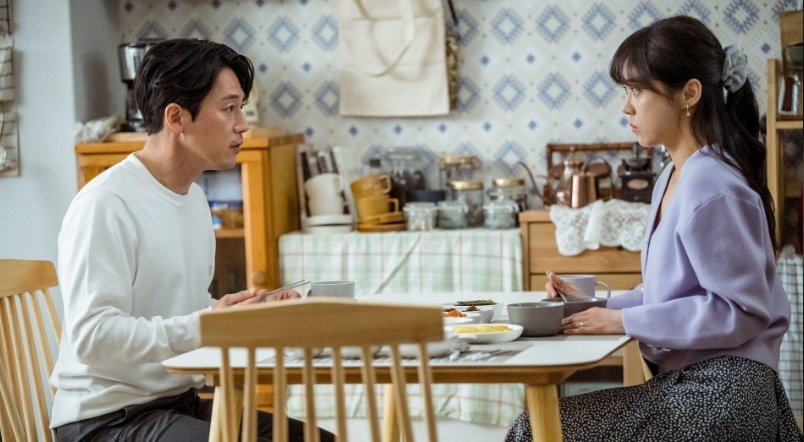
    In Family: The Unbreakable Bond (2023), Jang Hyuk plays Kwon Do-hoon, an experienced National Intelligence Service agent who hides his real profession behind the identity of an ordinary office worker. His wife, Kang Yu-ra, played by Jang Na-ra, appears to be a devoted homemaker who dreams of maintaining a happy family.

    But neither spouse knows the full truth about the other.

    The series had several promising ingredients: two popular actors reuniting, a marriage built on secrets, international criminal connections, and the possibility of turning an ordinary household into an extraordinary battlefield.

    Yet international viewers had mixed reactions.

    Some enjoyed the performances and the unusual premise. Others felt that the drama spent too much time on family comedy and secondary storylines while delaying the central spy conflict.

    The biggest disappointment was not necessarily the concept.

    It was the feeling that the drama had a much more entertaining story waiting to emerge, but struggled to bring it to the screen consistently.

    1. The Reunion That Created High Expectations

    One of the biggest attractions of Family: The Unbreakable Bond was the reunion of Jang Hyuk and Jang Na-ra.

    The two actors had previously appeared together in popular projects, including Successful Story of a Bright Girl and Fated to Love You. Their established chemistry made the new drama particularly appealing to longtime fans.

    This time, however, they were not playing a conventional romantic couple.

    They were already married, had a daughter, and had spent years living together without fully understanding each other’s hidden identities.

    That change in relationship dynamics created an interesting opportunity.

    Instead of watching two people fall in love, viewers could watch two people discover that the person sleeping beside them every night had an entirely different life.

    Before the premiere, Reddit users expressed excitement about seeing the two actors together again. Some even joked that the secret-agent couple sounded like a live-action version of Spy x Family.

    The expectations were clear: viewers wanted the chemistry of the two leads combined with the excitement of a spy thriller.

    2. A Husband Who Is Never Really Home

    Kwon Do-hoon is an NIS black agent and a highly skilled sniper.

    To protect his identity, he works under the cover of an ordinary employee at a trading company.

    His professional life requires secrecy, discipline, and frequent absences. Unfortunately, these demands also create problems at home.

    He misses family events, struggles to explain his schedule, and often leaves his wife to manage household responsibilities alone.

    From the outside, he looks like a husband who works too much.

    The irony is that Do-hoon is not neglecting his family because he does not care about them.

    He believes he is protecting them by keeping his real job secret.

    But the series raises an important question: can someone genuinely protect a family while hiding the truth from the people closest to him?

    His double life is the foundation of the drama’s comedy, but it is also the source of its emotional conflict.

    3. Jang Na-ra’s Kang Yu-ra Is Not an Ordinary Housewife

    Kang Yu-ra initially appears to be a cheerful and devoted wife who wants a peaceful family life.

    She manages the household, cares for her daughter, and tries to maintain the image of a perfect marriage.

    However, her personality changes when Jo Tae-gu appears.

    Tae-gu knows things about Yu-ra’s past that she desperately wants to leave behind.

    It gradually becomes clear that she is not simply a woman with a few hidden secrets.

    Her history is connected to violence, criminal organizations, and a life very different from the domestic world she has built with Do-hoon.

    This revelation gives Jang Na-ra an opportunity to move beyond the familiar image of a romantic-comedy heroine.

    Yu-ra can be affectionate and funny, but she can also be dangerous.

    The contrast is one of the drama’s strongest ideas.

    Unfortunately, the series sometimes reveals her abilities more effectively than it explores the emotional damage that made her want such an ordinary family in the first place.

    4. The Marriage Is More Complicated Than the Spy Premise Suggests

    The most interesting relationship in the series is not simply the conflict between two secret agents.

    It is the marriage between two people who have built their relationship around incomplete truths.

    Do-hoon hides his occupation because he believes secrecy is necessary.

    Yu-ra hides her past because she wants to escape the person she used to be.

    Both have reasons for keeping secrets, but those reasons do not automatically make the deception harmless.

    Their marriage therefore contains a contradiction.

    They love each other, but they do not fully know each other.

    The series could have explored this contradiction more deeply.

    What happens when the person you trust most discovers that much of your shared life has been built around a false identity?

    How much can love survive when honesty arrives years too late?

    These questions offer more emotional potential than the simple comedy of a husband inventing another excuse for missing dinner.

    5. Jo Tae-gu Brings the Past Into the Present

    Kim Nam-hee plays Jo Tae-gu, a mysterious man whose appearance threatens the peaceful life Yu-ra has constructed.

    He knows about her past and understands how vulnerable she is to the return of people connected to it.

    Tae-gu is important because he connects the domestic story with the larger criminal conflict.

    Without him, the series could easily become a collection of episodes about a secret agent struggling to balance work and family.

    His arrival gives the story a reason to move forward.

    He also creates a more complicated emotional situation than a conventional villain would.

    His relationship with Yu-ra is tied to their shared history, and the audience gradually learns that the past cannot simply be erased because someone has decided to become a different person.

    Kim Nam-hee brings an unsettling presence to the role.

    The character’s emotional significance becomes clearer as the story reveals more about Yu-ra’s childhood and the people who shaped her.

    6. The Biggest Structural Problem: Two Different Dramas Compete for Attention

    This is where many of the critical Reddit reactions become particularly interesting.

    Family: The Unbreakable Bond wants to be two things at once.

    It wants to be a domestic comedy about a married couple and their extended family.

    At the same time, it wants to be a spy thriller involving snipers, intelligence operations, criminal organizations, and dangerous secrets.

    There is nothing inherently wrong with combining these genres.

    In fact, the contrast could have made the series distinctive.

    The problem is the balance.

    Some viewers felt that the family storyline occupied too much of the early episodes, delaying the spy plot they had expected from the premise.

    In the Reddit discussions, one viewer complained that the show spent too much time on the family aspect in the first half. Another questioned why Yu-ra’s secret identity had not been revealed much earlier.

    These comments point to a pacing issue rather than a rejection of family comedy itself.

    The audience needed to understand why the family mattered before the danger surrounding it became truly exciting.

    7. Min-seo’s Storyline Became a Point of Frustration

    The daughter, Kwon Min-seo, is an important part of the family structure.

    Her school life and childhood relationships help establish the domestic world that Do-hoon and Yu-ra are trying to protect.

    But some viewers felt that her early storyline, particularly her childlike romantic interest, received more attention than it deserved.

    In one Reddit discussion covering episodes nine and ten, a viewer specifically complained that the early episodes had wasted time on Min-seo’s childhood crush.

    Another viewer said the family material should have been balanced more carefully with the spy storyline.

    This criticism is worth examining.

    A child character does not have to be involved in every major action sequence to matter.

    Min-seo represents the ordinary life that both parents want to preserve.

    But if her secondary storylines repeatedly interrupt the main conflict, viewers may begin to see her scenes as distractions rather than emotional foundations.

    The problem is not that the drama includes a child.

    It is that the amount of time given to each storyline does not always match its importance to the central narrative.

    8. The Two Leads Needed More Time Together

    The greatest missed opportunity may be the relationship between Do-hoon and Yu-ra.

    The premise practically writes its own entertaining scenes.

    Imagine two highly trained people trying to maintain an ordinary marriage while gradually realizing that neither is as innocent or helpless as they appear.

    Their domestic arguments could become tactical confrontations.

    Their attempts to protect each other could create both comedy and genuine suspense.

    Their secrets could produce emotional consequences that are more complicated than simply discovering another hidden weapon.

    Yet some viewers felt that the drama took too long to bring the central couple into the same story.

    Instead of allowing the relationship to drive the thriller, the series sometimes made the audience wait for the two characters to reach the point that the premise had promised from the beginning.

    The result is a strange contradiction.

    The actors are the main attraction, but the writing does not always make the best use of their partnership.

    9. Jang Hyuk’s Action Strength and the Limits of the Character

    Jang Hyuk is known for his physical performances and action roles.

    His experience gives Do-hoon credibility as a professional sniper and intelligence operative.

    The character is capable of sudden violence, but at home he must behave like an ordinary husband and father.

    This contrast should have been one of the drama’s greatest sources of entertainment.

    Jang Hyuk can switch between physical intensity and awkward domestic comedy, giving the character a distinctive personality.

    However, Do-hoon is not always an easy character to sympathize with.

    His long absences and emotional distance create understandable frustration for Yu-ra.

    In the Reddit discussions, one viewer criticized him as an emotionally unavailable husband who seemed to pay attention to his wife mainly when he wanted physical intimacy.

    That is a harsh reaction, but it highlights an important weakness in the character writing.

    The drama wants viewers to see Do-hoon as a loving husband who sacrifices his time for national security.

    But it also needs to show that his wife has legitimate reasons to feel neglected.

    Without that balance, the marriage can become harder to root for than the writers may have intended.

    10. The International Spy Story Expands the Conflict

    As the series progresses, the conflict becomes larger than the secrets between the two spouses.

    Yu-ra’s past is connected to a criminal organization known as MGD, while Do-hoon’s work places him inside an intelligence system with its own internal power struggles.

    Chief Oh Cheon-ryeon, played by Chae Jung-an, becomes an important figure in this wider conflict.

    Her position creates another layer of uncertainty because she is both Do-hoon’s superior and someone whose own history is not entirely straightforward.

    The story begins connecting personal loyalties with organizational interests.

    This is where the drama becomes more than a domestic comedy.

    The characters are forced to consider whether they can trust the people who have been giving them orders, protecting them, or hiding information from them.

    The international dimension could have supported a much larger thriller.

    But the short season and the many competing character arcs limit how deeply the political and criminal structures can be explored.

    11. The Drama’s Strongest Idea: Can a Dangerous Person Build an Ordinary Family?

    Yu-ra’s desire for a perfect family is more meaningful than it first appears.

    Her past suggests that she experienced a world in which violence and fear were normal.

    The peaceful home she creates with Do-hoon is therefore not simply a comfortable lifestyle.

    It represents the possibility of becoming someone different.

    But the drama also questions whether a person can completely escape their history.

    Yu-ra may change her name, her habits, and her surroundings.

    She may become a wife and mother.

    Yet the skills and memories associated with her previous life remain part of her.

    This creates a powerful contrast with Do-hoon.

    He also lives under a false identity, but his secret profession is still active.

    Yu-ra wants to leave her past behind.

    Do-hoon continues to live inside his.

    Their marriage is therefore built around two different relationships with secrecy.

    One hides the present.

    The other hides the past.

    That contrast could have been the emotional center of the entire series.

    12. The Final Episodes Reveal the Cost of the Family’s Secrets

    The final episodes bring the main characters into direct conflict with the forces connected to their past.

    Yu-ra becomes involved in a violent confrontation at NIS headquarters, while Do-hoon discovers how deeply the organization’s internal power struggle has affected his family.

    The story also gives Jo Tae-gu a more tragic role.

    He is not simply an enemy who appears to create trouble for the couple.

    His relationship with Yu-ra and Min-seo reveals a more complicated emotional connection.

    The ending confirms that the danger does not disappear simply because the immediate conflict has been resolved.

    Do-hoon decides to leave the NIS, while Yu-ra begins to confront the past she had tried to escape.

    The family survives, but the larger criminal and intelligence story is not entirely closed.

    This creates a conclusion that feels both emotionally resolved and narratively open.

    13. Jo Tae-gu’s Fate Gives the Story Its Most Bittersweet Moment

    One of the more memorable developments in the final episodes is Tae-gu’s fate.

    Despite the conflict surrounding him, his relationship with Yu-ra and Min-seo reveals a more human side.

    He eventually returns to Thailand, but his story does not end with a simple reconciliation.

    Tae-gu dies after becoming involved in the violent struggle against the people threatening the characters.

    His death adds a tragic dimension to the series.

    It also reinforces the idea that people connected to a violent past cannot always return to an ordinary life simply because they want to.

    The family may survive, but not everyone gets the chance to begin again.

    For viewers who had become attached to Tae-gu, his ending may be one of the most emotionally significant parts of the drama.

    14. What Reddit Actually Says: Chemistry Was Not the Main Problem

    The Reddit reaction is not completely negative.

    Before the premiere, viewers expressed strong interest in seeing Jang Hyuk and Jang Na-ra reunite. The couple’s history together and the unusual spy-marriage premise generated genuine excitement.

    During the broadcast, however, some viewers became frustrated with the pacing and the amount of time devoted to secondary family stories.

    The criticism became particularly specific in discussions of episodes nine and ten, where viewers questioned the balance between the domestic plot and the spy conflict.

    A later discussion about Jang Na-ra’s performances also included a viewer who praised her work in Family while describing the drama itself as a disappointment. Another commenter said the chemistry between the two leads had been wasted.

    That distinction matters.

    The available Reddit discussions do not establish that everyone disliked the series. Some viewers enjoyed it, and others found the later episodes more entertaining than the beginning.

    But a recurring criticism is that the drama had a stronger central concept than the storytelling consistently delivered.

    Reddit is a self-selected community rather than a representative survey of all viewers. Still, these discussions reveal a clear tension between the expectations created by the premise and the experience of watching the finished series.

    15. Family: The Unbreakable Bond Had the Right Ingredients but an Unclear Center

    Family: The Unbreakable Bond had an appealing combination of elements.

    Jang Hyuk and Jang Na-ra brought an established screen partnership. Their characters had secrets that could create comedy, suspense, and emotional conflict. The addition of Jo Tae-gu and the MGD organization gave the story a larger world beyond the family home.

    The problem was not a lack of ideas.

    It was deciding which idea deserved to lead.

    Was this a story about a marriage damaged by years of secrecy?

    Was it a spy thriller about two people with dangerous pasts?

    Or was it a family comedy in which extraordinary characters tried to maintain an ordinary home?

    The drama attempted to combine all three.

    At its best, that combination created entertaining moments that could not easily be found in a conventional spy series.

    At its weakest, the competing storylines diluted the suspense and delayed the relationship viewers had come to watch.

    Perhaps the greatest missed opportunity was the chance to make the marriage itself the engine of the action.

    Do-hoon and Yu-ra did not need to become a perfect couple.

    They needed to become a couple who finally understood what the other had been hiding.

    The most interesting question left by Family: The Unbreakable Bond is not whether Jang Hyuk and Jang Na-ra still have chemistry. It is how much better the series might have been if the writers had trusted that chemistry enough to put their complicated marriage at the center of the story.

  • My Happy Ending: When Everyone Questions Your Reality, Who Can You Trust?

    My Happy Ending: When Everyone Questions Your Reality, Who Can You Trust?

    1. The Perfect Life That Begins to Collapse

    From the outside, Seo Jae-won appears to have everything.

    She is a successful CEO, a popular social media personality, a devoted mother, and a woman who seems to have built the perfect family. Her professional achievements and comfortable lifestyle suggest that she has overcome the difficulties of her childhood.

    But appearances can conceal a very different reality.

    In the South Korean psychological thriller My Happy Ending, starring Jang Na-ra, Jae-won’s carefully constructed life begins to collapse when disturbing secrets emerge from the people closest to her.

    Her husband, Heo Soon-young, is not the person she believed him to be. Her former friend, Kwon Yoon-jin, becomes entangled in a destructive relationship with her family. Even the people she depends on for emotional support become part of a much more complicated mystery.

    As betrayal accumulates, Jae-won struggles to understand what is happening around her.

    The central question is not simply who is lying.

    It is what happens when a person loses confidence in her ability to recognize the truth.

    2. Success Does Not Guarantee Emotional Security

    Jae-won represents a familiar modern ideal: a woman who has achieved professional independence through determination and hard work.

    She leads a successful furniture company, maintains a public image, and appears to have a stable family.

    Yet her achievements do not protect her from emotional suffering.

    This contrast is important because society often assumes that people with money, professional status, and visible success have fewer reasons to be unhappy.

    Their problems may be dismissed because their lives appear enviable.

    But financial independence cannot guarantee emotional safety. Professional recognition cannot eliminate childhood trauma. A successful career cannot prevent betrayal within a marriage.

    Jae-won’s life exposes the weakness of equating achievement with happiness.

    She has built an impressive external identity, but the security of that identity depends heavily on relationships she cannot fully control.

    The series asks viewers to consider an uncomfortable possibility: someone can appear to have won at life while privately struggling to survive it.

    3. The Fear of Being Seen as Imperfect

    Jae-won’s childhood experiences influence the way she approaches adulthood.

    Her ambition is not simply a desire for money or recognition. It is also connected to the need to escape the vulnerability and instability of her earlier life.

    Success becomes a form of protection.

    If she can build a powerful company, maintain a respected image, and create a stable family, perhaps nobody will be able to hurt her in the same way again.

    But this strategy has a cost.

    A person who believes that being imperfect makes them vulnerable may find it difficult to reveal emotional struggles to others.

    Jae-won’s reluctance to disclose her bipolar disorder to her husband reflects the stigma surrounding mental health.

    She fears that revealing her condition could change how he sees her.

    This is not merely a personal secret. It reflects a wider social problem in which people may feel pressured to hide their mental health difficulties to remain acceptable to partners, families, and colleagues.

    The tragedy is that hiding a vulnerability can sometimes make the person even more isolated.

    4. When Your Own Mind Becomes Difficult to Trust

    One of the most important elements of My Happy Ending is Jae-won’s struggle with her mental health.

    The series gradually reveals that her experiences cannot always be interpreted at face value.

    Hallucinations, psychological distress, and the uncertainty surrounding her perceptions complicate the investigation.

    This creates an unusual viewing experience.

    The audience is not simply watching a protagonist investigate other people’s secrets. It must also consider whether the protagonist has access to all the information she believes she possesses.

    However, there is an important distinction.

    Having bipolar disorder does not mean that someone is incapable of understanding reality, telling the truth, or making sound decisions.

    The disorder should not be treated as an automatic explanation for every suspicious event.

    The real psychological conflict is the uncertainty created when genuine betrayal and mental health difficulties exist in the same person’s life.

    Jae-won faces external deception while also struggling with internal distress.

    That combination makes it difficult for her to know where to place her trust.

    5. Gaslighting and the Destruction of Confidence

    Gaslighting is often used to describe situations in which one person repeatedly manipulates another into questioning their own perception of reality.

    In My Happy Ending, this concept becomes particularly relevant because Jae-won is already vulnerable to emotional distress.

    When people conceal information, deny their actions, or allow misunderstandings to continue, they make it harder for her to establish what is actually happening.

    The damage is not limited to discovering a lie.

    The deeper damage comes from losing confidence in one’s own judgment.

    A person who repeatedly receives contradictory explanations may eventually begin to question even the things they previously understood clearly.

    This is one reason emotional manipulation can be so destructive.

    The victim may spend more time defending their perception than confronting the person responsible for the deception.

    Jae-won’s experience reveals how betrayal can become more complicated when the person being deceived already fears that others will consider her unreliable.

    The series does not present every misunderstanding as deliberate gaslighting, but it provides a useful framework for examining how manipulation and distrust can reinforce each other.

    6. Heo Soon-young: The Pain of Betrayal Within Marriage

    Heo Soon-young initially appears to be the ideal husband.

    He is gentle, family-oriented, and seemingly supportive of Jae-won’s demanding professional life.

    His relationship with her provides an important contrast to the pressures surrounding her career.

    But the discovery of his relationship with Kwon Yoon-jin changes everything.

    The betrayal is painful not only because of the affair itself, but because it undermines the foundation of trust that Jae-won believed existed within her family.

    Marriage depends on more than living together or sharing responsibilities.

    It requires honesty, communication, and the ability to acknowledge difficult truths.

    When those elements disappear, even ordinary conversations become suspicious.

    Soon-young’s actions also expose the danger of judging a relationship entirely through its public appearance.

    A marriage can look stable to outsiders while serious problems remain hidden inside it.

    His character forces viewers to confront the difference between appearing supportive and actually maintaining an honest relationship.

    7. Kwon Yoon-jin: When Jealousy Becomes an Identity

    Kwon Yoon-jin is one of the series’ most complicated characters.

    Her life has not followed the path she once imagined. Her marriage has failed, her artistic career is struggling, and she increasingly compares her circumstances with Jae-won’s apparent success.

    Their history makes the comparison particularly personal.

    Yoon-jin once knew Jae-won as a close university friend. She therefore has a long-standing understanding of the person whose life she now envies.

    This creates a dangerous emotional combination.

    She is not simply jealous of a successful stranger.

    She is comparing her own disappointments with the achievements of someone who once occupied a similar position in her life.

    Over time, resentment becomes more important than self-improvement.

    Instead of asking how she might rebuild her own future, she becomes increasingly focused on the idea that Jae-won does not deserve what she has.

    The character illustrates how comparison can become destructive when another person’s happiness is interpreted as evidence of one’s own failure.

    But understanding the origins of Yoon-jin’s jealousy does not excuse the harm she causes.

    Pain can explain behavior without making it acceptable.

    8. The Difference Between Explaining Evil and Excusing It

    One of the strongest questions raised by Yoon-jin’s storyline is whether a person who has suffered can become responsible for inflicting suffering on others.

    Her background, disappointments, and unresolved feelings help explain her emotional state.

    Yet these experiences do not remove her responsibility for her choices.

    This distinction matters because audiences sometimes fall into two opposing interpretations.

    The first treats a harmful character as completely evil, ignoring the experiences that shaped them.

    The second explains every destructive action through past suffering, effectively removing personal responsibility.

    Neither interpretation is sufficient.

    Human beings can be both victims of earlier circumstances and perpetrators of later harm.

    Recognizing one truth does not require denying the other.

    Yoon-jin’s story is most meaningful when viewers can understand her emotional history without automatically sympathizing with her actions.

    The same principle applies to real relationships.

    Someone’s difficult past deserves consideration, but it does not give them permission to destroy another person’s life.

    9. A Family Built on Secrets

    The conflict in My Happy Ending becomes increasingly complicated because the secrets extend beyond the marriage.

    Questions surrounding Jae-won’s daughter, Ah-rin, reveal how deeply family identity can be affected by hidden information.

    The truth about biological relationships, past events, and concealed decisions changes how the characters understand one another.

    But the series also reveals something more disturbing.

    Secrets are not always kept to protect someone.

    Sometimes they are maintained because revealing the truth would threaten a person’s position, reputation, or personal interests.

    In such situations, silence becomes a form of control.

    The person who possesses the information gains an advantage over the person who does not.

    Jae-won’s family illustrates how a relationship can become unstable when important truths are deliberately withheld.

    A family may continue functioning on the surface, but its emotional foundation becomes increasingly fragile.

    The series suggests that family loyalty cannot survive indefinitely when it depends on deception.

    10. The Psychological Cost of Being Disbelieved

    For Jae-won, one of the most painful aspects of the story is not simply that people betray her.

    It is that her ability to explain what she experiences becomes increasingly difficult.

    When someone is already struggling psychologically, others may be tempted to dismiss their concerns.

    They may assume that emotional distress makes every statement unreliable.

    This creates a dangerous social imbalance.

    A person’s mental health condition becomes more important to others than the actual evidence surrounding a particular incident.

    The result can be a form of isolation in which the individual feels that nobody is willing to listen without judgment.

    Jae-won’s experience invites viewers to examine their own assumptions.

    Do we evaluate what someone says based on evidence, or do we first decide whether that person seems credible?

    Mental health conditions should never automatically disqualify someone from being believed.

    At the same time, genuine support does not mean accepting every interpretation without question.

    It means listening carefully, examining evidence fairly, and refusing to reduce an entire person to a diagnosis.

    11. Jang Na-ra’s Performance: The Face of a Person Losing Control

    Jang Na-ra’s performance is central to the effectiveness of My Happy Ending.

    Jae-won is a character who must maintain an image of strength while experiencing growing emotional instability.

    Her expressions often communicate the conflict between what she wants others to see and what she is actually experiencing.

    The challenge is particularly demanding because the character moves between professional confidence, personal vulnerability, suspicion, anger, and psychological distress.

    A less convincing performance could easily turn these transitions into exaggerated melodrama.

    Jang Na-ra gives the character an emotional center that helps the audience remain connected to her even when the plot becomes increasingly complicated.

    Her performance also reinforces the series’ central contrast.

    The woman who appears to control a successful company cannot always control the events taking place inside her own family.

    The strength of the character comes not from being emotionally invulnerable, but from continuing to search for the truth while confronting her own limitations.

    12. The Psychiatric Hospital: Treatment Is Not Defeat

    Jae-won’s decision to seek psychiatric treatment is one of the most important developments in the series.

    For someone who has spent much of her life trying to appear strong and successful, acknowledging the need for professional help can feel like a personal defeat.

    But treatment represents something different.

    It is an acknowledgment that psychological difficulties deserve attention rather than concealment.

    The hospital storyline also raises questions about the stigma attached to psychiatric care.

    People may fear being labeled, judged, or treated differently if others discover that they have received mental health treatment.

    That fear can prevent them from seeking help even when they need it.

    Jae-won’s experience challenges the idea that recovery requires pretending nothing is wrong.

    Seeking treatment is not an admission that a person has failed.

    It can be an important step toward regaining stability, understanding one’s condition, and rebuilding a life.

    The series is most valuable when it presents recovery as a process rather than a sudden transformation.

    13. Why the Story’s Mental Health Representation Is Controversial

    Although My Happy Ending offers opportunities for meaningful discussion, its portrayal of mental health is not without problems.

    Some of its psychological developments rely heavily on dramatic revelations, hallucinations, and sudden changes in the audience’s understanding of events.

    This creates suspense, but it can also blur the distinction between a real mental health condition and a convenient thriller device.

    The South China Morning Post, for example, criticized aspects of the series’ representation of mental health while also praising Jang Na-ra’s performance.

    This criticism deserves attention.

    A psychological thriller has creative freedom, but it also carries responsibility when it uses a recognizable diagnosis as part of its central mystery.

    Bipolar disorder is a complex condition. It should not be reduced to a simple explanation for suspicious behavior or an easy mechanism for surprising viewers.

    The strongest interpretation of the series therefore separates Jae-won’s actual experiences from the dramatic devices used to construct the mystery.

    Viewers can appreciate the emotional story while still questioning the accuracy of its representation.

    14. The Ending: Happiness Is Not the Same as Restoring the Past

    The ending of My Happy Ending changes the meaning of its title.

    Jae-won does not simply return to the life she had before everything collapsed.

    Her marriage cannot be restored to its original form, and the truth about the people around her cannot be erased.

    Instead, the passage of time allows her to reconsider what she wants from the future.

    She steps away from the position that once defined her public identity and moves toward a more independent life.

    Her relationship with Ah-rin and her renewed focus on personal stability become more important than restoring the appearance of her former success.

    This is a significant shift.

    At the beginning, happiness appears to mean having everything: professional achievement, family stability, social recognition, and control.

    By the end, happiness becomes something more personal.

    It means no longer allowing the people who hurt her to determine the direction of her life.

    The ending may not satisfy viewers who wanted stronger accountability or a more dramatic confrontation.

    But its underlying message is that recovery does not necessarily require returning to the exact life that existed before the trauma.

    Sometimes a meaningful new beginning requires accepting that the old life is gone.

    15. My Happy Ending: Can You Rebuild Your Life After Losing Trust in Everyone?

    At its core, My Happy Ending is a story about the collapse of trust.

    Jae-won begins with a life that appears almost perfect. She has professional success, a family, and the public recognition she once worked so hard to achieve.

    But the people closest to her conceal truths that gradually destroy her confidence.

    Her struggle becomes more complicated because she must also confront her mental health and the stigma surrounding it.

    The series raises difficult questions about marriage, jealousy, family secrets, emotional manipulation, and the meaning of recovery.

    Its plot sometimes relies too heavily on melodramatic twists, and its representation of mental health deserves critical examination.

    Yet its central question remains compelling.

    What happens when a person can no longer trust the people around her, or even fully trust her own understanding of events?

    Perhaps the answer is not to become suspicious of everyone.

    It is to rebuild the ability to distinguish evidence from fear, genuine support from manipulation, and personal worth from public approval.

    Jae-won’s final happiness is not the restoration of a perfect life.

    It is the possibility of living without constantly trying to prove that she deserves one.

    A happy ending may not mean getting everything back.

    Sometimes it means finally becoming free to define happiness for yourself.

  • Good Partner: Why Can a Divorce Lawyer Solve Everyone’s Marriage Except Her Own?

    Good Partner: Why Can a Divorce Lawyer Solve Everyone’s Marriage Except Her Own?

    TTK Original โ€” Beyond the Headlines

    What happens when a woman who understands divorce better than almost anyone discovers that her own marriage is falling apart?

    In the Korean drama Good Partner, Cha Eun-kyung is an experienced divorce lawyer who has built her professional identity around resolving the most painful conflicts between married couples. She understands legal procedures, financial disputes, infidelity, custody battles, and the complicated emotions that accompany separation.

    Yet when her own husband betrays her, professional knowledge cannot protect her from the emotional consequences.

    This contradiction is the starting point of the drama’s deeper story.

    Alongside her is Han Yu-ri, a young lawyer whose strong sense of justice frequently clashes with Eun-kyung’s practical and sometimes emotionally detached approach. Their relationship develops through professional disagreements, difficult cases, and personal experiences that gradually change how they understand one another.

    At first glance, Good Partner appears to be a legal drama about divorce cases. But beneath its courtroom conflicts lies a more complicated question:

    Why can someone understand the destruction of other people’s relationships while remaining powerless to prevent the destruction of their own?

    The answer has less to do with legal knowledge than with the difference between understanding a problem and experiencing it.

    1. The Central Irony: Knowing Divorce Does Not Protect You From Betrayal

    Cha Eun-kyung is not an inexperienced person entering an unfamiliar world.

    She has spent years studying the legal and practical consequences of broken marriages. She knows how infidelity affects divorce proceedings, how financial interests influence negotiations, and how custody disputes can reshape a family’s future.

    Her professional experience gives her confidence.

    But knowledge and emotional protection are not the same thing.

    When her husband betrays her, Eun-kyung discovers that the language she uses in the courtroom cannot fully describe what she is experiencing privately.

    She can analyze the legal situation, but she cannot simply switch off the emotions attached to it.

    This is one of the drama’s most convincing ideas.

    A doctor can understand illness without being emotionally prepared to receive a diagnosis. A financial expert can understand risk while making an irrational personal investment. A divorce lawyer can understand separation while struggling to accept the end of her own marriage.

    Professional expertise does not make someone immune to human vulnerability.

    Eun-kyung’s crisis exposes the limits of the identity she has built around being competent, controlled, and prepared.

    2. Cha Eun-kyung’s Professional Success Becomes Her Personal Blind Spot

    Eun-kyung’s greatest strength is her ability to remain practical under pressure.

    She understands that divorce is not simply a disagreement between two people. It involves money, property, reputation, children, and competing interests.

    In many cases, emotional decisions can create serious legal disadvantages.

    Her professional approach therefore emphasizes preparation, strategy, and results.

    However, the same habits that make her successful as a lawyer can become obstacles in her private life.

    When someone is accustomed to solving problems, admitting that a problem cannot be controlled can feel like a personal defeat.

    Eun-kyung’s confidence is not necessarily arrogance. It is also a survival mechanism developed through years of professional competition.

    She has learned to function by remaining composed.

    The problem is that marriage does not operate like a courtroom.

    A legal dispute has procedures, evidence, and defined outcomes. An intimate relationship involves trust, emotional dependence, shared memories, and expectations that cannot always be translated into legal arguments.

    Eun-kyung must confront a reality that her professional experience cannot eliminate: some forms of betrayal cannot be managed simply by becoming more competent.

    3. Han Yu-ri Represents the Moral Questions Eun-kyung Has Learned to Manage

    Han Yu-ri enters the legal profession with a strong belief in justice.

    She is uncomfortable with treating every divorce as a strategic contest in which the only objective is to secure the best possible result.

    Her reactions often reveal a more idealistic understanding of the law.

    At first, this creates friction with Eun-kyung.

    Eun-kyung has practical experience and understands that clients do not always have the luxury of pursuing an ideal outcome. Yu-ri, meanwhile, believes that legal professionals should not abandon their moral responsibilities simply because a case is complicated.

    Neither perspective is entirely sufficient on its own.

    Yu-ri’s principles can become difficult to apply when clients have conflicting interests or when a legally favorable decision requires uncomfortable compromises.

    Eun-kyung’s pragmatism can become emotionally distant when the people involved need more than an efficient legal strategy.

    Their conflict is therefore not simply a disagreement between an experienced lawyer and a beginner.

    It is a debate about what it means to be a good lawyer.

    Should a lawyer focus primarily on achieving the best result for a client? Or must the lawyer also consider the emotional and ethical consequences of the methods used to achieve that result?

    The drama becomes more interesting because both women have something important to teach the other.

    4. Divorce Is Not Always the Opposite of Love

    One of the assumptions surrounding marriage is that a successful relationship must continue.

    When a couple separates, society often looks for someone to blame. The marriage is treated as a failed project, and divorce becomes evidence that something went wrong.

    But this interpretation is too simple.

    A marriage can end for many reasons. Betrayal, emotional neglect, incompatible expectations, financial pressure, abuse, and the gradual disappearance of trust can all contribute to separation.

    Not every marriage ends because two people failed to try hard enough.

    Sometimes continuing the relationship causes more damage than ending it.

    This distinction matters because Good Partner repeatedly shows how divorce is not merely a legal conclusion. It is also a decision about what kind of life someone is willing to continue living.

    For some characters, separation is a painful defeat.

    For others, it becomes the first opportunity to regain control over their lives.

    The drama challenges the idea that staying married is automatically more respectable than getting divorced.

    A relationship should not be judged only by how long it survives.

    It should also be judged by whether the people inside it can live with dignity and mutual respect.

    5. The Social Stigma of Divorce Can Become Another Form of Punishment

    A particularly important dimension of the drama is the social pressure surrounding divorce.

    In some families and communities, separation is treated as a source of shame.

    Women may face questions about their character, their parenting ability, or their supposed failure to maintain a household. Even when the reasons for divorce are beyond their control, they may still be expected to explain and defend their decision.

    This creates a second burden.

    The first burden is the breakdown of the marriage itself.

    The second is the social judgment that follows.

    A person who has already experienced betrayal or emotional suffering may then have to confront relatives, colleagues, and acquaintances who treat divorce as a personal disgrace.

    The drama exposes how social expectations can pressure people to preserve the appearance of a successful marriage even when the relationship has become deeply damaging.

    This is particularly important when children are involved.

    Parents may remain in an unhappy relationship because they fear the judgment of others or believe that separation automatically harms their children.

    But a household that looks complete from the outside is not necessarily emotionally healthy.

    The real question should not be whether a family fits society’s preferred image.

    It should be whether the people inside that family are safe, respected, and able to develop healthy relationships.

    6. Infidelity Is Not Only a Romantic Betrayal: It Destroys a Shared Reality

    Infidelity is often presented as a simple violation of marital loyalty.

    But its emotional consequences can be much broader.

    When one partner discovers that the other has maintained a secret relationship, the betrayal changes how the past is remembered.

    Ordinary conversations become suspicious. Previously meaningful moments may suddenly appear dishonest. Promises that once seemed genuine are reconsidered.

    The betrayed partner is no longer dealing only with what happened.

    They are also trying to understand which parts of their shared history can still be trusted.

    This is one reason betrayal can be so psychologically destructive.

    It damages the victim’s confidence in their own judgment.

    They may ask themselves why they did not notice the signs, whether they misunderstood their partner, or whether they were somehow responsible for what happened.

    These questions can create an additional emotional burden that has nothing to do with the legal process.

    Eun-kyung’s experience makes this contradiction especially powerful.

    She knows how to present evidence of infidelity in a legal dispute. But personally experiencing betrayal is very different from examining evidence on behalf of a client.

    The lawyer who understands the case suddenly becomes the person who must live with its consequences.

    7. The Custody Battle Reveals the Difference Between Winning and Parenting

    Divorce becomes even more complicated when children are involved.

    In a custody dispute, parents may begin to treat legal victory as proof of their value.

    They may argue over financial support, living arrangements, parental responsibility, and the amount of time each parent can spend with a child.

    But children are not prizes to be awarded to the parent who presents the strongest case.

    They are individuals whose emotional security can be deeply affected by the conflict.

    The drama’s treatment of family disputes invites viewers to consider a difficult distinction.

    A parent may win a legal argument while damaging the child’s relationship with the other parent.

    A parent may obtain a favorable arrangement while failing to recognize the emotional needs of the child.

    Legal rights are important, but they do not automatically create healthy parenting.

    The child’s experience should remain central.

    This is why custody cases can be among the most emotionally difficult parts of divorce proceedings.

    Adults may see the dispute as a question of fairness or authority. Children may experience it as the possibility of losing the stability they once depended on.

    The most responsible outcome is not necessarily the one that gives one parent everything.

    It is the one that best protects the child’s long-term well-being.

    8. Why the Cases Matter More Than Their Legal Outcomes

    The individual divorce cases in Good Partner are not merely procedural exercises.

    Each one reveals a different way in which people understand marriage.

    Some characters view marriage primarily as emotional commitment. Others see it as an economic partnership, a source of social status, or an institution that must be preserved regardless of personal happiness.

    These competing expectations create conflict.

    A marriage can appear stable while one partner feels emotionally abandoned. A relationship can look successful financially while trust has disappeared. A couple may remain together because separation would threaten their social position.

    The legal dispute is often only the visible part of a much larger emotional problem.

    This is why the drama works best when it examines the circumstances behind a case rather than treating every client as a simple victim or villain.

    People are not always easy to categorize.

    A person can be deeply hurt and still make harmful decisions. A person can have legitimate legal rights while behaving selfishly. Someone can sincerely want reconciliation while being unable to rebuild trust.

    The strongest legal storytelling recognizes that the law must deal with specific claims even when human relationships remain complicated.

    9. The Real Conflict Between Eun-kyung and Yu-ri Is About What Justice Should Look Like

    Eun-kyung and Yu-ri initially appear to represent two different professional philosophies.

    Eun-kyung emphasizes experience, strategy, and practical outcomes.

    Yu-ri emphasizes principles, fairness, and the emotional consequences of legal decisions.

    It would be easy to conclude that one woman is right and the other needs to change.

    But their development suggests something more interesting.

    Experience without empathy can become cold and mechanical.

    Principles without practical judgment can become ineffective.

    A good lawyer needs both.

    Eun-kyung gradually encounters situations in which professional efficiency cannot answer every human question. Yu-ri discovers that good intentions must be supported by an understanding of how the legal system actually works.

    Their relationship becomes a process of mutual correction.

    This is also why the title Good Partner has meaning beyond a romantic relationship.

    A good partner is not necessarily someone who agrees with everything.

    Sometimes a good partner is the person who challenges an assumption, identifies a blind spot, or prevents another person from becoming too comfortable with their own perspective.

    Their partnership is built through disagreement as much as cooperation.

    10. Being a Successful Woman Does Not Mean Having a Perfect Personal Life

    Eun-kyung’s character also raises questions about how society views successful women.

    Professional achievement is often treated as evidence that someone has control over their life.

    A woman who has a respected career, financial independence, and authority may be assumed to have overcome most personal difficulties.

    But this assumption creates unrealistic expectations.

    Success in one area does not guarantee happiness in another.

    A person can be financially independent and emotionally vulnerable. They can be respected by colleagues and betrayed by someone close to them. They can make excellent professional decisions while struggling with personal choices.

    Eun-kyung’s situation challenges the idea that a successful woman must also maintain a perfect family life.

    Her professional identity does not disappear because her marriage has failed.

    Nor should her marital situation define her entire worth.

    This is a significant aspect of her character development.

    She must learn that her value does not depend on whether she can preserve a marriage that has already been damaged.

    Her journey is not simply about becoming a better divorce lawyer.

    It is also about understanding who she is outside the role of a successful professional and wife.

    11. The Drama’s Most Important Relationship May Not Be Romantic

    Many dramas use romance as the central mechanism of character development.

    Good Partner takes a different route.

    The evolving relationship between Eun-kyung and Yu-ri becomes one of the most important emotional foundations of the series.

    Their connection is not based on romantic attraction. It grows through shared work, disagreements, disappointment, respect, and the gradual recognition of each other’s strengths.

    This matters because partnership is often misunderstood as emotional agreement.

    In reality, a meaningful partnership can exist between people who approach the same problem differently.

    One person may recognize the practical consequences that another overlooks. One may understand the emotional impact that the other has become accustomed to ignoring.

    The ability to challenge each other without completely dismissing each other is a valuable form of trust.

    Eun-kyung and Yu-ri’s relationship therefore offers an alternative definition of support.

    A good partner does not always make life easier.

    Sometimes a good partner helps someone see the truth they have been avoiding.

    12. The Workplace Is Another Family System

    The law firm in Good Partner is not simply a setting for legal arguments.

    It is another environment in which people compete, cooperate, form alliances, and struggle with expectations.

    Professional relationships can reproduce many of the same tensions found in families.

    There are hierarchies, loyalty tests, conflicts over recognition, and disagreements about responsibility.

    Eun-kyung and Yu-ri must navigate these pressures while developing their professional identities.

    The workplace also provides a contrast to the broken marriages they encounter.

    In a legal office, people often try to establish clear responsibilities and boundaries. In personal relationships, those boundaries can become much more difficult to maintain.

    The drama suggests that the ability to work with someone is not the same as understanding them.

    A successful professional relationship requires communication, respect, and the willingness to recognize another person’s limitations.

    In that sense, the office becomes another laboratory for the show’s central question: what makes two people capable of becoming good partners?

    13. Why Realistic Divorce Stories Can Be More Powerful Than Spectacular Courtroom Battles

    The appeal of Good Partner does not depend entirely on dramatic legal victories.

    Its most recognizable conflicts come from ordinary problems that can permanently change a person’s life.

    Infidelity, financial disputes, unequal emotional labor, custody disagreements, and family pressure may not sound extraordinary.

    But their consequences can be devastating.

    A marriage is not just a legal document. It is an arrangement built from daily habits, shared responsibilities, financial decisions, emotional expectations, and assumptions about the future.

    When that arrangement collapses, the consequences spread across multiple areas of life.

    This is why realistic divorce stories can feel more personal than fictional cases involving extraordinary crimes.

    Many viewers may recognize a family argument, an uncomfortable social expectation, or the fear of being judged.

    The drama does not need every case to be spectacular.

    Sometimes the most powerful conflict is a person trying to decide whether remaining in an unhappy relationship is more painful than leaving it.

    14. The Meaning of the Title: What Does It Actually Mean to Be a Good Partner?

    The title Good Partner initially sounds like a description of a successful romantic relationship.

    But the story gradually expands the meaning of partnership.

    A good partner can be a spouse, colleague, friend, parent, or professional collaborator.

    The essential question is not whether two people remain together.

    It is whether they respect one another’s dignity and take responsibility for the consequences of their actions.

    A marriage can continue without being a healthy partnership.

    A professional relationship can survive disagreement and become stronger because of it.

    A parent can love a child while still making decisions that harm the child’s emotional well-being.

    The title therefore becomes a question rather than a simple compliment.

    What makes someone a good partner?

    Is it loyalty alone? Is it sacrifice? Is it the ability to provide financial security? Or is it the willingness to recognize another person’s needs without denying their independence?

    The drama does not reduce partnership to a single rule.

    Instead, it shows how relationships become healthier when people stop treating the other person as an extension of themselves.

    15. The Real Victory Is Not Saving Every Marriage, but Helping People Recover Their Lives

    The most meaningful conclusion of Good Partner is not that every marriage should be saved or that every divorce represents a failure.

    Those are both simplistic answers to complicated human problems.

    Some relationships can be repaired. Others cannot.

    Some couples may benefit from reconciliation, while others need separation to regain safety and independence.

    The role of a lawyer is not to impose a particular definition of happiness on every client.

    It is to help people understand their rights, protect their interests, and make informed decisions about their futures.

    For Eun-kyung, this understanding is also personal.

    Her professional identity has been shaped by her ability to manage other people’s divorces. Her own experience forces her to recognize that she cannot measure her worth through the success of her marriage.

    For Yu-ri, professional growth means learning that justice requires more than sincere intentions.

    Together, the two women discover that being a good partner is not about having all the answers.

    It is about understanding the person beside you, respecting their choices, and accepting that some problems cannot be solved by control alone.

    The greatest victory is not necessarily keeping a marriage intact.

    Sometimes it is helping someone find the courage to build a life after it ends.


    Final Thought: A Marriage Ending Does Not Mean a Person’s Life Has Failed

    Good Partner is compelling because it refuses to treat divorce as a simple legal event.

    Behind every case is a person dealing with betrayal, uncertainty, fear, responsibility, and the possibility of starting again.

    Cha Eun-kyung knows the law, but her own experience teaches her that human relationships cannot be reduced to professional knowledge.

    Han Yu-ri begins with strong principles, but experience teaches her that justice must also survive contact with reality.

    Their partnership becomes meaningful because neither woman has everything the other needs.

    That may be the most valuable lesson of the drama.

    A good partner is not someone who guarantees that a relationship will never break.

    It is someone who understands that respect, honesty, and responsibility matter more than appearances.

    And when a relationship can no longer continue, the person who leaves should not automatically be treated as someone who has failed.

    Sometimes the most courageous decision is not saving a marriage. It is refusing to lose yourself trying to save it.