• My Country: The New Age (2019): When Friendship Becomes the Price of Building a Nation

    My Country: The New Age (2019): When Friendship Becomes the Price of Building a Nation

    1. What Happens When Two Friends Are Forced to Choose Different Worlds?

    What would you do if the person who understood you better than anyone else became the person standing in your way?

    Would you protect your friendship, even if it meant losing everything? Or would you sacrifice that relationship to pursue a future you believe is worth fighting for?

    These questions lie at the heart of My Country: The New Age, a South Korean historical drama released in 2019.

    Set during the final years of the Goryeo Dynasty and the birth of Joseon, the series follows two young men whose friendship is gradually destroyed by political ambition, social inequality, and the struggle for power.

    Seo Hwi and Nam Seon-ho begin with a shared past, but they grow into men with very different understandings of justice, loyalty, and survival.

    Their conflict is not simply a personal rivalry.

    It reflects a period in Korean history when an entire political order was collapsing and a new nation was being built through violence and betrayal.

    2. A Nation Is Being Born, but Not Everyone Gets to Choose Its Future

    The historical background is essential to understanding this drama.

    At the end of the fourteenth century, Goryeo was approaching its final days. Political instability, military conflict, and disputes over authority created an environment in which powerful figures competed to determine the future of the Korean Peninsula.

    General Yi Seong-gye eventually established the Joseon Dynasty in 1392.

    But the transition was not a peaceful change of government.

    The founding of a new dynasty involved political purges, military confrontation, and the elimination of rivals.

    For powerful families, the changing political landscape offered opportunities to gain influence.

    For ordinary people, it could mean losing their homes, status, or lives.

    My Country: The New Age uses this historical transformation as the setting for a deeply personal story.

    Rather than focusing exclusively on kings and generals, it asks what happens to people who are caught between competing political forces.

    The title itself becomes meaningful: whose country is being created, and who actually gets to call it their own?

    3. Seo Hwi: A Man Who Refuses to Abandon His Principles

    Yang Se-jong plays Seo Hwi, one of the central characters.

    Hwi is the son of a respected military commander, but his family’s position has been damaged by political circumstances.

    He is an exceptionally capable swordsman, yet his life is shaped less by ambition than by responsibility and loyalty.

    His greatest strength is also his greatest weakness.

    He finds it difficult to abandon people he cares about, even when protecting them puts his own life at risk.

    Hwi does not begin with a grand political vision.

    He wants to survive, protect his loved ones, and maintain the dignity that his family has lost.

    But history does not allow him to remain outside politics.

    As the struggle for a new dynasty intensifies, his personal choices become connected to events far greater than himself.

    Hwi represents people who do not necessarily want power but are forced to confront those who possess it.

    4. Nam Seon-ho: The Pain of Being Born on the Wrong Side of Society

    Woo Do-hwan plays Nam Seon-ho, a character whose motivations are very different from Hwi’s.

    Seon-ho is highly intelligent, ambitious, and determined to escape the social limitations imposed on him by his birth.

    His mother was a servant, and his position within society makes it difficult for him to receive the recognition he believes he deserves.

    His father is a powerful official, but that connection does not give Seon-ho the security or acceptance he wants.

    He grows up understanding that talent alone does not determine a person’s future.

    Family background, social hierarchy, and political connections can matter more than ability.

    This creates a deep sense of resentment.

    Unlike Hwi, who tries to preserve what remains of his family’s dignity, Seon-ho wants to break through the system that has denied him equality.

    His ambition is not simply greed.

    It is also the result of humiliation and a desire to prove that his birth should not determine his worth.

    That makes him one of the drama’s most complicated characters.

    5. Why Their Friendship Was Always in Danger

    The relationship between Hwi and Seon-ho is the emotional foundation of the entire series.

    They share a history, understand each other’s strengths, and initially believe that they can face the world together.

    But their different social positions gradually shape their expectations.

    Hwi is trying to protect the people he loves.

    Seon-ho is trying to escape a world that has repeatedly reminded him that he is considered inferior.

    Their friendship is tested by political decisions, family interests, and the ambitions of powerful men.

    The tragedy is that neither character begins as a simple villain.

    Both have understandable reasons for the decisions they make.

    But understanding someone’s reasons does not necessarily mean accepting their actions.

    As the story develops, their relationship becomes a painful example of how political systems can turn personal grievances into lasting hatred.

    The question is not whether they once cared about each other.

    It is whether that bond can survive when the future they want is no longer the same.

    6. Yi Bang-won: Was He a Villain or a Necessary Architect of Joseon?

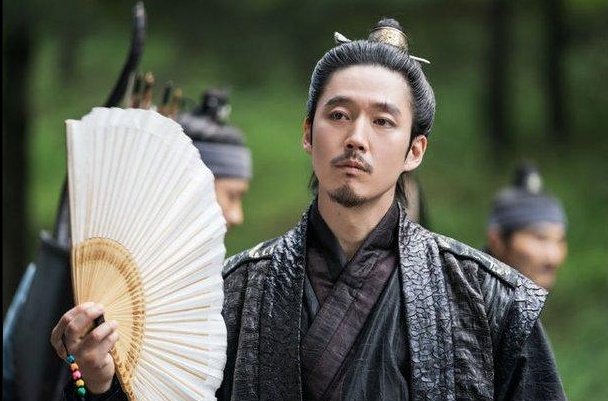
    Jang Hyuk’s portrayal of Yi Bang-won is one of the drama’s most memorable elements.

    Historically, Yi Bang-won was the fifth son of Yi Seong-gye, the founder of Joseon.

    He played a decisive role in the establishment of the dynasty and later became King Taejong.

    His rise to power involved ruthless political maneuvering and the violent removal of rivals, including members of his own family.

    The historical Yi Bang-won is therefore difficult to describe in simple moral terms.

    He helped establish a new political order, but he also used extreme violence to secure his position within it.

    The drama captures this contradiction through Jang Hyuk’s performance.

    His Yi Bang-won is intelligent, controlled, and dangerous.

    He does not need to shout to make other people understand his authority.

    His calmness often makes him more intimidating than characters who rely on open aggression.

    But the most interesting question is not whether he is frightening.

    It is whether the new state could have been created without the kind of political violence he represents.

    The series does not provide an easy answer.

    7. Jang Hyuk’s Performance Changes the Balance of the Drama

    Yi Bang-won is not the only important character, but his presence changes the atmosphere whenever he appears.

    Jang Hyuk gives the character a distinctive combination of intelligence, restraint, and explosive violence.

    His facial expressions and controlled delivery communicate that he is constantly evaluating the people around him.

    This is particularly effective because Yi Bang-won rarely appears to be acting without a purpose.

    Even when he seems calm, the audience senses that he is calculating the consequences of every interaction.

    His performance also creates an interesting contrast with the younger characters.

    Hwi and Seon-ho are still struggling to understand what kind of men they want to become.

    Bang-won already knows what he wants from the world.

    The difference is that he is willing to pay a price that the younger characters may not fully understand.

    Jang Hyuk’s portrayal gives the drama a powerful political dimension beyond its central friendship.

    8. Han Hee-jae: A Woman Trying to Find Her Own Position in a Man’s World

    Seolhyun plays Han Hee-jae, a woman who operates within the political and social conflicts of the period.

    She is intelligent, independent, and determined to pursue her own goals.

    Her character offers a different perspective on the changing world.

    While the male characters frequently express their conflicts through military strength and political ambition, Hee-jae must navigate a society in which women have fewer opportunities to exercise formal power.

    Her relationships with Hwi and the wider political world create another emotional layer in the drama.

    However, the character also illustrates one of the series’ weaknesses.

    Some viewers felt that her independence and potential were not fully developed as the story progressed.

    Her role sometimes becomes secondary to the conflict between the two male leads.

    This is an important limitation to acknowledge when evaluating the series.

    9. The Historical Events Behind the Fiction

    One reason My Country: The New Age is interesting is the way it places fictional characters inside real historical events.

    The story draws on the political transformation from Goryeo to Joseon.

    Several major historical developments form the background:

    • The Wihwado Retreat in 1388, which helped change the balance of power in Goryeo.
    • The rise of Yi Seong-gye and the establishment of Joseon in 1392.
    • The growing political influence of Yi Bang-won.
    • The First Strife of Princes in 1398, when the struggle over succession and political authority turned violently against members of the royal family.

    These events were not merely changes in royal leadership.

    They represented a fundamental transformation of the state.

    The drama uses this historical framework to show how individual lives can become trapped inside decisions made by powerful people.

    It is important, however, to distinguish the real historical figures and events from the fictional characters and dramatic relationships created for the series.

    The friendship between Hwi and Seon-ho is part of the drama’s fictional narrative, not a documented historical relationship.

    10. Why the Action Scenes Feel Personal

    The sword fights in My Country: The New Age are not simply decorative action sequences.

    They often represent emotional conflicts that the characters cannot resolve through conversation.

    A fight between two people who once trusted each other carries a different meaning from a battle between strangers.

    Every movement reflects a history of loyalty, disappointment, anger, and regret.

    The series combines large-scale military confrontations with smaller personal duels.

    This allows the action to function on two levels.

    It shows the physical danger of the period while also expressing the emotional distance between the characters.

    The result is a historical drama in which violence is closely connected to the relationships driving the story.

    11. Why Reddit Viewers Remember the Drama

    Discussions among international viewers on Reddit show that My Country: The New Age has left a particularly strong impression on fans of Korean historical dramas.

    Several elements repeatedly attract attention.

    The relationship between Seo Hwi and Nam Seon-ho

    Many viewers are drawn to the emotional complexity of their friendship and rivalry.

    Their story is not built around a simple misunderstanding that can be resolved through one conversation.

    It develops through repeated choices that gradually make reconciliation more difficult.

    Jang Hyuk as Yi Bang-won

    His performance is frequently singled out as one of the strongest parts of the series.

    Viewers appreciate the character’s commanding presence and the way Jang Hyuk creates tension without relying on exaggerated expressions.

    The emotional impact of the ending

    The conclusion is another major topic of discussion.

    For viewers who become invested in the two main characters, the final episodes can be particularly devastating.

    The series does not offer an uncomplicated happy ending in which friendship and love overcome every political conflict.

    That emotional commitment is part of why viewers continue discussing the drama after finishing it.

    12. The Ending: When the Past Cannot Be Recovered

    Spoiler warning: This section discusses the ending of the drama.

    The ending of My Country: The New Age is important because it completes the emotional journey of Hwi and Seon-ho.

    Their conflict is not resolved by one person simply defeating the other.

    Instead, the series brings their relationship back to the choices that shaped it.

    The two men have spent years being pushed apart by social inequality, political ambition, and the struggle to survive.

    By the time the story reaches its conclusion, the friendship they once shared has become inseparable from the pain they have caused each other.

    The tragedy is that they understand each other more deeply than many of the people around them.

    Yet understanding is not enough to undo the consequences of their decisions.

    The ending leaves viewers with the feeling that something precious has been lost long before the final moments arrive.

    It is not simply a story about two friends who become enemies.

    It is a story about two people who could not find a way to remain friends in the world they were forced to inhabit.

    13. Why the Drama’s Tragedy Works

    A tragic ending is not automatically meaningful.

    For tragedy to work, the audience must understand what the characters wanted, why they made their choices, and what those choices eventually cost them.

    My Country: The New Age builds its emotional impact through the contrast between the characters’ original hopes and their eventual positions.

    Hwi wants to protect the people he loves.

    Seon-ho wants to escape the social identity imposed on him.

    Bang-won wants to secure the future of a new dynasty.

    Each character pursues something that makes sense from his own perspective.

    But their goals cannot peacefully coexist.

    This is what gives the drama its tragic dimension.

    The characters are not simply destroyed by bad luck.

    They are shaped by the choices they make within a political system that rewards power and punishes weakness.

    The result is a story in which personal loyalty and national ambition repeatedly collide.

    14. Is My Country: The New Age Worth Watching?

    For viewers who enjoy Korean historical dramas, My Country: The New Age is a strong recommendation.

    Its greatest strengths include:

    • Yang Se-jong’s emotional portrayal of Seo Hwi.
    • Woo Do-hwan’s complex performance as Nam Seon-ho.
    • Jang Hyuk’s commanding interpretation of Yi Bang-won.
    • The historical setting surrounding the fall of Goryeo and the birth of Joseon.
    • Sword fights and large-scale action sequences.
    • A central friendship that develops into a deeply painful conflict.

    The series is especially suitable for viewers who prefer character-driven historical stories rather than dramas focused exclusively on palace politics.

    However, it is not without weaknesses.

    Some viewers may find the historical timeline complicated, the romantic storyline less convincing, or certain character arcs insufficiently developed.

    But the central relationship between Hwi and Seon-ho gives the drama a strong emotional reason to keep watching.

    Conclusion: A New Nation Was Built, but What Happened to the People Who Lost Each Other Along the Way?

    My Country: The New Age tells a story about the birth of a dynasty, but its most powerful moments are often far removed from the royal throne.

    They belong to two young men who once believed they could face the world together.

    Seo Hwi and Nam Seon-ho represent different responses to an unequal society.

    One tries to protect the people he loves.

    The other tries to escape the limitations of his birth.

    Their paths eventually become part of a much larger political struggle, one in which Yi Bang-won represents the ruthless logic of building and securing a new state.

    The historical transformation from Goryeo to Joseon created a new chapter in Korean history.

    But for the characters at the center of this drama, the new age came at an extraordinary personal cost.

    Perhaps the saddest question is not which of the two friends was right. It is whether they ever had a real chance to choose a future in which they could remain friends.

    That is why My Country: The New Age remains more than a historical action drama.

    It is a story about friendship, social inequality, political ambition, and the human cost of creating a new world.

    TTK Original — Beyond the Headlines
    Looking beyond the historical conflict to explore the friendship, ambition, and sacrifices behind the birth of a nation.
  • Money Flower: Can a Man Destroy a Corrupt Family Without Becoming Corrupt Himself?

    TTK Original — Beyond the Headlines

    Spoiler Warning: This analysis discusses major character developments, hidden identities, relationships, and the conclusion of the 2017 Korean drama Money Flower.

    There are revenge stories in which the protagonist fights evil from the outside.

    And then there are stories in which the protagonist enters the world of evil, learns its language, understands its rules, and eventually becomes powerful enough to destroy it from within.

    Money Flower belongs to the second category.

    The 2017 MBC drama follows Kang Pil-joo, played by Jang Hyuk, an extraordinarily intelligent man who works inside the powerful Cheong-A Group. To the founding family, he appears to be a loyal and indispensable employee. In reality, he has spent years concealing his identity and preparing a carefully constructed revenge against the family that shaped his past.

    His strategy is not based on physical strength or public accusations.

    He uses information, relationships, marriage, ambition, and the weaknesses of powerful people. He understands that people who believe they control everything are often the easiest people to manipulate.

    But the drama raises a much more uncomfortable question than whether Pil-joo can succeed.

    If a man must become an expert in manipulation to destroy a corrupt family, how much of that family’s corruption will eventually become part of him?

    That is the real tragedy hidden inside Money Flower.

    1. Revenge Is Not the Beginning of Kang Pil-joo’s Story

    At first glance, Kang Pil-joo appears to be a man who has everything under control.

    He is intelligent, professionally successful, confident, and trusted by some of the most powerful people in Cheong-A Group. His ability to anticipate problems makes him indispensable to the family.

    Yet his position is built on a carefully concealed past.

    Pil-joo is not simply an ambitious executive who wants to climb the corporate ladder. His relationship with the founding family is deeply personal. His identity and history are connected to the injustice that motivates his revenge.

    This distinction changes the way we understand his actions.

    A conventional corporate climber wants to enter the inner circle because it offers money, security, and influence.

    Pil-joo enters that circle because he wants to understand the people inside it well enough to bring their world down.

    His apparent loyalty is therefore a disguise.

    Every promotion, every act of assistance, and every moment of trust moves him closer to his real objective.

    The most important feature of his revenge is that he does not rush it.

    He understands that destroying a powerful family requires more than discovering its secrets. It requires allowing the family members to make decisions that gradually weaken their own position.

    Pil-joo does not merely attack the system.

    He learns how to operate it.

    2. Cheong-A Group Is More Than a Rich Family

    Cheong-A Group is the setting of the drama’s power struggle, but its importance goes beyond corporate ownership.

    The family represents a world in which wealth, bloodline, political influence, and personal relationships reinforce one another.

    The group’s founder, Jang Guk-hwan, believes that the company is the result of his own struggle and therefore something that must remain under his control.

    His children and grandchildren do not simply inherit wealth.

    They inherit expectations, rivalries, privileges, and the obligation to compete for the founder’s recognition.

    The company becomes a family kingdom.

    Its members may disagree about who deserves to lead it, but they share an assumption that the business empire belongs to their family by right.

    This is why the struggle for succession becomes so destructive.

    The question is not simply who is the most capable executive.

    It is who possesses the strongest claim to the founder’s approval, the family’s political connections, and the authority to control the next generation.

    In this environment, personal affection can become a strategic weakness.

    Marriage can become a business arrangement.

    Loyalty can become a transaction.

    And family members can treat one another as competitors rather than relatives.

    Cheong-A is therefore not just a company.

    It is a structure that converts private relationships into instruments of power.

    3. Jang Guk-hwan: The Founder Who Cannot Separate His Company From Himself

    Jang Guk-hwan, played by Lee Soon-jae, represents the founding generation of Korean corporate power.

    He built Cheong-A through calculation, determination, and an uncompromising understanding of competition.

    He does not see himself as an ordinary businessman.

    He sees himself as the creator of an empire.

    That belief explains much of his behavior.

    Because he regards the company as an extension of himself, he finds it difficult to accept that anyone else should exercise independent authority over it.

    Even his descendants are not automatically entitled to his trust.

    They must demonstrate that they deserve the privilege of inheriting what he created.

    But there is a contradiction in his philosophy.

    Guk-hwan wants a successor who can preserve his empire, yet the environment he has created encourages suspicion, rivalry, and manipulation.

    He has spent his life rewarding the ability to defeat competitors.

    Now he discovers that the same competitive instincts exist inside his own family.

    The founder’s greatest weakness is not simply that he has too many ambitious relatives.

    It is that he has built a family culture in which affection is inseparable from usefulness.

    He wants loyalty, but he has created a world in which everyone must calculate what loyalty is worth.

    The empire he built is powerful.

    The family expected to inherit it is deeply unstable.

    4. Kang Pil-joo’s Greatest Weapon Is Understanding Human Desire

    Pil-joo rarely needs to force people into doing what he wants.

    He studies what they already want and creates situations in which their desires become useful to his strategy.

    This is what makes him so dangerous.

    He understands that people do not always make decisions according to their long-term interests.

    They act out of insecurity, ambition, pride, jealousy, fear, and the need for recognition.

    A person who wants to become chairman can be manipulated through the promise of succession.

    A person who fears losing social status can be controlled through the threat of humiliation.

    A person who believes they deserve more can be encouraged to take risks that destroy their existing position.

    Pil-joo’s talent is not merely intelligence.

    It is his ability to identify the emotional pressure points that influence powerful people.

    He does not need to invent their weaknesses.

    He simply needs to understand them better than they understand themselves.

    This is also why his strategy resembles the behavior of the people he intends to defeat.

    He treats relationships as instruments.

    He sees emotional attachments as potential leverage.

    He calculates how one person’s decision will affect another person’s position.

    The difference between Pil-joo and the Cheong-A family is initially the purpose of their manipulation.

    But the methods increasingly look alike.

    5. Jung Mal-ran: A Woman Who Understands That Wealth Is Not the Same as Security

    Jung Mal-ran, played by Lee Mi-sook, is one of the most important characters in the drama.

    She is not simply a wealthy woman protecting her lifestyle.

    She is deeply invested in the idea that Cheong-A Group belongs to her side of the family.

    Her father’s political influence helped the company grow, and she believes this history gives her a legitimate claim to its future.

    Her ambition is therefore connected to both personal pride and family identity.

    Mal-ran understands that being a member of a powerful family does not automatically guarantee control.

    She must protect her position against competing relatives and prove that her son deserves the inheritance.

    This makes her a formidable opponent.

    She is capable of strategic thinking, emotional manipulation, and calculated decisions.

    Yet she is also vulnerable because her identity is tied so closely to her son’s future.

    She wants to secure power for him, but her methods place enormous pressure on the very person she wants to protect.

    Mal-ran’s relationship with Pil-joo is especially interesting.

    She trusts him because he appears to understand her ambitions and can help her achieve them.

    But the trust she places in him is based on an incomplete understanding of who he really is.

    She believes she is using a capable subordinate.

    In reality, she is allowing someone with a completely different objective to become central to her family’s survival.

    6. Jang Bu-cheon: The Heir Who Wants the Privileges Without the Burden

    Jang Bu-cheon, played by Jang Seung-jo, is one of the drama’s most morally complicated characters.

    He has been born into extraordinary privilege.

    Money, status, and access to powerful people are available to him in ways that ordinary people can barely imagine.

    Yet his position is not as secure as it appears.

    His mother wants him to become the successor to Cheong-A Group, while his grandfather constantly evaluates whether he deserves that position.

    Bu-cheon is therefore caught between entitlement and insecurity.

    He wants the benefits of being the heir, but he does not necessarily possess the discipline or ambition expected of someone who must control an empire.

    His relationship with Pil-joo is central to the story.

    Pil-joo appears to be the person who understands him, supports him, and helps him navigate the family’s complicated politics.

    But this relationship is built on an imbalance.

    Bu-cheon depends on Pil-joo’s intelligence.

    Pil-joo understands Bu-cheon’s weaknesses.

    One man believes he has a trusted adviser.

    The other sees an important piece in a much larger strategy.

    Yet Bu-cheon is not merely a helpless puppet.

    His decisions, failures, and moments of moral conflict influence the direction of the revenge plan.

    The drama becomes more interesting when we recognize that a person can be both privileged and vulnerable.

    Bu-cheon has access to enormous wealth, but he does not possess complete control over his own future.

    7. Na Mo-hyun: The Person Who Was Never Supposed to Become a Pawn

    Na Mo-hyun, played by Park Se-young, enters the story from a very different world.

    She is an environmental activist and a temporary science teacher. Her values are not initially defined by corporate competition or the pursuit of inherited wealth.

    She approaches life with a degree of openness and emotional sincerity that is largely absent from the Cheong-A family.

    For Pil-joo, this difference initially makes her useful.

    His revenge strategy requires a marriage that can strengthen Bu-cheon’s position and advance the family’s succession struggle.

    Mo-hyun becomes part of that calculation.

    But the plan creates an unexpected problem.

    Pil-joo begins to develop genuine feelings for the woman he originally intended to use.

    This is not a simple romantic complication.

    It exposes the central contradiction in his character.

    He has spent years learning how to treat people as instruments.

    Now he encounters someone whose value cannot be reduced to her usefulness in his plan.

    Mo-hyun represents a possibility of life outside the system that has consumed him.

    But Pil-joo cannot simply leave that system behind.

    He has built his identity around revenge for so long that genuine affection becomes another source of conflict.

    Mo-hyun’s importance lies in the fact that she challenges the logic of his entire existence.

    She reminds him that a person can have value beyond what they can provide to someone else’s ambitions.

    8. The Marriage Strategy: When Love Becomes a Corporate Instrument

    One of the drama’s most revealing elements is the use of marriage as a tool in the succession struggle.

    Pil-joo recognizes that Bu-cheon’s position inside Cheong-A can be strengthened through an advantageous marriage.

    Mo-hyun’s family background and public standing make her an important part of that strategy.

    The arrangement reveals how the powerful family views marriage.

    For ordinary people, marriage is often imagined as a private relationship built around affection, trust, and shared decisions.

    Inside Cheong-A, it can become a mechanism for consolidating influence.

    A marriage can strengthen political relationships.

    It can improve a successor’s public image.

    It can help stabilize a contested inheritance.

    And it can turn a private commitment into a corporate asset.

    The most disturbing aspect is that the people involved do not necessarily recognize the full extent of the manipulation.

    They believe they are making personal choices.

    But those choices have already been shaped by someone else’s calculations.

    This is where the drama moves beyond a conventional love triangle.

    It asks whether love can remain genuine when the circumstances surrounding it have been deliberately engineered.

    9. Yoon Seo-won: The Human Cost of a Family’s Power Games

    Yoon Seo-won, played by Han So-hee, provides another perspective on the relationship between wealth and personal freedom.

    She becomes involved with Bu-cheon, whose privileged world offers experiences and possibilities that are far removed from her ordinary working life.

    Their relationship develops within a deeply unequal environment.

    Bu-cheon has access to wealth and status.

    Seo-won must navigate the emotional and practical consequences of becoming involved with someone whose family controls an enormous business empire.

    Her position also reveals the limitations of the family’s idea of social hierarchy.

    People inside Cheong-A are not judged only by their individual character.

    Their background, relationships, and usefulness to the family all matter.

    Seo-won is therefore exposed to a world in which personal affection does not necessarily create equal standing.

    The drama uses her character to show that the consequences of powerful people’s decisions do not remain inside the boardroom.

    They reach people who have little influence over the rules of the game.

    And those people can become deeply affected by decisions made for reasons they do not fully understand.

    10. The Real Conflict Is Between Bloodline and Ability

    Cheong-A’s succession struggle appears to be a competition between family members.

    But underneath that competition is a much larger question.

    What actually gives someone the right to control a major corporation?

    Is it bloodline?

    Is it business ability?

    Is it political influence?

    Or is it simply the founder’s personal approval?

    Jang Guk-hwan wants to preserve his empire through a successor who meets his expectations.

    Mal-ran wants her son to inherit the position she believes belongs to her family.

    Bu-cheon wants the privileges associated with being the heir.

    Pil-joo understands the system well enough to exploit the contradictions between all three positions.

    The problem is that none of these people is pursuing a completely neutral definition of leadership.

    Each has a personal interest in the answer.

    The company becomes a battlefield because the family cannot separate its private desires from the public responsibilities of corporate control.

    This is one reason Money Flower works so well as a companion to dramas such as Empire of Gold.

    Both examine what happens when the ownership of wealth becomes inseparable from the struggle for personal identity and power.

    For another perspective on the relationship between ambition and corruption, see our analysis of Empire of Gold.

    11. Why Pil-joo Is Not a Traditional Hero

    A conventional revenge protagonist usually begins as a victim and gradually becomes strong enough to confront the people responsible.

    The audience is encouraged to celebrate each victory because the protagonist appears to be restoring a moral balance.

    Pil-joo complicates that expectation.

    He does not simply expose wrongdoing.

    He manipulates people, conceals information, and uses relationships to achieve his objectives.

    His actions may be understandable in the context of his past, but that does not automatically make every decision morally acceptable.

    The audience is placed in an uncomfortable position.

    We understand why he wants revenge.

    We recognize the injustice that shaped his life.

    We admire his intelligence and patience.

    Yet we must also confront the fact that innocent people can be affected by his strategy.

    This is what makes him more interesting than a straightforward hero.

    He is not simply fighting a corrupt system from the outside.

    He has become one of its most capable operators.

    The question is no longer whether he possesses the intelligence to defeat his enemies.

    It is whether he still possesses the moral freedom to choose a different way of living.

    12. The Hidden Cost of Manipulation: Nobody Remains Completely Untouched

    Pil-joo’s strategy depends on controlling information and anticipating how people will react.

    But human relationships are not machines.

    A plan can be carefully designed and still produce consequences that cannot be predicted.

    The more deeply Pil-joo becomes involved with the people around him, the harder it becomes to maintain the emotional distance that once made his strategy possible.

    His relationship with Mo-hyun is the clearest example.

    He initially treats her as part of the plan.

    But genuine affection introduces a variable that cannot be controlled through calculation alone.

    The same problem appears in his relationship with Bu-cheon.

    Their connection cannot be understood only as the relationship between a strategist and a pawn.

    Years of shared experiences create emotional complications that challenge Pil-joo’s original assumptions.

    This is an important distinction.

    Manipulation can control a person’s choices for a period of time.

    It cannot guarantee that the manipulator will remain emotionally unaffected.

    Pil-joo’s greatest danger is not necessarily that someone will discover his secret.

    It is that his own feelings may expose the limits of the identity he has constructed.

    13. The Meaning of the Title: Why Money Becomes a Flower

    The title Money Flower is an evocative contradiction.

    A flower usually represents beauty, life, growth, and something that can exist without being owned.

    Money represents a different kind of value.

    It can measure power, determine access, create dependence, and influence the choices people make.

    The drama brings these two ideas together.

    The people inside Cheong-A pursue money as though it can provide everything they need.

    But the more they pursue it, the more their relationships become damaged by competition and suspicion.

    Money creates the appearance of freedom while often producing new forms of dependence.

    The family members possess extraordinary material resources, yet they remain trapped by their need to inherit, control, and protect the empire.

    Pil-joo is the most extreme example.

    He has the intelligence and professional position to build a different life.

    But his past has made revenge more important than the possibility of personal happiness.

    The flower in the title can therefore be read as a symbol of something beautiful emerging from a deeply compromised environment.

    But it is also a reminder that beauty and corruption can exist side by side.

    The presence of money does not guarantee that life will flourish.

    Sometimes it makes everything around it more fragile.

    14. The Most Important Question: Can Revenge Produce Justice?

    This is the central moral problem of Money Flower.

    Pil-joo’s revenge is rooted in a past injustice.

    His anger is understandable.

    The people he targets are not innocent of the system that harmed him.

    Yet the methods he uses raise a difficult question.

    Can a person restore justice through a strategy built on deception and manipulation?

    There is an important difference between defeating an unjust person and creating a just outcome.

    The first may be achieved through power.

    The second requires something more.

    It requires considering the people who are affected by the struggle, including those who are not responsible for the original wrongdoing.

    A revenge strategy may succeed in destroying its target while leaving behind emotional damage, broken relationships, and another cycle of distrust.

    That is why the moral value of revenge cannot be measured only by whether the intended enemy loses.

    We must also examine what the avenger becomes in the process.

    Pil-joo’s story is compelling because the audience is not allowed to avoid this question.

    His intelligence makes us admire him.

    His history makes us sympathize with him.

    But his methods force us to consider whether revenge has become another form of domination.

    15. Final Reflection: The Man Who Entered the Empire to Destroy It

    Kang Pil-joo’s greatest achievement is not simply that he understands the Cheong-A family.

    It is that he understands how power operates inside the family better than many of its actual members.

    He knows which ambitions can be exploited.

    He understands how insecurity influences decisions.

    He recognizes that people who believe themselves powerful can become dependent on the very relationships they use to maintain their position.

    But this knowledge comes at a price.

    To destroy the world that harmed him, Pil-joo has spent years learning how to function within it.

    He has become patient, calculating, secretive, and emotionally guarded.

    These are precisely the qualities that make him effective inside Cheong-A.

    They are also the qualities that make it difficult for him to imagine a life outside revenge.

    That is the central irony of Money Flower.

    The man who enters a corrupt empire to destroy it gradually discovers that defeating the empire and escaping its influence are two entirely different challenges.

    The drama does not merely ask whether Kang Pil-joo can bring down the family.

    It asks whether he can recover the part of himself that existed before revenge became the purpose of his life.

    And that question is much harder to answer.

    Because a person may succeed in destroying the people who took away his future.

    But if he has sacrificed his ability to imagine another future, what has he really won?

    Perhaps the most dangerous power of money is not that it allows people to control others. It is that it can make them forget what they wanted before control became everything.

  • Family: The Unbreakable Bond — How Did a Perfect Spy Couple Become a Story of Wasted Potential?

    Family: The Unbreakable Bond — How Did a Perfect Spy Couple Become a Story of Wasted Potential?

    TTK Original — Beyond the Headlines

    What happens when a husband is a secret intelligence agent and his wife has a dangerous past of her own?

    It sounds like the perfect premise for a Korean action comedy.

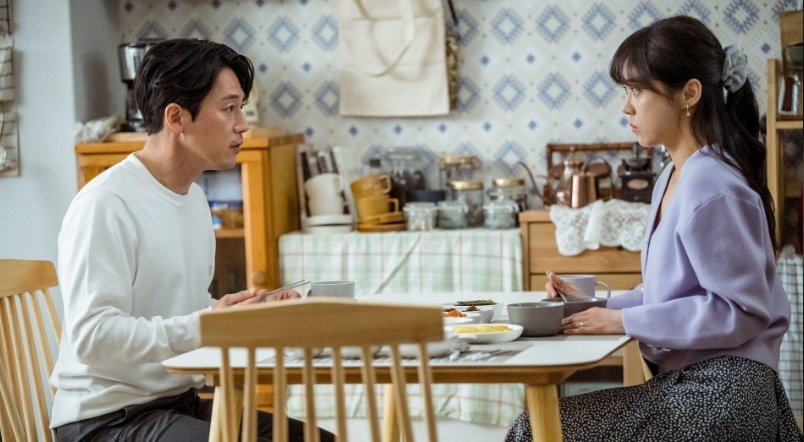
    In Family: The Unbreakable Bond (2023), Jang Hyuk plays Kwon Do-hoon, an experienced National Intelligence Service agent who hides his real profession behind the identity of an ordinary office worker. His wife, Kang Yu-ra, played by Jang Na-ra, appears to be a devoted homemaker who dreams of maintaining a happy family.

    But neither spouse knows the full truth about the other.

    The series had several promising ingredients: two popular actors reuniting, a marriage built on secrets, international criminal connections, and the possibility of turning an ordinary household into an extraordinary battlefield.

    Yet international viewers had mixed reactions.

    Some enjoyed the performances and the unusual premise. Others felt that the drama spent too much time on family comedy and secondary storylines while delaying the central spy conflict.

    The biggest disappointment was not necessarily the concept.

    It was the feeling that the drama had a much more entertaining story waiting to emerge, but struggled to bring it to the screen consistently.

    1. The Reunion That Created High Expectations

    One of the biggest attractions of Family: The Unbreakable Bond was the reunion of Jang Hyuk and Jang Na-ra.

    The two actors had previously appeared together in popular projects, including Successful Story of a Bright Girl and Fated to Love You. Their established chemistry made the new drama particularly appealing to longtime fans.

    This time, however, they were not playing a conventional romantic couple.

    They were already married, had a daughter, and had spent years living together without fully understanding each other’s hidden identities.

    That change in relationship dynamics created an interesting opportunity.

    Instead of watching two people fall in love, viewers could watch two people discover that the person sleeping beside them every night had an entirely different life.

    Before the premiere, Reddit users expressed excitement about seeing the two actors together again. Some even joked that the secret-agent couple sounded like a live-action version of Spy x Family.

    The expectations were clear: viewers wanted the chemistry of the two leads combined with the excitement of a spy thriller.

    2. A Husband Who Is Never Really Home

    Kwon Do-hoon is an NIS black agent and a highly skilled sniper.

    To protect his identity, he works under the cover of an ordinary employee at a trading company.

    His professional life requires secrecy, discipline, and frequent absences. Unfortunately, these demands also create problems at home.

    He misses family events, struggles to explain his schedule, and often leaves his wife to manage household responsibilities alone.

    From the outside, he looks like a husband who works too much.

    The irony is that Do-hoon is not neglecting his family because he does not care about them.

    He believes he is protecting them by keeping his real job secret.

    But the series raises an important question: can someone genuinely protect a family while hiding the truth from the people closest to him?

    His double life is the foundation of the drama’s comedy, but it is also the source of its emotional conflict.

    3. Jang Na-ra’s Kang Yu-ra Is Not an Ordinary Housewife

    Kang Yu-ra initially appears to be a cheerful and devoted wife who wants a peaceful family life.

    She manages the household, cares for her daughter, and tries to maintain the image of a perfect marriage.

    However, her personality changes when Jo Tae-gu appears.

    Tae-gu knows things about Yu-ra’s past that she desperately wants to leave behind.

    It gradually becomes clear that she is not simply a woman with a few hidden secrets.

    Her history is connected to violence, criminal organizations, and a life very different from the domestic world she has built with Do-hoon.

    This revelation gives Jang Na-ra an opportunity to move beyond the familiar image of a romantic-comedy heroine.

    Yu-ra can be affectionate and funny, but she can also be dangerous.

    The contrast is one of the drama’s strongest ideas.

    Unfortunately, the series sometimes reveals her abilities more effectively than it explores the emotional damage that made her want such an ordinary family in the first place.

    4. The Marriage Is More Complicated Than the Spy Premise Suggests

    The most interesting relationship in the series is not simply the conflict between two secret agents.

    It is the marriage between two people who have built their relationship around incomplete truths.

    Do-hoon hides his occupation because he believes secrecy is necessary.

    Yu-ra hides her past because she wants to escape the person she used to be.

    Both have reasons for keeping secrets, but those reasons do not automatically make the deception harmless.

    Their marriage therefore contains a contradiction.

    They love each other, but they do not fully know each other.

    The series could have explored this contradiction more deeply.

    What happens when the person you trust most discovers that much of your shared life has been built around a false identity?

    How much can love survive when honesty arrives years too late?

    These questions offer more emotional potential than the simple comedy of a husband inventing another excuse for missing dinner.

    5. Jo Tae-gu Brings the Past Into the Present

    Kim Nam-hee plays Jo Tae-gu, a mysterious man whose appearance threatens the peaceful life Yu-ra has constructed.

    He knows about her past and understands how vulnerable she is to the return of people connected to it.

    Tae-gu is important because he connects the domestic story with the larger criminal conflict.

    Without him, the series could easily become a collection of episodes about a secret agent struggling to balance work and family.

    His arrival gives the story a reason to move forward.

    He also creates a more complicated emotional situation than a conventional villain would.

    His relationship with Yu-ra is tied to their shared history, and the audience gradually learns that the past cannot simply be erased because someone has decided to become a different person.

    Kim Nam-hee brings an unsettling presence to the role.

    The character’s emotional significance becomes clearer as the story reveals more about Yu-ra’s childhood and the people who shaped her.

    6. The Biggest Structural Problem: Two Different Dramas Compete for Attention

    This is where many of the critical Reddit reactions become particularly interesting.

    Family: The Unbreakable Bond wants to be two things at once.

    It wants to be a domestic comedy about a married couple and their extended family.

    At the same time, it wants to be a spy thriller involving snipers, intelligence operations, criminal organizations, and dangerous secrets.

    There is nothing inherently wrong with combining these genres.

    In fact, the contrast could have made the series distinctive.

    The problem is the balance.

    Some viewers felt that the family storyline occupied too much of the early episodes, delaying the spy plot they had expected from the premise.

    In the Reddit discussions, one viewer complained that the show spent too much time on the family aspect in the first half. Another questioned why Yu-ra’s secret identity had not been revealed much earlier.

    These comments point to a pacing issue rather than a rejection of family comedy itself.

    The audience needed to understand why the family mattered before the danger surrounding it became truly exciting.

    7. Min-seo’s Storyline Became a Point of Frustration

    The daughter, Kwon Min-seo, is an important part of the family structure.

    Her school life and childhood relationships help establish the domestic world that Do-hoon and Yu-ra are trying to protect.

    But some viewers felt that her early storyline, particularly her childlike romantic interest, received more attention than it deserved.

    In one Reddit discussion covering episodes nine and ten, a viewer specifically complained that the early episodes had wasted time on Min-seo’s childhood crush.

    Another viewer said the family material should have been balanced more carefully with the spy storyline.

    This criticism is worth examining.

    A child character does not have to be involved in every major action sequence to matter.

    Min-seo represents the ordinary life that both parents want to preserve.

    But if her secondary storylines repeatedly interrupt the main conflict, viewers may begin to see her scenes as distractions rather than emotional foundations.

    The problem is not that the drama includes a child.

    It is that the amount of time given to each storyline does not always match its importance to the central narrative.

    8. The Two Leads Needed More Time Together

    The greatest missed opportunity may be the relationship between Do-hoon and Yu-ra.

    The premise practically writes its own entertaining scenes.

    Imagine two highly trained people trying to maintain an ordinary marriage while gradually realizing that neither is as innocent or helpless as they appear.

    Their domestic arguments could become tactical confrontations.

    Their attempts to protect each other could create both comedy and genuine suspense.

    Their secrets could produce emotional consequences that are more complicated than simply discovering another hidden weapon.

    Yet some viewers felt that the drama took too long to bring the central couple into the same story.

    Instead of allowing the relationship to drive the thriller, the series sometimes made the audience wait for the two characters to reach the point that the premise had promised from the beginning.

    The result is a strange contradiction.

    The actors are the main attraction, but the writing does not always make the best use of their partnership.

    9. Jang Hyuk’s Action Strength and the Limits of the Character

    Jang Hyuk is known for his physical performances and action roles.

    His experience gives Do-hoon credibility as a professional sniper and intelligence operative.

    The character is capable of sudden violence, but at home he must behave like an ordinary husband and father.

    This contrast should have been one of the drama’s greatest sources of entertainment.

    Jang Hyuk can switch between physical intensity and awkward domestic comedy, giving the character a distinctive personality.

    However, Do-hoon is not always an easy character to sympathize with.

    His long absences and emotional distance create understandable frustration for Yu-ra.

    In the Reddit discussions, one viewer criticized him as an emotionally unavailable husband who seemed to pay attention to his wife mainly when he wanted physical intimacy.

    That is a harsh reaction, but it highlights an important weakness in the character writing.

    The drama wants viewers to see Do-hoon as a loving husband who sacrifices his time for national security.

    But it also needs to show that his wife has legitimate reasons to feel neglected.

    Without that balance, the marriage can become harder to root for than the writers may have intended.

    10. The International Spy Story Expands the Conflict

    As the series progresses, the conflict becomes larger than the secrets between the two spouses.

    Yu-ra’s past is connected to a criminal organization known as MGD, while Do-hoon’s work places him inside an intelligence system with its own internal power struggles.

    Chief Oh Cheon-ryeon, played by Chae Jung-an, becomes an important figure in this wider conflict.

    Her position creates another layer of uncertainty because she is both Do-hoon’s superior and someone whose own history is not entirely straightforward.

    The story begins connecting personal loyalties with organizational interests.

    This is where the drama becomes more than a domestic comedy.

    The characters are forced to consider whether they can trust the people who have been giving them orders, protecting them, or hiding information from them.

    The international dimension could have supported a much larger thriller.

    But the short season and the many competing character arcs limit how deeply the political and criminal structures can be explored.

    11. The Drama’s Strongest Idea: Can a Dangerous Person Build an Ordinary Family?

    Yu-ra’s desire for a perfect family is more meaningful than it first appears.

    Her past suggests that she experienced a world in which violence and fear were normal.

    The peaceful home she creates with Do-hoon is therefore not simply a comfortable lifestyle.

    It represents the possibility of becoming someone different.

    But the drama also questions whether a person can completely escape their history.

    Yu-ra may change her name, her habits, and her surroundings.

    She may become a wife and mother.

    Yet the skills and memories associated with her previous life remain part of her.

    This creates a powerful contrast with Do-hoon.

    He also lives under a false identity, but his secret profession is still active.

    Yu-ra wants to leave her past behind.

    Do-hoon continues to live inside his.

    Their marriage is therefore built around two different relationships with secrecy.

    One hides the present.

    The other hides the past.

    That contrast could have been the emotional center of the entire series.

    12. The Final Episodes Reveal the Cost of the Family’s Secrets

    The final episodes bring the main characters into direct conflict with the forces connected to their past.

    Yu-ra becomes involved in a violent confrontation at NIS headquarters, while Do-hoon discovers how deeply the organization’s internal power struggle has affected his family.

    The story also gives Jo Tae-gu a more tragic role.

    He is not simply an enemy who appears to create trouble for the couple.

    His relationship with Yu-ra and Min-seo reveals a more complicated emotional connection.

    The ending confirms that the danger does not disappear simply because the immediate conflict has been resolved.

    Do-hoon decides to leave the NIS, while Yu-ra begins to confront the past she had tried to escape.

    The family survives, but the larger criminal and intelligence story is not entirely closed.

    This creates a conclusion that feels both emotionally resolved and narratively open.

    13. Jo Tae-gu’s Fate Gives the Story Its Most Bittersweet Moment

    One of the more memorable developments in the final episodes is Tae-gu’s fate.

    Despite the conflict surrounding him, his relationship with Yu-ra and Min-seo reveals a more human side.

    He eventually returns to Thailand, but his story does not end with a simple reconciliation.

    Tae-gu dies after becoming involved in the violent struggle against the people threatening the characters.

    His death adds a tragic dimension to the series.

    It also reinforces the idea that people connected to a violent past cannot always return to an ordinary life simply because they want to.

    The family may survive, but not everyone gets the chance to begin again.

    For viewers who had become attached to Tae-gu, his ending may be one of the most emotionally significant parts of the drama.

    14. What Reddit Actually Says: Chemistry Was Not the Main Problem

    The Reddit reaction is not completely negative.

    Before the premiere, viewers expressed strong interest in seeing Jang Hyuk and Jang Na-ra reunite. The couple’s history together and the unusual spy-marriage premise generated genuine excitement.

    During the broadcast, however, some viewers became frustrated with the pacing and the amount of time devoted to secondary family stories.

    The criticism became particularly specific in discussions of episodes nine and ten, where viewers questioned the balance between the domestic plot and the spy conflict.

    A later discussion about Jang Na-ra’s performances also included a viewer who praised her work in Family while describing the drama itself as a disappointment. Another commenter said the chemistry between the two leads had been wasted.

    That distinction matters.

    The available Reddit discussions do not establish that everyone disliked the series. Some viewers enjoyed it, and others found the later episodes more entertaining than the beginning.

    But a recurring criticism is that the drama had a stronger central concept than the storytelling consistently delivered.

    Reddit is a self-selected community rather than a representative survey of all viewers. Still, these discussions reveal a clear tension between the expectations created by the premise and the experience of watching the finished series.

    15. Family: The Unbreakable Bond Had the Right Ingredients but an Unclear Center

    Family: The Unbreakable Bond had an appealing combination of elements.

    Jang Hyuk and Jang Na-ra brought an established screen partnership. Their characters had secrets that could create comedy, suspense, and emotional conflict. The addition of Jo Tae-gu and the MGD organization gave the story a larger world beyond the family home.

    The problem was not a lack of ideas.

    It was deciding which idea deserved to lead.

    Was this a story about a marriage damaged by years of secrecy?

    Was it a spy thriller about two people with dangerous pasts?

    Or was it a family comedy in which extraordinary characters tried to maintain an ordinary home?

    The drama attempted to combine all three.

    At its best, that combination created entertaining moments that could not easily be found in a conventional spy series.

    At its weakest, the competing storylines diluted the suspense and delayed the relationship viewers had come to watch.

    Perhaps the greatest missed opportunity was the chance to make the marriage itself the engine of the action.

    Do-hoon and Yu-ra did not need to become a perfect couple.

    They needed to become a couple who finally understood what the other had been hiding.

    The most interesting question left by Family: The Unbreakable Bond is not whether Jang Hyuk and Jang Na-ra still have chemistry. It is how much better the series might have been if the writers had trusted that chemistry enough to put their complicated marriage at the center of the story.

  • The Killer: A Girl Who Deserves to Die (2022): Can a Professional Killer Become a Protector?

    The Killer: A Girl Who Deserves to Die (2022): Can a Professional Killer Become a Protector?

    TTK Original — Beyond the Headlines

    1. A Retired Killer Who Has Nothing Left to Prove

    In The Killer: A Girl Who Deserves to Die, Bang Ui-gang appears to have achieved something that most professional killers could never imagine: a peaceful retirement.

    Played by Jang Hyuk, Ui-gang has accumulated enough money to enjoy a comfortable life. He has a beautiful home, financial security, and a wife who knows little about his violent professional past.

    He no longer needs to accept dangerous assignments or prove his abilities to anyone.

    Yet his retirement does not necessarily mean that he has changed as a person.

    His physical skills remain intact. His instincts are still those of someone trained to recognize danger and eliminate threats. Even his leisure activities suggest that the world of violence has not completely disappeared from his identity.

    The arrival of Yoon-ji, a teenage girl temporarily placed under his care, disrupts this comfortable arrangement.

    Initially, Ui-gang sees the responsibility as an inconvenience. He is not particularly interested in becoming a guardian, and he expects the arrangement to end without creating serious problems.

    But when Yoon-ji becomes involved with dangerous people and is eventually kidnapped, his retirement comes to an abrupt end.

    The film’s central question emerges from this situation.

    Has Ui-gang genuinely left his violent past behind, or has he simply been waiting for a reason to use those abilities again?

    His decision to rescue Yoon-ji creates the appearance of a moral transformation. However, the film deliberately leaves room for a more complicated interpretation.

    Perhaps he has not become a different person.

    Perhaps he has finally found something worth using his old abilities to protect.

    2. Ui-gang: The Difference Between Abandoning Violence and Controlling It

    A conventional redemption story usually requires a character to recognize the wrongfulness of their past and attempt to become a better person.

    Ui-gang’s development is different.

    He does not suddenly become uncomfortable with violence. He does not reject his physical abilities or develop a completely new philosophy of life.

    Instead, he changes the purpose for which he uses them.

    This distinction is important.

    The film does not present a retired killer who has become harmless. It presents a dangerous individual whose capacity for violence remains almost entirely intact.

    What changes is the target of that violence.

    Before the kidnapping, Ui-gang’s abilities belong to a professional identity that he has supposedly left behind. After the kidnapping, those abilities become instruments of protection.

    This creates an unusual moral contradiction.

    Can a person become better without abandoning the methods that once made them dangerous?

    Ui-gang’s answer appears to be that violence can serve a protective purpose when directed against people who threaten the innocent.

    But that answer is not entirely comfortable.

    A person who believes that their violence is justified may become increasingly confident in their own ability to decide who deserves punishment.

    The film largely avoids examining this contradiction through philosophical dialogue. Instead, it expresses the idea through action.

    Ui-gang does not explain his moral position at length.

    He demonstrates it through the decisions he makes and the people he chooses to confront.

    3. Yoon-ji: A Teenager Who Becomes More Than a Rescue Objective

    Yoon-ji is initially introduced as a teenager whose behavior creates problems for the adults around her.

    She is placed under Ui-gang’s temporary supervision while her mother and Ui-gang’s wife are away.

    Their relationship begins with distance and inconvenience.

    Ui-gang does not understand her world, and Yoon-ji has little reason to trust a man who appears to have no interest in understanding her.

    This is an important starting point.

    The film does not immediately create a sentimental relationship between an older protector and a vulnerable child.

    Instead, it begins with two people who have very different expectations.

    Yoon-ji’s decisions bring her into contact with dangerous individuals, and her kidnapping turns what appeared to be a temporary guardianship arrangement into a life-threatening situation.

    From this point onward, the story becomes a rescue mission.

    However, Yoon-ji should not be understood only as a device that allows Ui-gang to demonstrate his fighting skills.

    Her vulnerability exposes a larger problem: a young person can become trapped in a criminal environment before fully understanding the danger surrounding her.

    The people exploiting that vulnerability do not necessarily see her as an individual with a future.

    They see an opportunity.

    That is what makes her situation morally significant.

    The central issue is not whether Yoon-ji is perfectly innocent or whether every decision she makes is sensible.

    It is whether her mistakes justify the exploitation and violence directed against her.

    The answer should be obvious.

    A teenager’s poor judgment does not make her disposable.

    4. The Title’s Moral Paradox: Does Anyone Deserve to Die?

    The English title, The Killer: A Girl Who Deserves to Die, creates an immediate contradiction.

    It sounds like a judgment.

    It appears to suggest that there is a category of child whose life has so little value that death could be considered deserved.

    But the film’s emotional direction challenges that assumption.

    The title becomes more interesting when considered alongside the idea that no child should be treated as someone whose life can simply be discarded.

    This contradiction changes how the audience understands the rescue.

    The question is not whether Yoon-ji is a perfect victim.

    She is not presented as a flawless person who always makes the correct decisions.

    The question is whether an individual’s mistakes can ever justify treating that person as an object without rights or dignity.

    The answer is no.

    This is where the title becomes more than an aggressive action-film slogan.

    It invites the audience to examine the language used to justify violence against vulnerable people.

    Criminal organizations often operate by dividing people into categories: useful, profitable, troublesome, disposable.

    Once a person is placed in the final category, their humanity becomes easier to ignore.

    The film’s title can be read as a challenge to that way of thinking.

    The real question is not whether a child deserves to die.

    It is why anyone would believe that a child’s life can be judged in those terms.

    5. The Criminal Organization: When Human Beings Become Merchandise

    The criminal network in the film gives the rescue mission its underlying moral urgency.

    Yoon-ji becomes caught in a dangerous organization involved in exploiting young people.

    This moves the story beyond a conventional disagreement between a teenager and the adults responsible for her.

    The real danger comes from people who recognize vulnerability as an opportunity for profit.

    In such an environment, the victim’s personal history, feelings, and future become secondary.

    What matters is what can be extracted from them.

    This is one of the darkest ideas beneath the film’s fast-moving action.

    The criminal organization does not need to understand Yoon-ji as a person.

    It only needs to recognize that she can be used.

    That is a particularly disturbing form of dehumanization.

    Violence is not always motivated by personal hatred. Sometimes it is carried out because another person has been reduced to an economic resource.

    The film does not provide a comprehensive investigation of human trafficking or the social systems that allow exploitation to continue.

    Its focus remains on Ui-gang’s rescue mission.

    Nevertheless, the criminal background gives the violence a clear moral context.

    The people Ui-gang confronts are not merely opponents who happen to stand in his way.

    They represent a system in which vulnerable individuals can be treated as disposable commodities.

    6. Protection and Possession: Does Saving Someone Mean Taking Responsibility for Them?

    Ui-gang’s relationship with Yoon-ji raises an important distinction between protecting another person and controlling them.

    At the beginning, he is assigned a temporary guardian role.

    He does not actively seek this responsibility, and he appears to regard it as an obligation imposed by his wife’s request.

    His initial attitude is therefore closer to inconvenience than affection.

    The kidnapping changes his priorities.

    He becomes determined to bring Yoon-ji home safely, even when doing so requires returning to the violent world he had supposedly abandoned.

    But protection can have different meanings.

    A person may protect someone because they genuinely respect their safety and future.

    Another person may protect someone because they believe they have the right to control every decision that person makes.

    These are not the same thing.

    The film is primarily interested in the physical dimension of protection: preventing kidnappers from harming Yoon-ji.

    It spends less time examining the long-term psychological questions that would follow such an experience.

    What happens after she is rescued?

    Can she recover her independence?

    Does Ui-gang’s protection help her regain control of her life, or does it simply replace one form of authority with another?

    These questions remain largely outside the film’s action-oriented structure.

    However, they are worth considering because genuine protection should ultimately restore another person’s ability to live freely.

    Saving someone is an immediate achievement.

    Respecting their future is a longer responsibility.

    7. The Wife’s Request: How an Ordinary Relationship Reconnects Ui-gang With Humanity

    Ui-gang’s wife plays an important role even though she is not the central action character.

    Her request that he look after her friend’s daughter creates the situation that brings Yoon-ji into his life.

    The request is ordinary.

    It does not involve a dangerous mission, a criminal investigation, or a moral dilemma.

    It is simply an act of trust between people who know one another.

    That ordinary beginning matters because it contrasts sharply with Ui-gang’s past.

    He has spent much of his life in a world where relationships can be based on contracts, objectives, and survival.

    Now he is being asked to accept a responsibility that has no obvious financial reward.

    He is not being paid to protect Yoon-ji.

    He is not receiving a professional assignment.

    He is helping because someone close to him has asked him to take care of another person’s child.

    This gives the rescue a different emotional foundation from the work of a conventional action hero.

    Ui-gang’s involvement begins through an ordinary relationship rather than a grand moral decision.

    The film suggests that a person’s return to human connection does not always begin with a dramatic declaration.

    Sometimes it begins with a small obligation that becomes much more important than expected.

    8. Jang Hyuk’s Physical Performance: Action as a Character Language

    One of the film’s strongest elements is Jang Hyuk’s physical performance.

    His character is not simply described as a legendary killer. The audience is shown why other people would fear him.

    His movements are controlled, direct, and efficient.

    He rarely appears to waste energy.

    The action is designed around the idea that Ui-gang has spent years developing the ability to neutralize threats as quickly as possible.

    The film also makes use of different weapons and fighting styles.

    Hand-to-hand combat, firearms, knives, and improvised violence become parts of the protagonist’s practical vocabulary.

    This is particularly effective because Jang Hyuk has an established background in martial arts and action performances.

    According to the Korean Film Council, he also participated in the film’s action design.

    That involvement helps explain why the choreography places such emphasis on physical execution rather than relying entirely on editing and visual effects.

    The action does not merely decorate the story.

    It communicates Ui-gang’s professional identity.

    The audience understands his past through the precision of his movements.

    His body remembers a profession that his ordinary life is supposed to have left behind.

    9. The Coffee Cup: An Ordinary Habit in the Middle of Extraordinary Violence

    One of the film’s most memorable visual ideas is Ui-gang’s seemingly casual relationship with violence.

    He can appear calm even while confronting extremely dangerous opponents.

    The image of him holding or drinking coffee amid violent situations creates a striking contrast.

    Coffee normally represents routine, relaxation, and an ordinary daily rhythm.

    Violence represents disruption, danger, and the collapse of normal life.

    Placing these two elements together gives the character a distinctive visual identity.

    Ui-gang behaves as though the situations around him are less extraordinary than they appear to everyone else.

    This is not necessarily evidence of emotional superiority.

    It is also a sign of how deeply violence has become normalized within his professional identity.

    For an ordinary person, a confrontation with armed criminals would be terrifying.

    For Ui-gang, it is a problem that can be handled through familiar procedures.

    The contrast is entertaining, but it also raises a darker question.

    What happens to a person when extraordinary violence becomes ordinary work?

    The coffee cup becomes a visual reminder that Ui-gang’s relationship with danger is fundamentally different from that of the people he encounters.

    He has not simply learned how to fight.

    He has learned to function in situations that most people would find psychologically overwhelming.

    10. The John Wick Comparison: Spectacle, Precision, and the Limits of Imitation

    International viewers frequently compare The Killer to John Wick and The Man from Nowhere.

    The comparison is understandable.

    Both films feature highly capable protagonists who confront criminal organizations through increasingly elaborate action sequences.

    They also share an interest in the contrast between an apparently controlled individual and a violent world that refuses to leave him alone.

    However, comparison should not replace analysis.

    John Wick builds an elaborate criminal mythology around its protagonist.

    Its world has its own institutions, rules, professional codes, and symbolic locations.

    The Man from Nowhere places greater emphasis on emotional isolation and the relationship between a dangerous adult and a vulnerable child.

    The Killer combines elements of both approaches.

    It uses the retired professional killer as its action foundation while placing the rescue of a teenage girl at the center of the emotional conflict.

    The result is a film that prioritizes physical spectacle.

    Its greatest achievement is the execution of the action itself rather than the creation of an especially complicated fictional world.

    This is not necessarily a weakness.

    An action film does not need to imitate the narrative complexity of a crime saga to succeed.

    But the comparison reveals what the film chooses to emphasize.

    It wants the audience to experience the pleasure of watching a highly trained fighter overcome overwhelming opposition.

    The moral relationship between Ui-gang and Yoon-ji provides the reason for that spectacle.

    11. The Long Takes: Why Seeing the Action Matters

    Action filmmaking depends on more than the number of punches, bullets, or opponents shown on screen.

    The audience must understand the physical geography of a confrontation.

    Where is the protagonist?

    Where are the threats?

    How does one movement create the next opportunity?

    Long takes can help answer these questions.

    When the camera remains with an action sequence for an extended period, viewers have more opportunity to appreciate the choreography and the physical work performed by the actors and stunt teams.

    The Korean Film Council highlighted the film’s use of long takes and the straightforward movements in Jang Hyuk’s action scenes.

    This approach is important because excessive cutting can sometimes hide the actual mechanics of a fight.

    Instead of showing how an actor performs a movement, rapid editing can create the impression of action without allowing the audience to fully understand it.

    The Killer attempts to make the physical execution itself part of the entertainment.

    The result is particularly noticeable in the film’s major confrontations.

    The audience is not simply watching a character defeat opponents.

    It is watching a sequence of decisions, movements, and reactions that reveal the protagonist’s training.

    This is one reason the film attracted attention at international genre festivals.

    12. Bruce Khan and the Final Confrontation: Two Different Forms of Physical Threat

    The presence of Bruce Khan gives the film a particularly important action counterpart to Jang Hyuk.

    A strong action protagonist needs more than a large number of opponents.

    The audience also needs to believe that the central character may eventually encounter someone capable of challenging him.

    A final confrontation becomes more satisfying when the opponent represents a genuine physical threat.

    Bruce Khan’s presence helps create that expectation.

    The contrast between the two performers gives the film an opportunity to move beyond the repeated pattern of one-sided confrontations.

    The film’s action design reaches its most concentrated form when the two characters finally face each other.

    This is important for the overall structure.

    For much of the story, Ui-gang appears almost impossibly capable.

    If every opponent is defeated with the same degree of ease, the action can gradually lose its tension.

    A formidable rival provides a different kind of challenge.

    The final confrontation becomes a test of physical ability and action choreography rather than simply another demonstration of the protagonist’s superiority.

    The Korean Film Council also identified the Jang Hyuk–Bruce Khan confrontation as one of the film’s major action attractions.

    Their encounter gives the action structure a clear focal point.

    13. What Reddit Viewers Appreciated — and What They Questioned

    Reddit discussions reveal that viewers were divided less over the existence of action and more over how effectively the film used it.

    In r/Koreanfilm, viewers discussed Jang Hyuk’s action performance and the film’s physical choreography.

    Some reactions were strongly positive.

    One viewer who watched the film at the Udine Far East Film Festival praised the action, particularly the major confrontation involving Jang Hyuk and Bruce Khan.

    Other viewers appreciated the film’s willingness to move quickly into action rather than spending too much time establishing a complicated premise.

    However, not every response was enthusiastic.

    In another discussion, viewers criticized the protagonist’s apparent invulnerability.

    If Ui-gang rarely seems to face a genuine possibility of defeat, the action can become impressive without remaining suspenseful.

    Other comments questioned whether the story and characters offered enough emotional depth to balance the violence.

    These reactions point to an important distinction.

    A film can be technically impressive without creating a strong emotional connection.

    The choreography may be excellent, the camera work may be effective, and the performances may be convincing.

    But viewers still need a reason to care about what happens beyond the next confrontation.

    This is where The Killer receives its most interesting criticism.

    Its action is often more developed than its exploration of character psychology.

    The film is at its strongest when it allows physical performance to carry the story.

    It is less successful when the audience expects a deeper examination of the emotional consequences of violence.

    14. The Final Question: Can Violence Become an Act of Protection?

    The central contradiction of The Killer: A Girl Who Deserves to Die is that its protagonist protects a vulnerable teenager through the same abilities that once made him a professional killer.

    This is the film’s most compelling idea.

    Ui-gang’s transformation is not a complete rejection of his past.

    He does not become an ordinary man who has forgotten how to fight.

    Instead, he discovers a reason to use his abilities in a way that appears morally different from his former profession.

    But the film leaves an important question unresolved.

    Does using violence to protect someone automatically make that violence morally acceptable?

    The answer is more complicated than the action genre usually allows.

    Protecting a person from immediate danger can justify necessary defensive force.

    But that does not mean every act of retaliation becomes morally innocent.

    The distinction between protection and revenge matters.

    Protection aims to prevent harm and restore safety.

    Revenge seeks to punish someone for what has already happened.

    The two motivations can overlap, particularly when a loved one has been threatened or harmed.

    Ui-gang’s journey is compelling because it sits precisely at that intersection.

    He is not simply rescuing Yoon-ji.

    He is returning to a world of violence and discovering that the purpose of his actions has changed.

    The film does not demand that viewers believe he has become a completely different human being.

    It asks them to consider whether a person with a violent past can still make a meaningful choice to protect someone else.

    That is a more interesting question than whether he can defeat every opponent.

    TTK Final Perspective

    The Killer: A Girl Who Deserves to Die is a direct and energetic action thriller built around Jang Hyuk’s physical performance.

    Its greatest strength is the choreography, the use of long takes, and the contrast between a retired professional killer and a teenager whose safety becomes his responsibility.

    Its limitations are also visible.

    Ui-gang can appear almost invulnerable, and the film spends more time developing action spectacle than exploring the psychological consequences of its characters’ experiences.

    Yet beneath the violence lies a meaningful contradiction.

    A man who once used violence as a profession now uses the same abilities to protect someone who cannot protect herself.

    His past does not disappear.

    His skills do not become harmless.

    But the purpose behind his actions changes.

    The film’s most important question is therefore not whether a killer can become a hero.

    It is whether a person can choose to use the abilities shaped by a violent past for a purpose that protects another human being.

    TTK Original — Beyond the Headlines