Insurance

  • If I Pay $500 a Month for Health Insurance, Why Do I Still Have a $5,000 Deductible?

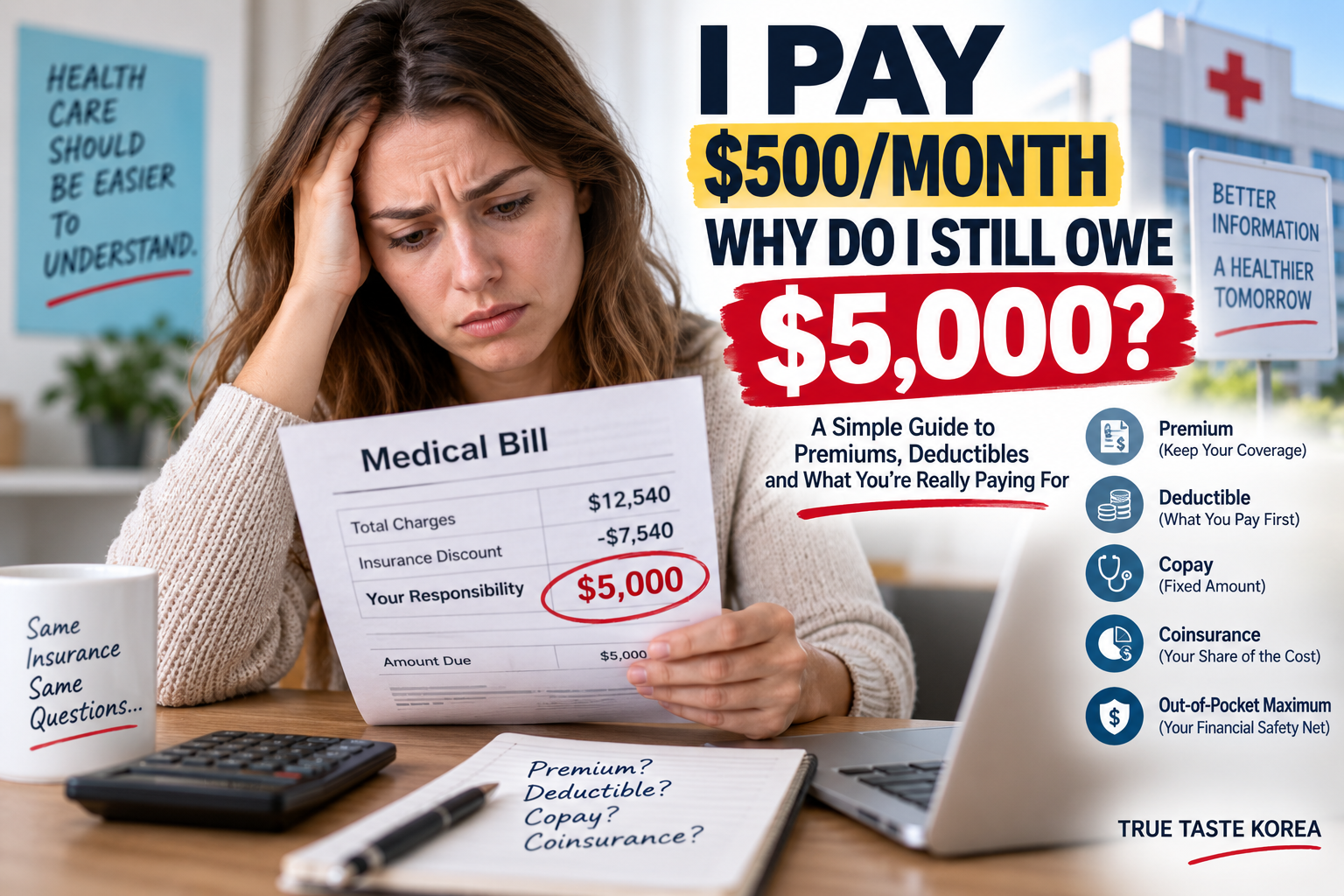
    If I Pay $500 a Month for Health Insurance, Why Do I Still Have a $5,000 Deductible?

    You pay $500 every month for health insurance.

    That is $6,000 a year before you even walk into a doctor’s office.

    Then you actually need medical care.

    And suddenly you discover something called a:

    $5,000 deductible.

    Wait.

    You already paid thousands of dollars for insurance.

    Now you’re being told you may have to pay thousands more before your insurance starts paying for many services?

    So what exactly were those monthly premiums paying for?

    If you’ve ever looked at your health insurance plan and thought:

    “This makes absolutely no sense.”

    You’re asking one of the most important questions in American health care.

    And the answer starts with understanding that your premium and deductible are two completely different costs.


    First: Your Premium Does NOT Pay Your Deductible

    This is the part that surprises many people.

    Your premium is what you pay to keep your health insurance active.

    Think of it like the membership fee.

    If your premium is $500 per month:

    $500 × 12 = $6,000 per year

    You may pay that amount even if you never visit a doctor.

    Your deductible, on the other hand, is an amount you may have to pay toward covered medical services before your insurance begins paying its share for many types of care.

    So yes:

    You can pay thousands of dollars in premiums…

    and still have a deductible of several thousand dollars.

    The premium generally does not count toward your deductible.

    And it generally does not count toward your out-of-pocket maximum either. CMS specifically explains that monthly premiums are excluded from the Marketplace out-of-pocket limit.

    That’s the first key to understanding the system.


    Then What Am I Paying $500 a Month For?

    This is the natural next question.

    If insurance doesn’t immediately pay every medical bill, why pay the premium at all?

    Because you’re not buying unlimited free health care.

    You’re buying financial protection against covered medical costs under the rules of your plan.

    Your insurance may provide:

    • negotiated in-network prices
    • preventive services covered without cost sharing when applicable
    • prescription drug benefits
    • copays for certain services
    • partial payment after the deductible
    • protection against very large covered medical expenses
    • an annual out-of-pocket maximum for covered in-network care, subject to plan rules

    That last item is especially important.

    Health insurance is partly designed to protect you from a catastrophic medical bill—not necessarily to make every doctor’s visit free.


    Here’s How the Money Actually Works

    Let’s make this simple.

    Imagine a hypothetical plan:

    Monthly premium: $500
    Annual premium: $6,000
    Deductible: $5,000
    Coinsurance: 20%
    Out-of-pocket maximum: $8,000

    These numbers are just an example.

    Now imagine you need expensive medical treatment.

    Stage 1: You Pay the Premium

    Every month:

    You pay $500.

    This keeps your insurance coverage active.

    That money is separate from your deductible.

    Stage 2: You Start Using Medical Care

    Depending on the service and your plan, you may pay costs until you’ve met the deductible.

    Suppose you eventually accumulate:

    $5,000 toward your deductible.

    Now you’ve met it.

    That doesn’t necessarily mean everything becomes free.

    Stage 3: Coinsurance May Begin

    Your plan might now pay, for example:

    80%

    while you pay:

    20%.

    That’s coinsurance.

    Stage 4: You Reach the Out-of-Pocket Maximum

    Once your eligible spending reaches your plan’s annual out-of-pocket maximum, the plan generally pays 100% of covered in-network benefits for the rest of the plan year, subject to the policy’s terms.

    For 2026 Marketplace plans, the federal maximum out-of-pocket limit can be as high as $10,600 for an individual and $21,200 for a family, although many plans have lower limits. Premiums do not count toward those limits.

    That’s why the out-of-pocket maximum may actually be one of the most important numbers on your insurance plan.


    Premium vs. Deductible vs. Copay vs. Coinsurance

    American health insurance becomes much easier to understand once you separate these four words.

    Premium

    The amount you pay to maintain your insurance coverage.

    Think:

    “My insurance membership fee.”

    Deductible

    The amount you generally pay toward certain covered services before your plan begins sharing those costs.

    Think:

    “The amount I may have to cover first.”

    Copay

    A fixed amount for a service.

    For example:

    $30 for a doctor visit.

    Depending on the plan, some copays may apply even before you’ve met your deductible.

    Coinsurance

    Instead of a fixed dollar amount, you pay a percentage.

    For example:

    Insurance pays 80%.

    You pay 20%.

    Out-of-Pocket Maximum

    This is the annual ceiling on what you pay for covered in-network services that count toward the limit.

    Think:

    “My financial safety net.”

    But remember:

    your premiums generally sit outside that ceiling.


    So Can I Really Pay $6,000 in Premiums AND Thousands More for Medical Care?

    Yes.

    That’s exactly why many Americans become frustrated with health insurance.

    Using our hypothetical example:

    Annual premiums:

    $6,000

    Potential covered medical cost sharing:

    up to the plan’s applicable out-of-pocket maximum

    Those are separate buckets.

    So a household can spend substantial money maintaining insurance and still face significant costs when someone actually becomes sick.

    And this isn’t just a theoretical concern.

    The latest comprehensive KFF employer survey available found that the average annual premium for employer-sponsored health insurance in 2025 reached:

    $9,325 for single coverage

    and:

    $26,993 for family coverage.

    Workers didn’t personally pay all of that—the employer typically paid a substantial share—but workers contributed an average of $6,850 toward family coverage.

    That’s roughly:

    $571 per month from the worker’s paycheck for family coverage.

    And that’s before considering many forms of cost sharing when health care is actually used.


    “My Employer Pays Part of My Insurance. Why Is It Still So Expensive?”

    Because the number deducted from your paycheck isn’t necessarily the full cost of your health insurance.

    This is one of the hidden features of employer-sponsored insurance.

    Suppose your paycheck shows:

    Health insurance: $500

    You might naturally think your insurance costs $500.

    But your employer may be paying another substantial amount behind the scenes.

    KFF found that the average total employer-sponsored family premium was nearly $27,000 in 2025.

    The employee contribution is only one portion of that total.

    This is why changing jobs—or losing employer coverage—can produce such a shocking realization about the full price of health insurance.


    Why Are Deductibles So High?

    There isn’t one universal reason.

    But there is an important tradeoff in insurance design:

    Lower premium → often higher deductible

    and

    Higher premium → often lower deductible

    Not always, but commonly.

    A high-deductible plan shifts more routine or initial medical spending to the patient while providing insurance protection against larger covered expenses.

    That can make the monthly premium cheaper than a more generous plan.

    For someone who rarely uses medical care, that tradeoff may look attractive.

    For someone who needs frequent treatment, prescriptions, specialists or planned surgery, it may look very different.


    High Deductibles Are Not Rare

    This isn’t an unusual corner of the American insurance market.

    KFF found that 88% of covered workers with single coverage in 2025 were enrolled in a plan with a general annual deductible.

    Among workers whose plans had a deductible, the average was:

    $1,886.

    And 34% of covered workers were enrolled in a plan with a general annual deductible of $2,000 or more for single coverage.

    Workers at smaller companies faced particularly high deductibles.

    For covered workers at firms with 10–199 employees, the average single deductible among plans with a deductible was:

    $2,631

    compared with:

    $1,670

    at larger employers.

    That’s a major difference.


    Deductibles Have Also Increased Over Time

    Here’s another reason people feel squeezed.

    Among covered workers with a general annual deductible, KFF reports that the average single deductible increased from:

    $1,320 in 2015

    to:

    $1,886 in 2025.

    That’s an increase of about 43% over ten years.

    So when Americans say:

    “I have insurance, but I still can’t afford to use it,”

    there is a real economic tension behind that complaint.

    Having insurance and having inexpensive access to medical care are not necessarily the same thing.


    “But I Thought Insurance Pays for Doctor Visits”

    It can.

    This is where things get complicated because plans differ.

    Some services may be covered before you meet your deductible.

    Certain preventive services can be covered without cost sharing under applicable rules.

    Your plan might also offer a doctor’s visit for a fixed copay even before you’ve met the full deductible.

    Prescription drugs may have separate rules.

    Emergency care may work differently.

    Specialists may work differently.

    That’s why saying:

    “I have a $5,000 deductible, so insurance pays absolutely nothing until I’ve spent $5,000”

    isn’t always accurate.

    You need to read your actual plan.


    The $10,000 Medical Bill That Doesn’t Necessarily Cost You $10,000

    Here’s another important benefit people overlook.

    Suppose a hospital’s sticker price for a service is:

    $10,000.

    Your insurer may have negotiated an allowed in-network price of:

    $6,000.

    Depending on your plan, your cost sharing is generally calculated using that negotiated structure rather than simply paying whatever sticker price appears on the original bill.

    This is one reason insurance can have value even before the insurer itself appears to be paying most of the bill.

    But there is an enormous warning attached:

    network status matters.

    Out-of-network care can operate under different rules and potentially expose patients to greater costs, depending on the circumstances and applicable protections.


    Why Doesn’t My Premium Count Toward My Out-of-Pocket Maximum?

    This is probably the part consumers dislike most.

    Because these are fundamentally different categories in the insurance contract.

    Premium:

    the cost of having coverage

    Out-of-pocket spending:

    your share of covered health-care expenses

    CMS explicitly says Marketplace monthly premiums don’t count toward the out-of-pocket limit.

    So imagine someone pays:

    $6,000 in annual premiums

    and also reaches:

    $8,000 in covered out-of-pocket costs

    in our hypothetical plan.

    Their total health-related insurance and cost-sharing spending could reach:

    $14,000

    before considering expenses the plan doesn’t cover.

    That’s why looking only at the monthly premium can be a huge mistake when choosing health insurance.


    The Cheapest Premium May NOT Be the Cheapest Health Plan

    This is one of the most important lessons in this article.

    Imagine two plans.

    Plan A

    Premium: $300/month
    Deductible: $6,000
    Out-of-pocket maximum: $9,000

    Plan B

    Premium: $500/month
    Deductible: $1,500
    Out-of-pocket maximum: $5,000

    Plan A looks cheaper when you look only at the paycheck deduction.

    But suppose you know you’ll need:

    regular specialist appointments,

    expensive medication,

    imaging,

    physical therapy,

    or surgery.

    Suddenly Plan B might produce lower total annual spending.

    The right question isn’t:

    “Which plan has the lowest premium?”

    It’s:

    “What could this plan cost me in total under the medical care I’m likely to use?”


    A Better Way to Compare Health Insurance

    Before choosing a plan, write down these numbers:

    1. Monthly premium
    2. Annual premium
    3. Deductible
    4. Copays
    5. Coinsurance
    6. Out-of-pocket maximum
    7. Prescription drug costs
    8. Network
    9. Employer HSA/HRA contribution, if any

    Then run three scenarios.

    Scenario A: Healthy Year

    Almost no medical care.

    How much do you spend?

    Scenario B: Normal Year

    Several doctor visits, prescriptions and maybe testing.

    How much do you spend?

    Scenario C: Very Bad Year

    Hospitalization, surgery or another major medical event.

    What’s the maximum financial damage?

    That third scenario is especially important.

    Insurance exists partly because nobody knows which year will become the bad year.


    Don’t Ignore an Employer HSA Contribution

    If you’re comparing high-deductible plans, check whether your employer contributes money to an HSA or HRA.

    This can materially change the calculation.

    KFF found that employer account contributions can offset a meaningful part of high deductibles for some workers. After accounting for employer HRA/HSA contributions, the share of covered workers effectively facing deductibles of $2,000 or more fell from 34% to 26% in its analysis.

    So don’t compare deductibles alone.

    A $3,000 deductible accompanied by a substantial employer contribution isn’t economically identical to a $3,000 deductible with no employer contribution.


    “So What Is My Health Insurance Actually Protecting Me From?”

    This may be the most useful way to think about it.

    Health insurance isn’t necessarily designed to eliminate every medical expense.

    It is designed to share covered costs and limit your exposure to potentially catastrophic covered medical expenses, subject to the terms of your plan.

    A $150 doctor’s visit is unpleasant.

    A $1,000 test is painful.

    But a serious illness or major accident can generate bills vastly larger than either.

    That’s when the difference between:

    uninsured

    and

    insured with an out-of-pocket limit

    can become financially enormous.

    The frustrating part is that Americans can still face substantial costs before reaching that protection.

    Both things can be true.


    Why Does Health Insurance Feel More Expensive Even When Your Employer Helps?

    Because households experience health-care costs in several different places.

    You see:

    money disappearing from every paycheck

    Then:

    the deductible

    Then:

    copays

    Then:

    coinsurance

    Then:

    prescription costs

    Because these charges arrive separately, it can feel like you’re paying for the same thing again and again.

    In reality, they’re different pieces of the same insurance cost-sharing system.

    That doesn’t make them cheap.

    But it explains why they exist simultaneously.


    Before Choosing Your 2027 Health Plan, Don’t Look Only at the Premium

    This is where understanding the system can save real money.

    During open enrollment, many people naturally look at one number:

    “How much comes out of my paycheck?”

    Don’t stop there.

    A plan that’s $100 cheaper per month saves:

    $1,200 per year in premiums.

    Great.

    But if it increases your deductible by $3,000 and your out-of-pocket maximum by $4,000, the cheaper premium may not be the cheaper choice for someone expecting significant medical care.

    Conversely, a healthy person with adequate savings might reasonably prefer a different cost structure.

    There is no universally cheapest plan.

    There is only a plan whose combination of premium + expected medical spending + financial risk fits you better.


    The Five Numbers You Should Find on Your Health Plan Today

    If you have health insurance but don’t really understand it, don’t try to read every page of the policy tonight.

    Start with five numbers:

    1. Monthly premium

    How much are you actually paying?

    2. Deductible

    How much could you need to pay before major cost sharing kicks in?

    3. Coinsurance

    After the deductible, what percentage might still be yours?

    4. Out-of-pocket maximum

    What’s your ceiling for eligible covered in-network expenses?

    5. Employer HSA/HRA contribution

    Is your employer giving you money that offsets some of that risk?

    Once you know those five numbers, your insurance becomes much easier to understand.


    Bottom Line

    So:

    If I pay $500 a month for health insurance, why do I still have a $5,000 deductible?

    Because the two payments serve different purposes.

    Your premium buys and maintains the insurance coverage.

    Your deductible determines how much you may need to spend on certain covered medical care before the plan begins sharing many of those costs.

    Then copays and coinsurance may apply.

    Finally, the out-of-pocket maximum limits eligible annual cost sharing for covered in-network services—but your monthly premiums generally don’t count toward that limit.

    And this isn’t a small issue.

    The latest comprehensive KFF employer survey found average family premiums approaching $27,000 per year, while millions of covered workers also face substantial deductibles.

    That’s why the question:

    “If I’m already paying so much for insurance, why am I paying again when I get sick?”

    isn’t foolish at all.

    It’s actually the question that unlocks how American health insurance works.

    The next time you compare plans, don’t ask only:

    “What’s the monthly premium?”

    Ask:

    “What could this insurance cost me in a good year—and what could it cost me in a terrible year?”

    That is the number that matters.

    This article is for general informational purposes only and is not medical, legal, insurance or financial advice. Health insurance benefits and rules vary by plan, employer and state.
  • Why Did My Car Insurance Go Up in 2026 Even With No Accidents or Tickets?

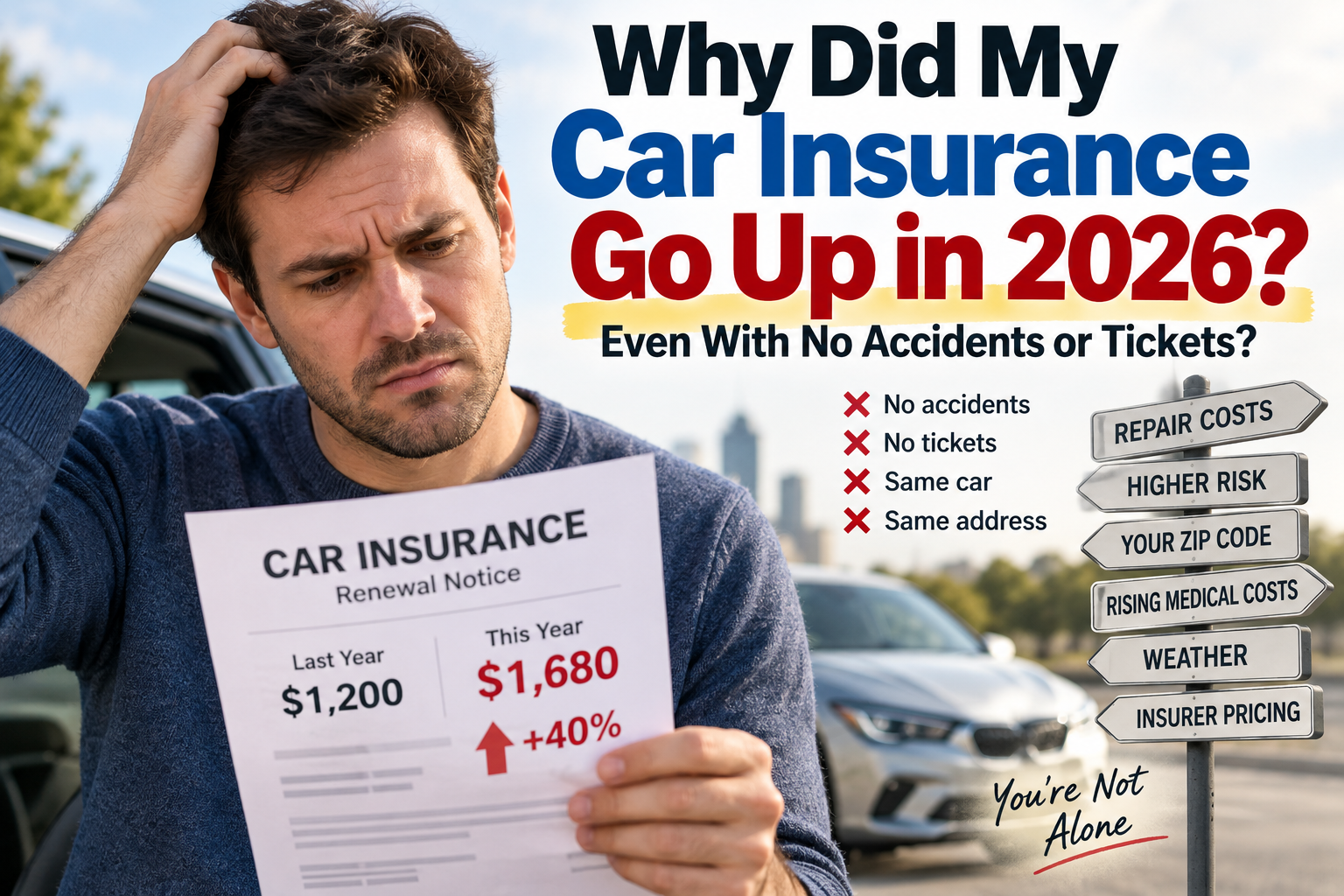
    Why Did My Car Insurance Go Up in 2026 Even With No Accidents or Tickets?

    You haven’t had an accident.

    You haven’t gotten a speeding ticket.

    You haven’t added a new car.

    You haven’t moved.

    Maybe you’ve even been with the same insurance company for years.

    Then your renewal notice arrives.

    And somehow, your car insurance costs more.

    So you ask the obvious question:

    Why did my car insurance go up in 2026 when I did nothing wrong?

    You’re not asking the wrong question.

    But here’s where things get strange.

    According to the latest available U.S. Bureau of Labor Statistics data, the national motor vehicle insurance index was actually 4.5% lower in July 2026 than a year earlier.

    So if car insurance prices are falling nationally…

    why did YOUR premium go up?

    That’s the real question.

    And the answer reveals something most drivers don’t realize about how auto insurance actually works.


    Your Driving Record Is Only One Part of Your Insurance Price

    Many drivers think car insurance works like this:

    Good driver = lower price.

    Bad driver = higher price.

    That’s partly true.

    Accidents, tickets and claims can absolutely affect what you pay.

    But your driving history is only one piece of a much larger calculation.

    Insurers may also consider factors such as:

    • where you live
    • the vehicle you drive
    • how expensive that vehicle is to repair
    • local accident and theft patterns
    • your annual mileage
    • other drivers on the policy
    • coverage levels and deductibles
    • state insurance rules
    • your age and driving experience
    • insurance history
    • credit-based insurance information where permitted
    • the insurer’s own claims experience and pricing model

    That’s why two people with perfectly clean driving records can receive dramatically different quotes.

    And it’s why your premium can rise even when you personally did nothing wrong.


    Reason No. 1: Cars Are Becoming More Expensive to Repair

    This may be one of the biggest pieces of the puzzle.

    Modern cars are essentially computers on wheels.

    A bumper isn’t always just a piece of plastic anymore.

    It may contain:

    cameras,

    radar,

    parking sensors,

    driver-assistance technology,

    and other electronics.

    A relatively minor collision can require not only replacing damaged parts but recalibrating sophisticated safety systems.

    And the latest BLS numbers show that these costs are still rising.

    In July 2026, motor vehicle maintenance and repair prices were 6.6% higher than a year earlier.

    Maintenance and servicing were up 7.3%, while motor vehicle repair was up 6.2%.

    That matters to your insurer.

    Because insurance isn’t only pricing the probability that you’ll crash.

    It’s also pricing:

    how expensive the crash could be.


    “But I Didn’t Crash My Car. Why Should I Pay More?”

    This is where insurance becomes frustrating.

    You aren’t buying a personal savings account.

    You’re participating in a risk pool.

    Imagine thousands of drivers insured by the same company in your area.

    Even if you don’t crash, the insurer may experience:

    more expensive repairs,

    more severe claims,

    higher medical costs,

    more theft,

    more weather-related damage,

    or higher liability payouts.

    Those costs can influence future rates.

    So the question insurance companies are trying to answer isn’t simply:

    “Did this driver have an accident last year?”

    It’s closer to:

    “How much risk does this policy represent going forward?”

    Those are very different questions.


    Reason No. 2: Your ZIP Code Can Matter More Than You Think

    You can be an excellent driver and still live in an expensive place to insure.

    Why?

    Because location affects risk.

    Your area may have:

    higher accident frequency,

    more vehicle theft,

    more vandalism,

    more uninsured drivers,

    more expensive repair shops,

    severe hail,

    flooding,

    or other weather risks.

    Move only a relatively short distance and insurance quotes can sometimes change.

    Your driving ability didn’t suddenly become worse.

    The risk surrounding the vehicle changed.


    Reason No. 3: The Car You Drive Matters Even If It’s Getting Older

    Here’s another question drivers often ask:

    “My car is older and worth less. Why isn’t my insurance getting cheaper?”

    Because the value of your own car is only part of the policy.

    Auto insurance can include several different types of protection, including collision, comprehensive, bodily injury liability, property damage liability, medical-related coverage and uninsured-motorist coverage, depending on the policy and state. BLS includes these major coverage categories when measuring motor vehicle insurance prices.

    Suppose you’re driving an old $5,000 car.

    You hit a $70,000 SUV.

    Or someone is seriously injured.

    The fact that your own vehicle is cheap doesn’t make those potential liability costs cheap.

    That’s why:

    “My car isn’t worth much anymore”

    doesn’t necessarily mean:

    “My insurance should be cheap.”


    Reason No. 4: Insurance Is About Other People’s Cars Too

    Look around an American parking lot today.

    Pickup trucks can cost tens of thousands of dollars.

    SUVs can be extremely expensive.

    Luxury vehicles can cost $80,000, $100,000 or much more.

    And even ordinary vehicles increasingly contain expensive electronics.

    Your liability insurance isn’t simply protecting your car.

    It’s protecting you financially if you’re responsible for damaging someone else’s property or injuring someone else.

    That means rising vehicle and repair costs across the entire road system can matter.

    You don’t have to own an expensive vehicle to be exposed to expensive vehicles.


    Reason No. 5: Medical Costs Can Make Accidents More Expensive

    The expensive part of a serious crash isn’t always the car.

    It can be the people.

    An accident may involve:

    ambulance services,

    emergency treatment,

    hospitalization,

    surgery,

    rehabilitation,

    lost income,

    and liability claims.

    BLS reported hospital service prices were 5.2% higher year over year in July 2026.

    That doesn’t translate directly into the same percentage increase in your car insurance.

    But it illustrates a broader problem:

    the financial consequences of serious accidents can be extremely expensive.


    Reason No. 6: Weather Can Raise Auto Insurance Risk Too

    Homeowners aren’t the only people affected by extreme weather.

    Cars get damaged by:

    hail,

    floods,

    falling trees,

    wildfires,

    hurricanes,

    and severe storms.

    One hailstorm can damage thousands of vehicles in a single metropolitan area.

    One flood can destroy entire parking lots full of cars.

    That’s why comprehensive insurance risk can change even for someone with a spotless driving record.

    You didn’t cause the storm.

    But your vehicle was still exposed to the risk.


    Then Why Does the Government Say Car Insurance Prices Are Falling?

    Now we get to the most interesting part.

    The latest BLS data show U.S. motor vehicle insurance prices down 4.5% year over year in July 2026.

    That sounds contradictory.

    But it isn’t.

    The BLS Consumer Price Index measures changes across a large national sample.

    It does not mean every driver’s individual premium fell 4.5%.

    Your insurance renewal is personal.

    It depends on your insurer, state, location, vehicle, coverage, household and risk profile.

    Think about home prices.

    If the national median home price falls, that doesn’t mean every house in every city became cheaper.

    Insurance works the same way.

    A national trend and your individual bill can move in opposite directions.

    And there’s another important piece of context.

    One year earlier, in August 2025, motor vehicle insurance prices were still 4.7% higher than the previous year, according to BLS.

    So 2026’s national decline comes after years in which many drivers experienced substantial increases.

    A decline in the rate index doesn’t magically erase the higher price level many households reached during previous increases.


    This Is the Difference Between “Prices Falling” and “Prices Returning to Normal”

    Imagine your insurance premium looked like this:

    2022: $1,200

    2023: $1,350

    2024: $1,550

    2025: $1,800

    Then prices stabilize or even decline somewhat.

    That doesn’t necessarily mean you’re going back to $1,200.

    This distinction matters throughout the economy.

    Inflation slowing doesn’t mean prices return to where they started.

    And an insurance index falling doesn’t guarantee your renewal notice will suddenly look cheap.


    Reason No. 7: Your Insurer May Simply Price You Differently Now

    Insurance companies don’t all calculate risk the same way.

    One insurer may desperately want customers like you.

    Another may be trying to reduce its exposure in your state, ZIP code or vehicle category.

    One company’s quote might be $1,500.

    Another might be $2,300.

    A third might be $3,000.

    Same driver.

    Same car.

    Same address.

    Different insurer.

    This is one reason staying loyal to the same insurance company indefinitely doesn’t automatically guarantee the best price.


    “I’ve Been With My Insurance Company for 15 Years. Shouldn’t That Make It Cheaper?”

    Maybe.

    But don’t assume loyalty always produces the lowest rate.

    Insurance pricing changes continuously.

    Your company may offer discounts for tenure or multiple policies.

    But competitors may use completely different pricing models.

    That’s why one of the most important things you can do after a large renewal increase is simple:

    Get competing quotes.

    You’re not required to accept your renewal price without checking the market.


    Reason No. 8: Adding a Teen Driver Can Be Extremely Expensive

    Parents often experience one of the biggest insurance shocks when a teenager starts driving.

    Why?

    Because insurers price risk partly based on driving experience and historical claims patterns.

    A newly licensed driver has very little driving history.

    That uncertainty can be expensive.

    So when parents say:

    “I added my teenager and my insurance exploded.”

    the increase isn’t necessarily about the family’s previous claims.

    It’s about the new risk being added to the policy.

    This is another example of why:

    “I haven’t had an accident”

    doesn’t tell the whole insurance story.


    Reason No. 9: Credit Can Affect Insurance Prices in Some States

    This surprises many drivers.

    Depending on the state, insurers may use credit-based insurance scores or related information when determining premiums.

    These aren’t necessarily identical to the credit score a lender uses to approve a mortgage or credit card.

    And state rules vary.

    Some states restrict or prohibit the practice.

    But where it is permitted, changes in credit-related information can potentially affect insurance pricing even when your driving record hasn’t changed.

    If your premium jumps unexpectedly, it’s worth asking your insurer exactly which factors contributed to the change.


    Reason No. 10: Coverage Changes Can Hide Inside the Renewal

    Don’t assume this year’s policy is identical to last year’s policy.

    Check it.

    Look at:

    liability limits,

    collision coverage,

    comprehensive coverage,

    deductibles,

    uninsured motorist coverage,

    rental coverage,

    roadside assistance,

    and other optional protections.

    A change in coverage can change the price.

    So when comparing your old bill with your new one, compare the policy, not just the premium.


    Why Does My Friend Pay Less Than Me?

    This question drives people crazy.

    Your friend:

    drives a newer car,

    lives nearby,

    and maybe even has a worse driving record.

    Yet somehow pays less.

    There may be dozens of differences.

    Different insurer.

    Different ZIP code.

    Different mileage.

    Different deductibles.

    Different liability limits.

    Different discounts.

    Different household drivers.

    Different insurance history.

    Different credit-related factors where allowed.

    Different vehicle safety and repair characteristics.

    Without comparing the complete policies, the two premiums aren’t necessarily comparable.


    Should You Drop Full Coverage on an Older Car?

    Sometimes this question is worth asking.

    If your vehicle has relatively little market value, paying a large amount for collision and comprehensive coverage may eventually stop making financial sense.

    But don’t confuse dropping optional physical-damage coverage with dropping legally required or financially important liability protection.

    Before changing coverage, ask:

    How much is the car worth?

    How much am I paying for collision and comprehensive?

    What is my deductible?

    Could I afford to replace the car myself tomorrow?

    If losing the car would create a financial crisis, dropping coverage purely to save a small amount could backfire.


    Should You Raise Your Deductible?

    A higher deductible can sometimes lower your premium.

    For example, moving from a $500 deductible to $1,000 means you’re accepting more of the initial loss yourself.

    The insurer takes less risk.

    The premium may fall.

    But don’t choose a deductible you couldn’t afford tomorrow.

    The purpose of insurance is to prevent a financial disaster.

    Saving a few dollars each month isn’t useful if a claim suddenly requires cash you don’t have.


    What Should You Do If Your Car Insurance Suddenly Goes Up?

    Don’t immediately cancel the policy.

    First, investigate.

    1. Compare the old and new policy

    Make sure the coverage hasn’t changed.

    2. Ask the insurer why

    Call and ask:

    “What factors caused my renewal premium to increase?”

    Don’t settle for “rates went up.”

    Ask specifically.

    3. Check for discounts

    Ask about:

    safe-driver discounts,

    low-mileage programs,

    multi-car discounts,

    home-and-auto bundling,

    automatic payment,

    defensive-driving programs,

    and other available discounts.

    4. Get several quotes

    This may be the most important step.

    Don’t assume your existing insurer remains the cheapest.

    5. Compare identical coverage

    A cheaper quote with much lower liability limits isn’t necessarily a better deal.

    6. Review your deductible

    If you have enough emergency savings, a higher deductible may reduce premiums.

    7. Check your annual mileage

    If you drive much less than you used to, tell your insurer.

    8. Review optional coverage on older vehicles

    Some coverage may no longer make economic sense.


    Don’t Make This Mistake When Shopping for Insurance

    Suppose your current policy costs $2,000.

    Another company offers $1,450.

    Fantastic?

    Maybe.

    Then you discover the cheaper policy has:

    lower liability limits,

    a much higher deductible,

    no rental coverage,

    and weaker protection.

    That’s not necessarily a $550 savings.

    You may simply be buying less insurance.

    When shopping, compare equivalent coverage as closely as possible.


    Could Car Insurance Become Cheaper Again?

    Possibly.

    And the July 2026 BLS data suggest that national insurance price pressure has already eased substantially compared with earlier periods.

    Competition among insurers can help.

    Safer vehicles can reduce some kinds of accidents.

    Improved anti-theft technology can reduce certain losses.

    Claims trends can improve.

    And insurers can adjust prices as conditions change.

    But there’s a competing force.

    Cars continue becoming technologically sophisticated and expensive to repair.

    The latest BLS data show vehicle maintenance and repair costs still rising significantly even while the motor vehicle insurance index is falling.

    That’s why the future probably won’t be as simple as:

    “Insurance inflation is over, so everyone’s bill goes down.”


    The Most Important Question Isn’t “Did I Have an Accident?”

    This is the mistake many drivers make.

    They open their renewal notice and think:

    I didn’t crash.

    I didn’t get a ticket.

    I didn’t file a claim.

    So why did my price change?

    Because insurers aren’t only looking backward.

    They’re estimating future risk.

    Your driving history matters.

    But so do the cost of cars around you, repair bills, medical expenses, your location, weather exposure, your vehicle, other drivers on the policy and the insurer’s own pricing strategy.

    That’s why a perfect driving record doesn’t freeze your premium forever.


    Bottom Line

    So why did your car insurance go up in 2026 even though you had no accidents or tickets?

    Because your driving record isn’t the only thing your insurance company is pricing.

    Your premium reflects a much larger risk environment.

    Vehicle repairs are expensive.

    Modern cars contain costly technology.

    Medical treatment can be expensive.

    Your ZIP code matters.

    Weather matters.

    Your vehicle matters.

    Other drivers on your policy matter.

    And your insurance company can change how it evaluates all of those risks.

    Here’s the strange part:

    The latest national data show motor vehicle insurance prices 4.5% lower year over year in July 2026, while vehicle maintenance and repair costs were 6.6% higher.

    So both of these statements can be true at the same time:

    Car insurance prices can be falling nationally.

    And:

    Your personal car insurance bill can still be going up.

    That’s the answer many frustrated drivers are looking for.

    And if your renewal suddenly jumped, perhaps the most useful question isn’t:

    “What did I do wrong?”

    It’s:

    “What changed in the risk my insurer is charging me for—and can another insurer price that risk differently?”

    This article is for general informational purposes only and is not insurance, legal or financial advice. Insurance rules, rating factors and available coverage vary by state and insurer.