Inflation

  • Why Are Americans Feeling Worse About the Economy While Stocks Keep Rising?

    Something strange is happening in the U.S. economy.

    American consumers are becoming increasingly pessimistic.

    The University of Michigan’s preliminary Consumer Sentiment Index fell to 47.8 in September 2026, down from 51.7 in August. Expectations for the future deteriorated even more sharply, while consumers’ expectations for inflation over the next year jumped from 4.0% to 4.6%.

    Yet Wall Street told a very different story.

    On Friday, the S&P 500, Nasdaq and Dow all rose more than 1%.

    So how can both things be true?

    Why can Americans feel increasingly worried about the economy while stocks continue to rise?

    The answer is surprisingly simple:

    The stock market and the average household are measuring two very different things.


    Americans Are Becoming More Worried About the Economy

    First, the numbers.

    The University of Michigan’s preliminary September survey showed:

    • Consumer Sentiment Index: 47.8
    • August reading: 51.7
    • Current Economic Conditions: 50.9
    • Consumer Expectations: 45.8

    The headline index is down 13.2% from September 2025.

    The particularly important number may be expectations.

    Consumers aren’t only unhappy about their current situation.

    They are becoming more worried about what comes next.

    The Expectations Index dropped from 51.5 in August to just 45.8 in September.

    Why?

    Two issues are hitting households particularly hard:

    fuel prices and inflation fears.

    University of Michigan survey director Joanne Hsu said renewed fuel-price pressures and trade tensions were leading consumers to expect more pressure on their finances.


    Inflation Is Back at the Center of the Problem

    The timing matters.

    U.S. consumer prices rose 0.4% in August, while annual CPI inflation stood at 3.4%.

    But consumers aren’t only reacting to the official inflation rate.

    They’re reacting to the prices they actually encounter.

    Gasoline.

    Food.

    Housing.

    Insurance.

    Car payments.

    Credit cards.

    Those expenses affect how wealthy—or poor—a household feels every month.

    And energy has become particularly painful.

    Oil prices surged during the week amid conflict in the Middle East before retreating on Friday. Brent crude had reached nearly $110 per barrel before pulling back toward $104.

    For a household filling its car every week, that isn’t an abstract economic statistic.

    It’s money disappearing from the checking account.


    But Why Are Stocks Rising?

    This is where the apparent contradiction begins to make sense.

    The stock market does not ask:

    “How comfortable does the average American household feel today?”

    Investors are asking different questions:

    How much money will companies earn?

    What will interest rates do next?

    Are inflation numbers better or worse than investors expected?

    What will happen six or twelve months from now?

    That distinction is crucial.

    On Friday, the CPI report wasn’t necessarily good for households.

    Inflation was still elevated.

    But it was close enough to market expectations that investors were relieved it wasn’t significantly worse.

    Reuters reported that U.S. stocks rose 1% or more after the inflation report, while Treasury yields retreated from their highs.

    In other words:

    Consumers can dislike an economic number while investors like the same number.


    Wall Street Trades Expectations, Not Happiness

    Imagine investors expect something terrible.

    Then something merely bad happens.

    Stocks can rise.

    Why?

    Because the result was:

    better than feared.

    This is one of the strangest things about financial markets for people who don’t follow them every day.

    A headline might say:

    “Inflation rises.”

    And stocks rise.

    Another headline might say:

    “Company profits increase.”

    And the stock falls.

    The reason is expectations.

    If investors had already expected inflation to be even worse, a less-bad inflation report can create relief.

    If investors expected a company’s earnings to rise 30%, a 20% increase can disappoint them.

    Markets constantly compare reality with expectations.

    Households don’t.

    A family doesn’t care whether gasoline prices were “better than Wall Street expected.”

    They care about how much it costs to fill the tank.


    The Federal Reserve Makes the Divide Even More Complicated

    There’s another important factor:

    interest rates.

    August’s inflation report increased expectations that the Federal Reserve could raise rates at its next meeting.

    Markets were pricing roughly an 85% probability of a quarter-point rate increase following the CPI report, according to Reuters.

    Higher interest rates can hurt households through:

    • mortgages,
    • auto loans,
    • credit cards,
    • business borrowing,
    • and other forms of debt.

    But financial markets think several moves ahead.

    Investors don’t only ask whether rates will rise next week.

    They ask:

    What happens after that?

    Will inflation cool?

    Will the Fed stop hiking?

    Will corporate earnings remain strong?

    Will oil prices fall?

    Will economic growth survive?

    That’s why stock prices can move in a direction that seems completely disconnected from today’s household experience.


    The Stock Market Is Not the U.S. Economy

    This is probably the most important point.

    People often use the stock market as shorthand for “the economy.”

    They’re not the same thing.

    The U.S. economy includes hundreds of millions of people, millions of businesses, workers, renters, homeowners and consumers.

    The stock market represents the expected value of publicly traded companies.

    And the largest companies have an enormous influence on major indexes.

    A household struggling with groceries and gasoline can therefore coexist with a highly profitable technology company.

    Both realities can be true simultaneously.

    Wall Street can be doing well while Main Street feels terrible.


    There Is Also a Wealth Divide

    Stocks don’t benefit everyone equally.

    Americans who own significant stocks through brokerage accounts, retirement plans or other investments can benefit when markets rise.

    Someone without meaningful financial assets doesn’t receive that benefit.

    They may experience:

    higher groceries + higher gasoline + expensive housing + expensive borrowing

    without receiving much of the upside from:

    rising stocks.

    That helps explain why a booming market doesn’t automatically produce booming consumer confidence.

    For some households, a rising S&P 500 may increase their wealth.

    For others, it is little more than a headline.


    Why Consumer Sentiment Matters Anyway

    It would be easy to dismiss consumer sentiment as simply a survey of people’s feelings.

    That would be a mistake.

    Consumer spending is an enormous part of the U.S. economy.

    If people become worried enough about their finances, they may eventually change their behavior.

    They may postpone:

    a new car,
    a vacation,
    a home renovation,
    a major appliance,
    or other discretionary purchases.

    If millions of households make those decisions simultaneously, weaker sentiment can eventually become weaker spending.

    And weaker spending can eventually affect corporate profits.

    That’s where the two worlds can reconnect.

    Wall Street can ignore unhappy consumers for a while.

    It cannot ignore them forever if they stop spending.


    What Could Eventually Make Stocks Fall?

    The current gap between consumer anxiety and stock prices doesn’t necessarily continue indefinitely.

    Several things could bring the two closer together.

    1. Consumers actually reduce spending

    Feeling pessimistic is one thing.

    Changing spending behavior is another.

    If retail sales and discretionary spending weaken materially, corporate earnings could suffer.

    2. Oil stays expensive

    Energy affects almost everything.

    Transportation costs rise.

    Businesses pay more.

    Consumers have less money available for other purchases.

    Persistent high oil prices could therefore hit both households and corporate profits.

    3. Interest rates remain high

    The benchmark 10-year U.S. Treasury yield recently approached 5%, a level closely watched by investors.

    High bond yields can make borrowing more expensive and also make bonds more attractive compared with stocks.

    4. Corporate earnings weaken

    Ultimately, earnings remain one of the strongest supports for stock prices.

    If companies continue producing strong profits, markets can remain resilient even when consumers are unhappy.

    But if consumer weakness finally reaches company earnings, investors may react very differently.


    So Is Wall Street Wrong or Are Consumers Wrong?

    Probably neither.

    They’re answering different questions.

    Consumers are saying:

    “My life feels more expensive, and I’m worried it will get worse.”

    Investors are saying:

    “Given everything we already expected, what are companies likely to earn in the future?”

    Those statements do not contradict each other.

    And that’s the key to understanding the strange U.S. economy of 2026.

    The economy can simultaneously contain:

    strong companies,
    rising stocks,
    high borrowing costs,
    persistent inflation,
    and unhappy consumers.


    The Number to Watch Next

    One number will be particularly interesting from here:

    consumer spending.

    Consumer sentiment tells us how people feel.

    Spending tells us what they do.

    If Americans continue spending despite their pessimism, the disconnect between Wall Street and household sentiment could continue.

    But if deteriorating confidence finally causes consumers to pull back significantly, the story could change.

    Because eventually:

    lower spending → weaker company revenue → weaker earnings

    can reach Wall Street too.

    That’s when today’s strange disconnect could start disappearing.


    Final Takeaway

    So why are Americans feeling worse about the economy while stocks keep rising?

    Because households and Wall Street experience the economy differently.

    Consumers feel the economy through:

    gas prices, groceries, rent, mortgages, wages and monthly bills.

    Investors view it through:

    earnings, interest rates, expectations and future growth.

    Right now, those two perspectives are pointing in different directions.

    September’s consumer sentiment reading of 47.8 shows just how worried households have become.

    Meanwhile, stocks can still rise when economic data is merely better than investors feared.

    But there’s one question worth watching:

    What happens if worried Americans finally stop spending?

    That’s when Main Street’s pessimism could become Wall Street’s problem.
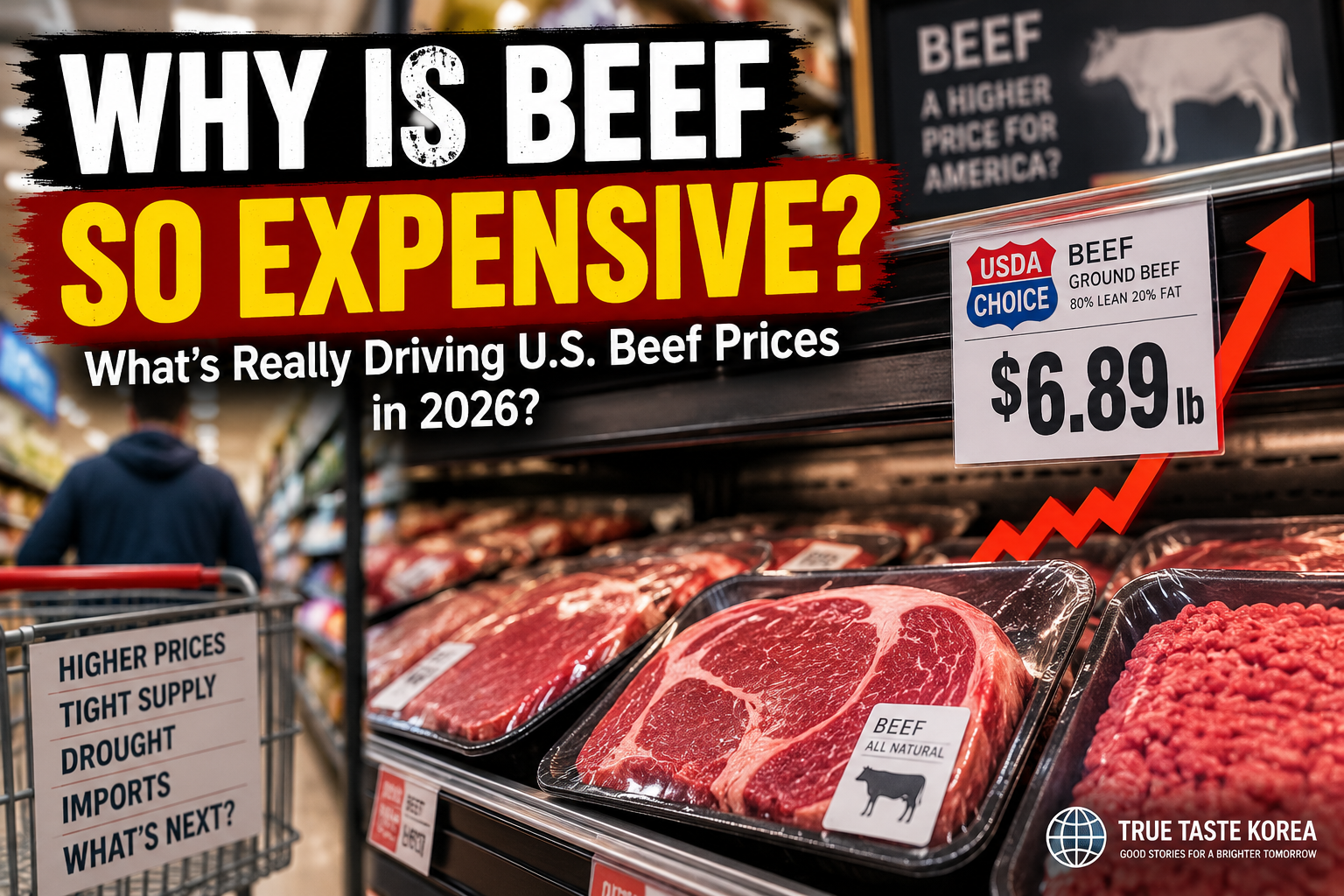
  • Why Is Beef So Expensive in 2026? What’s Really Driving U.S. Beef Prices

    Why Is Beef So Expensive in 2026? What’s Really Driving U.S. Beef Prices

    If you’ve recently stood in the meat aisle wondering when beef became a luxury item, you’re not alone.

    Ground beef that once felt like an affordable weeknight staple is becoming noticeably more expensive. Steaks, roasts and popular cuts are putting even more pressure on grocery budgets.

    And many Americans are asking the same question:

    Why is beef so expensive in 2026?

    The simple answer is that America doesn’t have enough cattle.

    But the full story is more complicated.

    A historically small U.S. cattle herd, years of drought, expensive feed and operating costs, restrictions on Mexican cattle, strong consumer demand and questions about competition in the meat industry have all collided at the same time.

    The federal government is now taking action, including expanding beef imports and investigating pricing practices.

    Here’s what’s really happening to America’s beef supply—and why prices may not return to the levels consumers remember anytime soon.

    Beef Prices Have Become a Major Grocery-Bill Problem

    Americans aren’t imagining the increase.

    Beef prices have remained near record levels in 2026, turning one of America’s most familiar foods into an increasingly expensive purchase.

    Earlier this year, average ground beef prices were already well above $6 per pound nationally, while many steak cuts were considerably more expensive.

    By late summer, ground beef prices were approaching $7 per pound on average, with consumers in some cities paying substantially more.

    The price shock is beginning to change shopping behavior.

    Some consumers are buying less beef, waiting for sales or replacing it with chicken, turkey or pork.

    That matters because Americans tolerated rising beef prices surprisingly well for a long time.

    Now there are signs that consumers may finally be reaching their limit.

    The Biggest Reason: America Has Far Fewer Cattle

    The most important number in the entire beef-price story isn’t the price of steak.

    It’s the number of cattle in America.

    The U.S. cattle herd has fallen to its lowest level in roughly 75 years.

    That is an extraordinary supply problem for a country with enormous demand for beef.

    Several difficult years pushed ranchers to reduce their herds.

    When drought damages pasture, ranchers have less grass available for cattle.

    They then have two choices:

    Buy increasingly expensive feed

    or

    sell some of their cattle.

    Many ranchers chose—or were forced—to reduce their herds.

    The problem is that once breeding cows are sold, America’s cattle supply cannot simply be switched back on.

    Why Can’t Ranchers Just Produce More Cattle?

    This is one of the biggest differences between beef and many manufactured products.

    If demand for smartphones suddenly increases, a manufacturer may be able to increase production relatively quickly.

    Cattle don’t work that way.

    A rancher must retain breeding females rather than sending them to market.

    Those cows must become pregnant.

    A calf must be born.

    Then the animal must grow for many months before entering the beef supply chain.

    Rebuilding a national cattle herd therefore takes years, not months.

    And there’s an uncomfortable short-term effect.

    When ranchers begin rebuilding, they keep more female cattle for breeding instead of sending them to slaughter.

    That can actually reduce the amount of beef available to consumers before supply eventually improves.

    In other words:

    Rebuilding the herd can initially make the beef shortage worse.

    Drought Started a Chain Reaction

    Drought has played a major role in shrinking America’s cattle herd.

    Cattle production depends heavily on pasture.

    When rainfall is inadequate:

    grass production falls → hay becomes scarcer → feed costs increase → ranchers reduce herds.

    This isn’t simply a weather story.

    It becomes an economics story.

    If it costs too much to maintain a cow relative to what the rancher expects to earn, keeping that animal no longer makes financial sense.

    Years of difficult conditions across important cattle-producing regions accelerated herd liquidation.

    And once those animals disappear from the breeding population, rebuilding takes time.

    Ranchers Are Paying More Too

    Consumers may see expensive beef and assume ranchers must be making enormous profits.

    The reality is more complicated.

    Cattle producers face their own rising costs, including:

    • feed
    • hay
    • fuel
    • labor
    • equipment
    • land
    • veterinary care
    • transportation
    • insurance
    • financing

    Higher interest rates are particularly important.

    Ranching is capital intensive.

    Farmers and ranchers often finance land, equipment, cattle and operating expenses.

    Higher borrowing costs make expanding a herd more expensive precisely when America needs ranchers to expand production.

    That’s one reason high supermarket prices don’t automatically translate into easy profits for producers.

    There’s Another Problem: Mexican Cattle

    The U.S. cattle market normally doesn’t operate in isolation.

    Mexico is an important supplier of live cattle to the United States.

    But the spread of the New World screwworm, a dangerous livestock parasite, has forced the U.S. to restrict cattle movements from Mexico as authorities work to prevent the pest from spreading.

    That matters because imported Mexican cattle normally supplement domestic supply.

    When those animals don’t enter the U.S. market, an already tight cattle supply becomes even tighter.

    The government has been working toward phased reopening of southern cattle ports, but animal-health concerns complicate the process.

    Protecting the domestic herd from disease is essential.

    But economically, restrictions can reduce available supply.

    Why Doesn’t America Just Import More Beef?

    That’s exactly what the government is trying to do.

    The United States is simultaneously one of the world’s biggest beef producers, consumers and importers.

    Imports are particularly important for ground beef.

    American consumers eat enormous quantities of hamburgers, but the U.S. beef system produces large amounts of fatty beef trimmings.

    Processors blend those with imported lean beef to produce the ground-beef mixtures consumers expect.

    With domestic supplies tight, policymakers have moved to expand access to imported lean beef.

    In August 2026, the administration announced additional measures intended to increase beef imports and lower consumer prices.

    Up to 300,000 metric tons of additional lean beef imports have been targeted for lower-tariff access.

    The goal is simple:

    More supply → more competition → lower prices.

    But ranchers are pushing back.

    Why American Ranchers Don’t Like the Import Solution

    From the consumer’s perspective, cheaper imported beef sounds straightforward.

    From a rancher’s perspective, it isn’t.

    American cattle producers have endured years of drought, high costs and difficult market conditions.

    Now that cattle prices are finally strong enough to encourage herd rebuilding, a large influx of cheaper foreign beef could push cattle prices lower.

    That creates a potential contradiction.

    The government wants to lower beef prices today.

    But America also needs ranchers to invest money in producing more cattle for tomorrow.

    If cattle prices fall too far, ranchers may have less incentive to expand their herds.

    That could prolong the underlying supply problem.

    This is why beef policy has become surprisingly complicated.

    Consumers want lower prices.

    Ranchers need profitable prices.

    And policymakers need both.

    Why Is the Justice Department Investigating Beef Prices?

    The supply shortage isn’t the only issue attracting attention.

    In September 2026, the U.S. Department of Justice expanded an investigation into beef pricing to include major retailers.

    The investigation reportedly includes companies such as Walmart, Costco and Amazon.

    The government is examining whether pricing practices and competition in the beef supply chain are contributing to unusually high consumer prices.

    This does not mean investigators have established that retailers illegally caused high beef prices.

    An investigation is not proof of wrongdoing.

    But it highlights a long-running concern in America’s meat industry:

    market concentration.

    A relatively small number of large companies process a significant share of American beef.

    Critics argue that greater competition could improve prices for both ranchers and consumers.

    The industry has disputed claims that concentration is primarily responsible for high retail beef prices.

    The current investigation could therefore become important in determining how much of today’s price problem comes from cattle shortages—and how much may involve the structure of the supply chain.

    If Beef Is So Expensive, Why Aren’t Farmers Getting Rich?

    This may be the most interesting question in the entire story.

    The price consumers pay at a supermarket is not the same as the price a rancher receives for cattle.

    Between ranch and grocery store are:

    cattle auctions → feedlots → processors → packing plants → transportation → wholesalers → retailers.

    Each stage has costs and margins.

    So a $7 package of ground beef doesn’t mean $7 goes back to the rancher.

    That’s why consumers can simultaneously complain:

    “Beef is unbelievably expensive.”

    while ranchers complain:

    “We’re not receiving enough of the retail price.”

    Both statements can be true.

    Why Is Chicken Still Cheaper?

    This explains something many shoppers are noticing.

    Beef prices have risen much faster than many chicken products.

    The biological production cycles are completely different.

    A chicken can reach market weight in a matter of weeks.

    A cow requires dramatically more time, land, feed and capital.

    If chicken demand rises, producers can respond relatively quickly.

    If beef demand rises while America’s cattle herd is historically small, producers cannot create millions of additional cattle within a few months.

    This makes beef supply much less flexible.

    It also explains why shoppers trying to reduce grocery bills are increasingly switching proteins.

    Americans May Finally Be Buying Less Beef

    For much of the recent price surge, American consumers kept buying beef.

    That’s one reason prices could continue climbing.

    But that may be changing.

    Recent retail data indicate beef sales volumes have begun weakening while chicken consumption continues to grow.

    That’s economically significant.

    Economists call this demand destruction.

    There is eventually a price at which consumers say:

    “That’s too expensive. I’ll buy something else.”

    For one shopper that might mean switching from ribeye to ground beef.

    For another it means replacing beef with chicken.

    Another family may simply eat meat less frequently.

    If enough consumers change their behavior, retailers and suppliers eventually face pressure to stop raising prices.

    Will Beef Prices Go Down in 2026?

    Consumers shouldn’t expect a quick return to the beef prices of several years ago.

    The fundamental supply problem hasn’t disappeared.

    The cattle herd remains historically small, and rebuilding it takes years.

    The U.S. Department of Agriculture expects domestic beef production to decline in 2026 compared with 2025.

    Additional imports could provide some relief.

    Weaker consumer demand could also limit further price increases.

    Improved weather could help ranchers rebuild their herds.

    But none of those factors instantly creates millions of additional U.S. cattle.

    That means the more realistic near-term outcome may be slower price growth or stabilization, rather than a dramatic collapse in beef prices.

    Could Beef Stay Expensive Until 2028?

    Possibly.

    The biological timeline of cattle production is why some agricultural analysts believe meaningful supply relief may take several years.

    Consider the sequence:

    2026: Ranchers begin retaining breeding animals.

    2027: More calves are born and the herd gradually expands.

    2027–2028: Those animals move through the production cycle.

    2028 and beyond: Larger supplies can begin reaching consumers more meaningfully.

    This isn’t a precise forecast.

    Weather, feed costs, imports, consumer demand and government policy can all change the timeline.

    But it illustrates why solving America’s beef shortage isn’t a one-season problem.

    What Could Make Beef Prices Fall Faster?

    Several developments could help.

    1. More beef imports

    Additional lean beef imports could increase supply, particularly for ground beef.

    2. Better weather

    Improved pasture conditions would reduce pressure on ranchers and make herd rebuilding easier.

    3. Lower feed costs

    Cheaper feed improves the economics of raising cattle.

    4. Lower interest rates

    Reduced financing costs could make herd expansion more affordable.

    5. Lower consumer demand

    If enough Americans switch to chicken, pork or other proteins, beef sellers may lose pricing power.

    6. More processing competition

    If government investigations lead to structural changes that increase competition, some costs or margins in the supply chain could change.

    But none of these guarantees dramatically cheaper beef.

    What Can Consumers Do Right Now?

    Until supply improves, shoppers may need to become more strategic.

    Instead of abandoning beef entirely, consumers can compare price per pound and substitute cuts.

    For example:

    Expensive steak → chuck steak or roast

    Premium ground beef → larger value packs

    Beef several nights a week → alternate with chicken, pork, turkey, eggs or beans

    Consumers can also buy larger packages during promotions and freeze portions for later use.

    And one simple rule matters more than ever:

    Compare price per pound, not package price.

    A smaller package can look cheaper while actually costing considerably more per pound.

    Is Beef Becoming a Luxury Food?

    Probably not in the literal sense.

    America still produces and consumes enormous quantities of beef.

    But consumer behavior is clearly changing.

    A ribeye dinner that once felt routine may become an occasional purchase.

    Ground beef may remain a staple but appear less frequently on some household menus.

    That’s an important distinction.

    Beef isn’t disappearing.

    But Americans may be moving from:

    “What beef should we buy?”

    to:

    “Should we buy beef this week?”

    For the industry, that’s a major change.

    The Bigger Story Behind America’s Beef Prices

    The beef-price crisis is a useful reminder that food inflation isn’t just a number reported in the Consumer Price Index.

    Behind a supermarket price are years of decisions involving:

    weather, cattle breeding, feed, financing, disease, international trade, meat processing, transportation and consumer demand.

    The hamburger sitting in a grocery-store cooler today began its economic journey years ago.

    That’s why beef prices can rise quickly but take much longer to come back down.

    Bottom Line

    So why is beef so expensive in 2026?

    There isn’t one culprit.

    America is dealing with a historically small cattle herd after years of drought and herd reductions. Ranchers face high production and financing costs. Restrictions on Mexican cattle have tightened supply further, while American demand for beef has remained remarkably strong.

    The federal government is responding with increased imports, support for ranchers and greater scrutiny of pricing and competition in the meat industry.

    But the central problem remains biological:

    America needs more cattle—and cattle take years to produce.

    That means consumers hoping for dramatically cheaper steaks and ground beef may need patience.

    Prices could stabilize.

    Imports could provide relief.

    Consumers may shift toward cheaper proteins.

    But rebuilding America’s beef supply will take much longer than changing the price tag at the grocery store.

    This article is for informational purposes only. Prices, trade policies and agricultural forecasts can change.