Hyun Bin

  • Is Hwang Dae-sik Chun Doo-hwan? The Real History Behind Made in Korea Season 2

    If you are watching Made in Korea Season 2, one new character may immediately raise a question:

    Is Hwang Dae-sik supposed to be Chun Doo-hwan?

    Hwang Dae-sik, played by Heo Jung-do, is the commander of the Defense Security Command and quickly emerges as one of the most important military power players after the assassination of President Park Chung-hee.

    That sounds very familiar to anyone who knows South Korean history.

    In real life, the commander of the Defense Security Command in 1979 was Chun Doo-hwan, the general who would soon seize control of the military and eventually become president of South Korea.

    So is Hwang Dae-sik simply Chun Doo-hwan with a different name?

    The answer is more complicated.

    Hwang Dae-sik is a fictional character, and the drama has not officially identified him as Chun Doo-hwan.

    However, his position and the historical moment surrounding him create obvious parallels with the real general.

    Understanding those parallels makes Season 2 much easier — and much more interesting — to follow.

    Who Is Hwang Dae-sik in Made in Korea Season 2?

    Hwang Dae-sik is played by actor Heo Jung-do.

    He is introduced as a major general and commander of the Defense Security Command, a powerful military intelligence organization.

    Before President Park’s death, Hwang is already positioned close to political power.

    But after the president is assassinated, the balance of power suddenly changes.

    Instead of simply reacting to the crisis, Hwang begins calculating how the new political situation can work in his favor.

    This is important.

    Season 2 is no longer only about Baek Ki-tae’s personal ambition.

    A new source of power is emerging.

    The military.

    And Hwang Dae-sik stands at its center.

    Why Do Viewers Think Hwang Dae-sik Is Chun Doo-hwan?

    The biggest reason is his job.

    Season 2 begins its main historical story on October 26, 1979, when President Park Chung-hee was assassinated.

    At that time in real Korean history, Chun Doo-hwan was commander of the Defense Security Command.

    Hwang Dae-sik holds essentially that same position within the fictional story.

    That alone creates a very strong historical association.

    But there is more.

    After Park’s assassination, the investigation became one of the most important sources of political power in South Korea.

    In the real history, Chun Doo-hwan became chief of the Joint Investigation Headquarters investigating the assassination.

    That gave him enormous influence.

    And only weeks later, on December 12, 1979, Chun and allied military officers would move against the existing military leadership and seize control of key military forces.

    Made in Korea Season 2 takes place precisely during the period leading toward that moment.

    So when viewers see Hwang Dae-sik gaining power after October 26, the historical parallel is difficult to ignore.

    But Hwang Dae-sik Is Not Officially Chun Doo-hwan

    This distinction is important.

    Director Woo Min-ho has explained that Made in Korea Season 2 approaches real historical events through fictional characters around those events.

    That is different from making a direct biographical drama.

    The series uses real history as its framework.

    President Park Chung-hee’s assassination is real.

    The KCIA is real.

    The Defense Security Command is real.

    The political chaos following October 26 is real.

    The coming December 12 military insurrection is real.

    But characters such as Baek Ki-tae and Hwang Dae-sik are allowed to operate inside that history as fictional players.

    That gives the drama freedom to change alliances, create confrontations and imagine events that were never recorded in actual history.

    So it would be misleading to say:

    “Hwang Dae-sik is Chun Doo-hwan.”

    A better way to describe him is:

    Hwang Dae-sik is a fictional military figure occupying a historical position that strongly evokes Chun Doo-hwan.

    Who Was Chun Doo-hwan in 1979?

    For international viewers unfamiliar with modern Korean history, this part is essential.

    Chun Doo-hwan was a South Korean Army major general in 1979.

    He commanded the Defense Security Command.

    After President Park Chung-hee was assassinated on October 26, Chun became deeply involved in the investigation through the Joint Investigation Headquarters.

    That placed him in an extraordinarily powerful position.

    South Korea suddenly had a political vacuum.

    Park Chung-hee, who had dominated the country for nearly two decades, was dead.

    The KCIA had been thrown into crisis because its own director, Kim Jae-gyu, had assassinated the president.

    Political leaders were uncertain.

    The military leadership was divided.

    And different institutions began competing over what would happen next.

    Chun Doo-hwan emerged from this chaos as one of the most powerful figures.

    Then came December 12, 1979.

    What Happened on December 12?

    On December 12, Chun Doo-hwan and military officers aligned with him moved against the established military leadership.

    The event is commonly known as the December 12 military insurrection.

    Chun’s faction seized key military positions and dramatically increased its control over the armed forces.

    It became a crucial step in Chun’s rise to national power.

    This is why the timeline of Made in Korea Season 2 matters so much.

    Director Woo Min-ho has explained that the season’s central story begins on October 26 and runs until just before December 12.

    In other words:

    The audience knows where real history is heading.

    The fictional characters do not.

    And Hwang Dae-sik is standing exactly where one of the most consequential figures in that real history once stood.

    Why Doesn’t the Drama Just Call Him Chun Doo-hwan?

    Because Made in Korea is doing something different from a straightforward historical drama.

    If Hwang Dae-sik were literally Chun Doo-hwan, the writers would be heavily constrained by historical records.

    They would have to consider:

    What did Chun actually do?

    Where was he on a particular date?

    Who did he meet?

    What orders did he give?

    What could reasonably be attributed to him?

    A fictional character removes many of those restrictions.

    Hwang Dae-sik can fight Baek Ki-tae.

    He can make fictional deals.

    He can betray fictional characters.

    He can participate in conversations that never happened.

    And most importantly, the writers can change his personal motivations while still placing him inside a recognizable historical power structure.

    The viewer gets the tension of real history without requiring every character to be a direct recreation of a real person.

    This Is Also Why Baek Ki-tae Can Exist

    The same storytelling method applies to Hyun Bin’s character.

    Baek Ki-tae is not presented as a literal historical KCIA official whose biography the series is recreating.

    He is a fictional intelligence operative inserted into real events.

    Director Woo Min-ho has explained the basic historical imagination behind Season 2.

    After the KCIA director assassinated the president, power in actual history shifted toward the Joint Investigation Headquarters.

    Woo asked a fascinating question:

    Would the KCIA really have simply done nothing?

    He imagined that people within the intelligence agency might have attempted to fight back.

    And then he imagined Baek Ki-tae leading that counterattack.

    That fictional premise creates the central power struggle of Season 2.

    Baek Ki-tae vs. Hwang Dae-sik Is Bigger Than Two Men

    This is why their conflict matters.

    On the surface, it can look like another confrontation between two ambitious men.

    But underneath it lies something much larger:

    KCIA vs. military power.

    Baek Ki-tae represents an intelligence establishment fighting to preserve and expand its influence.

    Hwang Dae-sik represents a military power structure becoming increasingly important after the president’s death.

    The audience already knows which institution gained the upper hand in real history.

    That creates dramatic irony.

    Baek Ki-tae may believe he can defeat Hwang Dae-sik.

    He may believe he can manipulate the chaos.

    But viewers who know what happened on December 12 understand that history is moving toward military domination.

    That makes every confrontation between the two more dangerous.

    Hwang Dae-sik’s Appearance May Be Deliberate Too

    Actor Heo Jung-do underwent a striking physical transformation for the role.

    His shaved head and military appearance immediately distinguish Hwang from many of the other characters.

    But the important thing is not whether the actor physically resembles Chun Doo-hwan.

    The stronger connection comes from position, timing and power.

    Hwang is a major general.

    He commands military intelligence.

    The president is assassinated.

    He gains influence through the investigation.

    And the story is moving toward December 12.

    Those narrative choices matter far more than physical resemblance.

    The Connection to 12.12: The Day

    There is another reason international viewers may recognize this history.

    The Korean film 12.12: The Day dramatized the military confrontation surrounding December 12, 1979.

    That movie also used fictionalized names for characters inspired by historical figures.

    Its character Chun Doo-gwang, played by Hwang Jung-min, clearly represents Chun Doo-hwan.

    Made in Korea Season 2 takes a somewhat different approach.

    Hwang Dae-sik’s name is not an obvious variation of Chun Doo-hwan’s name.

    That creates more distance between the fictional character and the historical figure.

    Still, both works occupy connected historical territory.

    Director Woo Min-ho himself has recommended 12.12: The Day to viewers interested in what historically happens around the point where Season 2’s story approaches its end.

    So there is an interesting way to think about the two works:

    Made in Korea Season 2 shows the political chaos moving toward December 12.

    12.12: The Day shows the military confrontation that erupts on December 12.

    They are separate fictional works, but understanding one can make the historical background of the other easier to follow.

    Woo Min-ho Has Explored This Period Before

    This is also not the first time director Woo Min-ho has explored the final days of the Park Chung-hee era.

    He directed The Man Standing Next, which focused on the political world surrounding Park Chung-hee and the events leading to his assassination.

    But Made in Korea Season 2 approaches the same historical era differently.

    Woo has explained that works such as The Man Standing Next focused more directly on people deeply involved in historical events.

    Made in Korea, by contrast, looks at those events through fictional characters positioned around them.

    That distinction explains characters like Hwang Dae-sik.

    He can resemble a real historical power player without being restricted to becoming that person.

    So, Is Hwang Dae-sik Really Chun Doo-hwan?

    The most accurate answer is:

    No — not officially.

    There is no confirmed statement identifying Hwang Dae-sik as a direct portrayal of Chun Doo-hwan.

    But the historical parallels are unmistakable.

    Both occupy the position of Defense Security Command chief during the political chaos of 1979.

    Both stand at the center of growing military power after President Park Chung-hee’s assassination.

    And Season 2 is deliberately moving toward December 12 — the historical event that transformed Chun Doo-hwan’s position.

    So rather than asking whether Hwang Dae-sik is Chun Doo-hwan, the more interesting question may be:

    How much of Chun Doo-hwan’s historical role has been built into Hwang Dae-sik?

    That question could become increasingly important as Season 2 continues.

    Because viewers already know what happens in real history.

    The military rises.

    The KCIA loses its former dominance.

    And December 12 changes everything.

    But Baek Ki-tae does not know that yet.

    He still believes history is something he can control.

    And Hwang Dae-sik may be the man standing directly between Baek Ki-tae and that illusion.
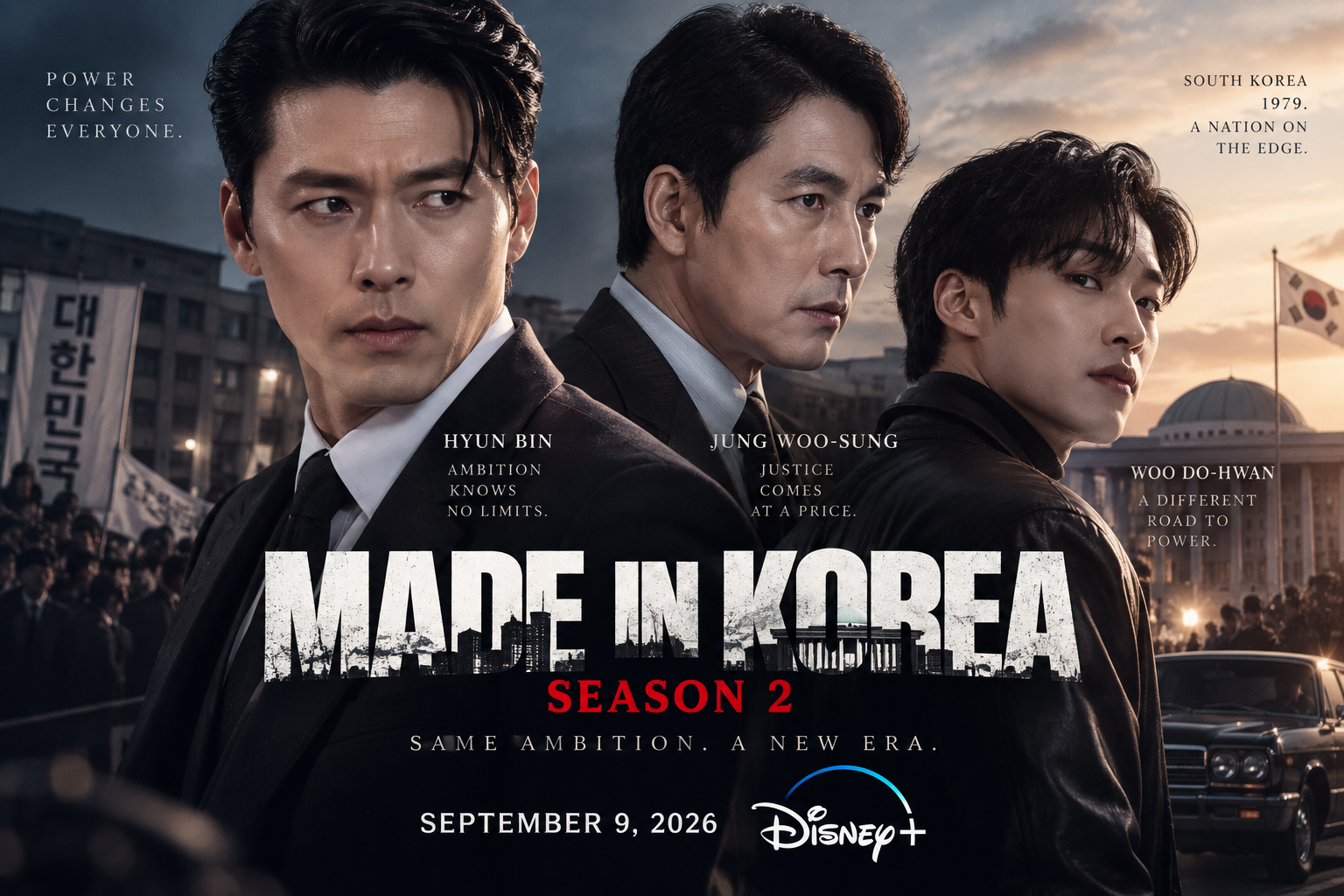
  • Is Baek Ki-tae a Real Person? The True History Behind Made in Korea Season 2

    If you started watching Made in Korea Season 2, you may have wondered:

    Was Baek Ki-tae a real person?

    It is an understandable question.

    Season 2 places Hyun Bin’s character directly inside one of the most dramatic periods in modern South Korean history.

    President Park Chung-hee is assassinated.

    The Korean Central Intelligence Agency, or KCIA, is thrown into crisis.

    The military begins competing for power.

    And the story moves toward the events of December 12, 1979 — a turning point that would eventually help Chun Doo-hwan rise to power.

    Many of these events really happened.

    But what about Baek Ki-tae?

    The short answer is:

    Baek Ki-tae is a fictional character placed inside real Korean history.

    And understanding that distinction makes Made in Korea Season 2 much more interesting.

    Is Baek Ki-tae Based on a Real Person?

    There is no official confirmation that Baek Ki-tae is a direct portrayal of one specific historical figure.

    He should therefore not be treated as a real KCIA official whose life the drama is recreating.

    Instead, Made in Korea uses fictional characters to explore real institutions, political struggles and historical events.

    That gives the writers much more freedom.

    Baek Ki-tae can enter places where real history happened.

    He can interact with characters who resemble historical power figures.

    And his fictional ambitions can collide with events that Korean viewers already know happened.

    This creates an unusual combination:

    The history is real.
    The protagonist is fictional.
    The collision between them is the drama.

    Why Is 1979 So Important in Korean History?

    To understand Season 2, international viewers need to understand the year 1979.

    Park Chung-hee had ruled South Korea for nearly two decades.

    His presidency was associated with rapid economic development, but also authoritarian rule, political repression and the powerful national security apparatus surrounding his government.

    Then everything changed on October 26, 1979.

    Park Chung-hee was assassinated by Kim Jae-gyu, the director of the KCIA.

    It was an extraordinary event.

    The head of South Korea’s intelligence agency had killed the president.

    Suddenly, the political system that had existed for years was thrown into uncertainty.

    Who would control the government?

    Who would control the military?

    What would happen to the KCIA?

    And who would take advantage of the power vacuum?

    That uncertainty is exactly where Made in Korea Season 2 begins.

    Season 2 Begins on October 26, 1979

    Director Woo Min-ho has explained that the main story of Season 2 begins on October 26, the day Park Chung-hee was assassinated.

    It then moves through the chaotic weeks that followed.

    The season approaches another enormously important date:

    December 12, 1979.

    That date is crucial because Major General Chun Doo-hwan and allied military officers launched what is widely known as the December 12 military insurrection.

    The event dramatically changed the balance of military power and helped create the conditions for Chun’s eventual rise to the presidency.

    So Season 2 is not simply “set sometime in the 1970s.”

    It is positioned inside a remarkably narrow and explosive historical window.

    Between October 26 and December 12, South Korea’s old power structure had collapsed — but the new one had not yet fully taken its place.

    That gap is where Baek Ki-tae operates.

    The Director Asked One Fascinating Question

    Woo Min-ho has explained the creative idea behind Season 2.

    After the KCIA director assassinated President Park, power increasingly moved toward the military’s Joint Investigation Headquarters.

    But Woo wondered:

    Would the KCIA really have done nothing?

    The director imagined that even if history did not record such a counterattack, people inside the intelligence agency might have fought to preserve their power.

    And then he asked another question:

    What if Baek Ki-tae led that counterattack?

    That idea became one of the foundations of Season 2.

    This is important because it tells us exactly how viewers should approach the series.

    Made in Korea is not a documentary.

    It is not claiming that Baek Ki-tae secretly controlled the events of 1979.

    Instead, it inserts a fictional power player into a real historical vacuum and asks:

    What could someone like Baek Ki-tae have tried to do?

    So Who Is Baek Ki-tae?

    Baek Ki-tae, played by Hyun Bin, is an intelligence operative driven by enormous ambition.

    By Season 2, nine years have passed since the events of Season 1.

    He has climbed much higher within the KCIA.

    But power has not satisfied him.

    It has only made him want more.

    That makes the timing of 1979 perfect for his character.

    In a stable political system, there are limits to how quickly someone can rise.

    But when a president is suddenly assassinated and the institutions surrounding him begin fighting for survival, the rules change.

    For an ambitious man, chaos can become opportunity.

    That is what makes Baek Ki-tae dangerous.

    He does not simply survive history.

    He tries to use history.

    Is Baek Ki-tae Inspired by Park Seon-ho?

    Some Korean viewers have noticed similarities between Baek Ki-tae and real KCIA figures from the period, including Park Seon-ho.

    Park Seon-ho was a KCIA official who became involved in the October 26 assassination.

    There are biographical details that can make comparisons tempting.

    However, viewers should be careful.

    Unless the filmmakers explicitly identify Baek Ki-tae as a portrayal of Park Seon-ho, it is more accurate to describe these as possible similarities or inspirations rather than say:

    “Baek Ki-tae is Park Seon-ho.”

    The drama’s larger structure suggests that Baek Ki-tae functions as a fictional composite capable of moving freely through historical events.

    That freedom is essential to the story.

    What About Chun Doo-hwan?

    This is where Season 2 becomes even more interesting.

    After Park Chung-hee’s assassination, military power became increasingly important.

    Chun Doo-hwan, then a major general and commander of the Defense Security Command, became one of the most consequential figures in the investigation and the political struggle that followed.

    On December 12, Chun and his allies seized control of key military forces.

    The consequences would reshape South Korea.

    Season 2 moves directly toward this historical moment.

    That means Baek Ki-tae is not simply fighting personal enemies anymore.

    His ambitions are colliding with forces that viewers know will soon transform the country.

    For Korean audiences, this creates dramatic irony.

    We know what history eventually does.

    Baek Ki-tae does not.

    Why December 12 May Feel Familiar to Korean Movie Fans

    International viewers who watched the hit Korean film 12.12: The Day may recognize this historical period.

    That movie dramatized the December 12 military insurrection.

    Interestingly, Made in Korea director Woo Min-ho has even suggested that viewers interested in what happens historically around this period can watch 12.12: The Day.

    The two works are not the same story.

    But they occupy connected historical territory.

    Made in Korea Season 2 explores the unstable period after Park Chung-hee’s assassination and moves toward December 12.

    12.12: The Day focuses directly on the military confrontation surrounding that event.

    Watching both can therefore give international viewers a much clearer picture of why late 1979 is such a dramatic period in Korean history.

    Woo Min-ho Has Visited This History Before

    There is another interesting connection.

    Woo Min-ho previously directed The Man Standing Next, a film centered on the political world surrounding Park Chung-hee and the events leading toward his assassination.

    Now Made in Korea Season 2 returns to October 26 from a very different direction.

    Instead of simply recreating the assassination, the drama asks what fictional characters might do once the existing system suddenly collapses.

    That distinction matters.

    The historical event is not necessarily the destination of the story.

    It is the starting gun.

    Why Fictional Characters Work So Well Here

    There is a major advantage to using fictional characters inside real history.

    If Baek Ki-tae were literally a historical figure, the story would constantly be restricted by what that person actually did.

    But because he is fictional, the writers can ask more provocative questions.

    What would an ambitious intelligence officer do during a power vacuum?

    Would he defend the existing system?

    Would he betray it?

    Would he cooperate with the military?

    Would he fight the military?

    Or would he attempt to build a completely new source of power for himself?

    The audience knows that history is moving toward December 12.

    But Baek Ki-tae is free to fight against that current.

    That creates tension even when we already know the broad historical outcome.

    And What About Jang Geon-young?

    Jang Geon-young, played by Jung Woo-sung, is also part of the drama’s fictional storytelling structure.

    His battle with Baek Ki-tae began as a struggle between prosecutor and intelligence operative.

    Nine years later, however, the world around both men has changed.

    The institutions themselves are unstable.

    That makes their conflict more complicated.

    Season 1 could ask:

    Can a prosecutor stop Baek Ki-tae?

    Season 2 can ask something much larger:

    What happens when the system that was supposed to decide who is right begins collapsing around both of them?

    That is why 1979 is more than a historical backdrop.

    It changes the rules of the drama.

    Made in Korea Is Not Secret History

    This is probably the most important thing for international viewers to remember.

    When a fictional character appears beside real historical events, it is easy to assume the drama is revealing some hidden version of history.

    That is not the best way to watch Made in Korea.

    A better description would be:

    historical fiction built inside real political history.

    Park Chung-hee was real.

    His assassination on October 26, 1979 was real.

    The KCIA was real.

    The struggle for power after his death was real.

    The December 12 military insurrection was real.

    But Baek Ki-tae’s role inside those events belongs to fiction.

    The series uses that fiction to explore ambition, power and what people may do when the rules holding society together suddenly disappear.

    Why This Makes Season 2 More Interesting

    If you watch Season 2 without knowing Korean history, Baek Ki-tae’s story is a political thriller.

    But once you know what happens between October 26 and December 12, another layer appears.

    The audience is watching a fictional man attempt to control a moment that history has already claimed.

    He thinks he can use chaos.

    He thinks he can manipulate institutions.

    He thinks he can continue climbing.

    But history is moving toward something enormous.

    And that creates perhaps the most interesting question in Made in Korea Season 2:

    How powerful can Baek Ki-tae become before real history becomes more powerful than him?

    So no, Baek Ki-tae is not a historical figure whose biography you somehow missed.

    He is something more useful to this particular story:

    a fictional man placed at the center of a very real storm.

    And knowing what happened in Korea in 1979 may completely change the way you watch what he does next.

  • Made in Korea Season 2: Do You Need to Watch Season 1 First?

    Made in Korea Season 2: Do You Need to Watch Season 1 First?

    Hyun Bin is back.

    And this time, Baek Ki-tae is no longer simply trying to climb to the top.

    He is already there.

    Disney+’s Korean political thriller Made in Korea returns for Season 2 on September 9, 2026, bringing back Hyun Bin and Jung Woo-sung while adding an even bigger role for Woo Do-hwan.

    But as the new season approaches, one question is especially relevant for viewers discovering the drama for the first time:

    Do you need to watch Made in Korea Season 1 before Season 2?

    The short answer is:

    Yes. You really should.

    Season 2 isn’t a completely separate story.

    It takes place nine years after the events of Season 1, and the central conflict between Baek Ki-tae and prosecutor Jang Geon-young continues directly into the new story.

    The good news?

    Season 1 is short enough to catch up quickly.

    And judging by the early discussion among K-drama fans, quite a few viewers are planning to do exactly that.


    When Does Made in Korea Season 2 Come Out?

    Made in Korea Season 2 premieres September 9, 2026.

    Disney+ currently confirms the September 9 Season 2 launch on its official Made in Korea page.

    The second season consists of six episodes and is scheduled to run through September 23.

    Made in Korea Season 2 Quick Facts

    TitleMade in Korea Season 2
    Korean Title메이드 인 코리아 시즌2
    PremiereSeptember 9, 2026
    PlatformDisney+
    Episodes6
    DirectorWoo Min-ho
    Hyun BinBaek Ki-tae
    Jung Woo-sungJang Geon-young
    Woo Do-hwanBaek Ki-hyun
    Setting1979 South Korea
    GenrePolitical / Crime / Thriller

    What Is Made in Korea About?

    Before talking about Season 2, here’s the basic setup.

    Made in Korea is set against the political and social turbulence of 1970s South Korea.

    At the center of the story is Baek Ki-tae, played by Hyun Bin.

    Ki-tae is a government intelligence operative.

    But he lives a dangerous double life.

    During the day, he works within the government system.

    Outside that world, he becomes involved in an illegal business while relentlessly pursuing wealth and power.

    Standing in his way is prosecutor Jang Geon-young, played by Jung Woo-sung.

    Geon-young becomes determined to bring Ki-tae down—even if doing so costs him almost everything.

    Disney+’s own synopsis describes the central conflict as a battle between a man obsessed with reaching the top and a prosecutor prepared to risk everything to stop him.

    That confrontation forms the foundation of Season 1.

    But Season 2 changes the balance dramatically.


    What Happens in Made in Korea Season 2?

    Season 2 jumps forward nine years.

    The story now takes place in 1979.

    And Baek Ki-tae’s situation has changed.

    He has reached the peak of power.

    The ambitious man we watched climbing upward in Season 1 now has considerably more influence.

    But reaching the top hasn’t satisfied him.

    His ambition has become even greater.

    Hyun Bin himself has said Ki-tae is bolder in Season 2, with his increased power changing everything from how he talks and walks to the way he deals with other people.

    Meanwhile, Jang Geon-young hasn’t disappeared.

    He has spent those nine years enduring his own hardships and preparing to strike back.

    And then there is a third major player.

    Baek Ki-hyun.

    Played by Woo Do-hwan, Ki-hyun is Baek Ki-tae’s younger brother.

    But he doesn’t necessarily intend to follow his brother’s path.

    He begins pursuing his own route to power.

    That turns what was already a dangerous confrontation into something more complicated.


    Do You Need to Watch Made in Korea Season 1 First?

    Yes—and there are three big reasons.

    1. Season 2 continues the same central conflict

    Baek Ki-tae and Jang Geon-young aren’t new characters being introduced again from scratch.

    Their history matters.

    Season 1 explains:

    why Geon-young is obsessed with stopping Ki-tae,

    how Ki-tae accumulated power,

    what each man sacrificed,

    and why their confrontation became personal.

    Without that context, you can probably understand the basic Season 2 plot.

    But you may miss much of the emotional weight behind it.


    2. Season 2 takes place nine years later

    A time jump works best when you know who the characters were before the jump.

    Seeing Baek Ki-tae already at the top isn’t nearly as interesting if you never watched him fight his way upward.

    The same applies to Geon-young.

    Season 2 presents a tougher, more aggressive version of the prosecutor after nine difficult years. Jung Woo-sung has described both men as people ultimately swept along by the enormous forces of their era.

    Knowing their earlier selves makes those changes more meaningful.


    3. Season 1 isn’t very long

    This may be the strongest practical reason.

    You aren’t facing a 16- or 20-episode catch-up marathon.

    The first season has six episodes.

    That makes Made in Korea relatively easy to catch up on before September 9.


    Is Made in Korea Season 1 Worth Watching?

    The numbers suggest plenty of viewers thought so.

    According to Disney+ information reported by Yonhap, Made in Korea was the most-watched Korean show on Disney+ in 2025.

    That’s important because Season 2 isn’t simply a speculative continuation of a forgotten drama.

    Disney is bringing back a Korean series that already performed strongly on its platform.

    The Reddit reaction also gives us an interesting glimpse of viewer behavior.

    In discussion surrounding Season 2, some users admitted they hadn’t watched Season 1 yet. Other viewers responded by recommending it, with one describing the first season as “amazing.”

    Another fan said they planned to watch both seasons once Season 2 arrived.

    That’s exactly why “Do I need to watch Season 1?” could become a useful search question as the premiere approaches.


    Who Is Baek Ki-tae?

    If there is one character you need to understand before Season 2, it’s Baek Ki-tae.

    Hyun Bin plays him as a man driven by extraordinary ambition.

    He isn’t satisfied with merely surviving within the political system.

    He wants money.

    Influence.

    And ultimately power.

    The first season follows his rise.

    Season 2 asks a different question:

    What happens to an ambitious man after he finally gets the power he wanted?

    Does he stop?

    Apparently not.

    The official Season 2 storyline describes Ki-tae as pursuing even greater ambitions after reaching the height of power.

    That may be the key transformation between the two seasons.


    Hyun Bin Says Baek Ki-tae Has Changed

    Hyun Bin has already teased a different version of his character.

    In recent comments about Season 2, he explained that Ki-tae has become bolder as his power has increased.

    The change isn’t only in his decisions.

    It affects the way he speaks, moves and presents himself.

    That’s an interesting detail because it suggests Season 2 isn’t simply giving Ki-tae a bigger title.

    Power has changed his personality.

    And Hyun Bin has said this is the first time he has stayed with a character for this long, making Baek Ki-tae particularly meaningful to him.


    What Happened to Jang Geon-young?

    Jung Woo-sung returns as prosecutor Jang Geon-young.

    In Season 1, Geon-young risked everything trying to stop Ki-tae.

    Season 2 finds him nine years older—and considerably harder.

    According to Jung Woo-sung, the years of hardship have made Geon-young tougher and more aggressive.

    So we’re not simply getting:

    Ki-tae vs. Geon-young, Part Two.

    We’re getting two men who have both been transformed by nine years of political struggle.

    That’s a much more interesting confrontation.


    Why Woo Do-hwan Could Be the Wild Card

    Then comes Woo Do-hwan as Baek Ki-hyun.

    Ki-hyun is Ki-tae’s younger brother.

    But Season 2 places him on a different road toward power.

    Official descriptions say Ki-hyun pursues a path distinct from his older brother’s, while the ambitions surrounding all three men begin spiraling toward an irreversible rupture.

    That gives us a new power structure:

    Baek Ki-tae

    The man who reached the top.

    Jang Geon-young

    The prosecutor returning for a counterattack.

    Baek Ki-hyun

    The younger brother building his own path to power.

    That third element could completely change the dynamics of the drama.

    And Reddit discussions already show viewers interested in seeing the two brothers collide.


    Why Is Season 2 Set in 1979?

    This detail deserves attention.

    Season 2 takes place in 1979, nine years after the first season.

    For Korean viewers, the significance of that year is immediately obvious.

    1979 was one of the most turbulent years in modern South Korean history.

    That means the drama’s political power struggle isn’t occurring in isolation.

    The characters are moving through a country undergoing enormous historical change.

    This is also why international viewers may benefit from understanding that Made in Korea isn’t simply a crime thriller.

    It’s a fictional story operating against the backdrop of real historical tensions.

    Exactly how Season 2 integrates those events into its fictional storyline will be one of the most interesting things to watch.


    Is Made in Korea Based on a True Story?

    This is another question international viewers may ask.

    Made in Korea is a fictional drama, not a straightforward true-story adaptation.

    However, it deliberately places its fictional characters and conflicts inside a recognizable period of South Korean history.

    That distinction matters.

    Viewers should not assume that Baek Ki-tae or every incident in the series represents a specific historical person or event.

    Instead, the drama uses its historical setting to explore themes such as:

    political power

    government institutions

    money

    crime

    ambition

    loyalty

    and

    survival.


    Who Is Returning for Made in Korea Season 2?

    The major cast includes:

    Hyun Bin — Baek Ki-tae

    Jung Woo-sung — Jang Geon-young

    Woo Do-hwan — Baek Ki-hyun

    Seo Eun-soo — Oh Ye-jin

    Won Ji-an — Choi Yu-ji

    Jung Sung-il — Cheon Seok-jung

    Roh Jae-won — Pyo Hak-su

    Director Woo Min-ho also returns.

    That’s important because the visual and political tone established in the first season should carry into the second.


    How Many Episodes Will Made in Korea Season 2 Have?

    Season 2 is currently listed for six episodes, airing from September 9 through September 23.

    That’s another advantage for international viewers.

    Instead of stretching the story across a traditional long K-drama season, Made in Korea operates more like a compact political thriller.

    Six episodes means the power struggle can move quickly.

    And if you haven’t watched Season 1 yet, the combined commitment is still relatively manageable.


    Where Can You Watch Made in Korea Season 2?

    The series is a Disney+ original.

    Disney+’s official listing confirms the September 9 Season 2 release.

    Availability and branding can vary by country, so viewers should check their local Disney streaming service.

    Watch Made in Korea on Disney+


    What Are K-Drama Fans Saying Before Season 2?

    This is the part we’re watching closely.

    The Reddit discussion isn’t enormous yet—but that’s actually useful.

    We’re looking for questions appearing before the search rush, rather than waiting until everyone is already writing about the same topic.

    And one recurring theme is clear:

    Some viewers haven’t watched Season 1 yet.

    One Reddit user reacting to Season 2 material said they hadn’t gotten around to Season 1.

    Responses encouraged them to watch it, emphasizing both its quality and its short six-episode length.

    Another discussion included a viewer planning to watch both seasons together once Season 2 arrives.

    That’s why this article isn’t titled simply:

    “Made in Korea Season 2 Release Date and Cast.”

    Plenty of websites can write that.

    The more useful question is:

    “Do I need to watch Season 1 first?”

    And the answer is yes.


    Can You Skip Season 1 and Still Understand Season 2?

    Probably at the basic plot level.

    You can understand:

    Baek Ki-tae is powerful.

    Jang Geon-young wants to stop him.

    Baek Ki-hyun is entering the power struggle.

    But understanding the plot isn’t the same as understanding why the confrontation matters.

    Season 1 establishes the history behind these men.

    So if you’re interested enough in Made in Korea to watch Season 2, skipping only six episodes of backstory doesn’t make much sense.

    Our recommendation:

    Watch Season 1 first.


    7 Things to Remember Before Season 2

    If you watched Season 1 months ago and don’t want to rewatch everything, remember these basic points:

    1. Baek Ki-tae is driven by wealth and power.

    2. Jang Geon-young made stopping Ki-tae his mission.

    3. Their conflict is personal as well as political.

    4. Season 2 jumps forward nine years.

    5. Ki-tae has now reached the height of power.

    6. Geon-young has spent those years becoming tougher.

    7. Baek Ki-hyun now emerges as another major contender for power.

    That should give returning viewers the basic framework needed for September 9.


    5 Questions Season 2 Needs to Answer

    1. How powerful has Baek Ki-tae become?

    Reaching the top was once his goal.

    Now we need to see what he does after getting there.

    2. What exactly has Jang Geon-young been doing for nine years?

    His counterattack could drive much of the season.

    3. Will Baek Ki-hyun challenge his own brother?

    This may become the biggest new conflict.

    4. How will the events of 1979 affect the characters?

    The historical setting could become as important as the personal rivalry.

    5. Can Baek Ki-tae’s ambition ever be satisfied?

    This may ultimately be the question at the heart of the entire series.


    Should You Watch Made in Korea Season 2?

    If you enjoy K-dramas such as political thrillers, crime stories and morally complicated power struggles, this is one of September’s releases worth watching.

    But don’t start on September 9 with Season 2.

    Start with Season 1.

    There are only six episodes, and Season 2 is specifically built around how its characters have changed nine years after the first story.

    The transformation is part of the point.


    Final Thoughts

    The most interesting thing about Made in Korea Season 2 isn’t simply that Hyun Bin is returning.

    It’s where his character is returning from.

    Season 1 showed a man climbing toward power.

    Season 2 begins with that man already standing near the top.

    Jang Geon-young has spent nine years becoming tougher.

    Baek Ki-hyun is now pursuing power on his own terms.

    And all of them are entering 1979, one of the most consequential periods in modern Korean history.

    So if you’ve seen the Season 2 trailer and are wondering:

    “Can I just start with Season 2?”

    You can.

    But you shouldn’t.

    Watch those six Season 1 episodes first.

    Season 2 premieres on Disney+ on September 9, 2026.


    K-Beauty Shopping

    Watching Korean dramas can be a gateway to Korean fashion, skincare and beauty trends too.

    Shop K-Beauty at OLIVE YOUNG Global

    If you purchase through the link above, the site operator may receive a commission at no additional cost to you.