Today, Gangnam is one of the most recognizable symbols of wealth in South Korea.
Its luxury apartments, expensive shopping districts, corporate offices, and high property prices have made it a global symbol of modern Seoul.
But in the 1970s, much of the area was still farmland and undeveloped land.
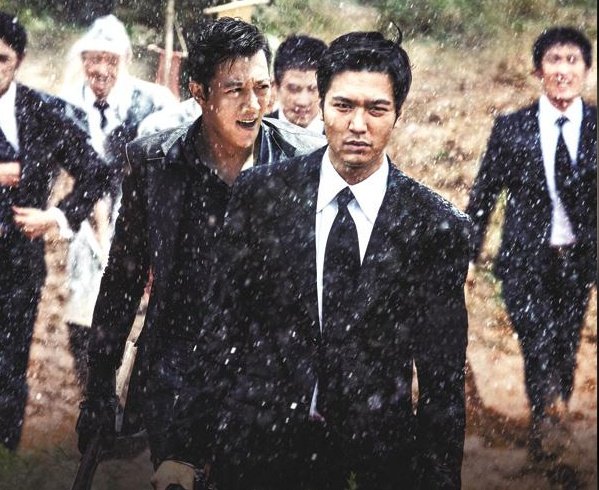
Gangnam Blues (2015), directed by Yoo Ha, takes viewers back to that period. It follows two orphaned childhood friends, Kim Jong-dae and Baek Yong-ki, who grow up together in poverty before becoming involved in the violent world of organized crime and political corruption.
Their dreams are simple at first.
Jong-dae wants land and a home. Yong-ki wants money and power.
But when Gangnam becomes the center of a massive development struggle, their different ambitions begin to destroy their brotherhood.
The film’s most disturbing question is not simply who wins the fight over Gangnam.
It is why the people who risked everything to control the land are ultimately denied the future they were fighting for.
Here is the ending of Gangnam Blues explained, including the betrayal between Jong-dae and Yong-ki, the role of political power, and the meaning of the final scene.
1. What Was Gangnam Like Before It Became Rich?
To understand the film, it helps to understand the historical setting.
Modern Gangnam is famous for its expensive real estate and wealthy residents. But the area south of the Han River was transformed dramatically during the 1970s.
Government development plans, new infrastructure, land purchases, and population movement helped turn the area into an important part of Seoul.
That transformation also created opportunities for speculation and political influence.
The film uses this historical background to construct a fictional story about people who discover that land can become more valuable than almost anything else.
Jong-dae and Yong-ki do not begin as powerful criminals.
They begin as poor young men who have almost nothing.
Their struggle to escape poverty becomes entangled with the development of an entire district.
2. Why Are Jong-dae and Yong-ki So Close?
Jong-dae and Yong-ki grew up together in an orphanage.
After leaving, they survive by collecting scrap materials and living wherever they can.
They are not biological brothers, but their relationship is closer than many family relationships.
They share food, endure poverty, and depend on each other when life becomes unbearable.
Their friendship is built on a simple promise: neither of them should have to face the world alone.
This background is essential to the tragedy.
When the two men eventually become enemies, the audience is not watching two ordinary gangsters competing for territory.
It is watching two people destroy the relationship that once helped them survive.
3. Why Does Their Shanty Home Get Demolished?
The two friends lose their small home when the area is cleared for redevelopment.
For wealthier people, redevelopment may represent investment and economic progress.
For people like Jong-dae and Yong-ki, it means losing the only place they can afford to live.
They have no property, no financial security, and no influential connections.
The demolition pushes them further into desperation.
This is one of the film’s most important contrasts.
The development of Gangnam promises a better future for the city, but the people who already live there are not necessarily the people who benefit from it.
For Jong-dae and Yong-ki, the future is being built without them.
4. How Do Two Poor Young Men Become Involved in Politics?
After losing their home, the friends become involved in a violent operation connected to a political convention.
They are recruited by people working with organized crime groups.
Their job is not to participate in politics because they believe in a particular ideology.
They are simply hired muscle.
The operation becomes chaotic, and the two friends are separated during the violence.
This moment changes their lives.
They entered the political conflict because they needed money.
They leave it with completely different futures.
The film uses this incident to show how ordinary people can become tools in struggles involving political power and organized crime.
5. Why Does Jong-dae Join Another Gang?
Three years later, Jong-dae has been taken in by Gil-soo, a former gang leader who has left the criminal world.
Gil-soo treats him like family.
He also lives with his daughter, Seon-hye.
For the first time, Jong-dae experiences something resembling a stable home.
But he still wants to escape poverty.
Although Gil-soo hopes he will live an honest life, Jong-dae secretly continues his involvement in organized crime.
His decision is not driven only by greed.
He wants a home, financial security, and a future in which he does not have to worry about being thrown out again.
This is what makes his character complicated.
His dream is understandable.
The methods he chooses to achieve it are increasingly destructive.
6. Why Does Yong-ki Become a More Powerful Gangster?
While Jong-dae builds a new life around Gil-soo, Yong-ki has become involved with a powerful criminal organization.
He rises through the ranks of the Myeongdong gang.
Unlike Jong-dae, who is increasingly interested in acquiring land, Yong-ki is attracted to immediate money, status, and organizational power.
He understands that influence inside a criminal organization can provide opportunities that ordinary people never receive.
When the two friends eventually meet again, they realize that they can help each other.
Jong-dae has connections and ambitions involving land.
Yong-ki has access to the criminal network and the manpower needed to control territory.
Their old friendship becomes a business partnership.
But the partnership is already built on different priorities.
7. Who Is Min Seong-hee, and Why Is She Important?
Min Seong-hee, played by Kim Ji-soo, is a powerful woman with connections to influential people.
She understands the value of land and knows how political information can create enormous opportunities.
Through her connections, Jong-dae becomes involved in a much larger development scheme.
She also helps connect him to politician Seo Tae-gon.
This changes the scale of the story.
Jong-dae is no longer simply working for a gang.
He is entering a world where political influence, property speculation, and organized violence are connected.
The people who know what the government plans to do can acquire land before its value rises.
The people who control the streets can help secure those acquisitions.
And the people who control political decisions can benefit from the entire arrangement.
8. Why Does Jong-dae Want Land While Yong-ki Wants Money?
The film repeatedly contrasts the two men’s ambitions.
Jong-dae wants land.
To him, land represents permanence.
He has spent his life without a proper home. He has been displaced, abandoned, and forced to survive on whatever he can find.
Owning land means that nobody can simply demolish his home and send him away again.
Yong-ki, however, is more interested in money and immediate power.
He wants to rise within the criminal organization and become someone who cannot be ignored.
These differences may initially appear small.
But they become increasingly important as their partnership grows.
Jong-dae is thinking about what he can own in the future.
Yong-ki is thinking about what he can control right now.
Their dreams overlap, but they are not identical.
9. How Does Gangnam Become a Battlefield Between Political Parties?
The land development struggle becomes connected to political competition.
Different groups want access to the same valuable properties.
Information about future development plans becomes extremely important.
If someone knows which areas will be developed before the public does, they can acquire land before prices rise.
This creates opportunities for people with political connections.
The criminal organizations become involved because they can use intimidation and violence to protect their interests.
The film portrays a world in which political influence and street-level violence are not separate.
They support each other.
The gangs provide muscle.
Political figures provide access and protection.
Land becomes the prize.
This is the larger system that eventually consumes Jong-dae and Yong-ki.
10. Why Does Yong-ki Betray Gil-soo?
As the conflict between criminal organizations intensifies, Yong-ki begins to face suspicion from his own side.
He has been passing information to Jong-dae, helping their partnership gain an advantage in the land struggle.
But his actions create a serious problem.
His loyalty to Jong-dae threatens his position inside the Myeongdong organization.
To regain the trust of his superiors, Yong-ki kills Gil-soo.
This is one of the most important turning points in the film.
Gil-soo is not simply another gang leader.
He is the man who gave Jong-dae a home and treated him like a son.
By killing him, Yong-ki destroys the family that Jong-dae had finally managed to find.
The betrayal is especially painful because Yong-ki knows how much Gil-soo means to his old friend.
He chooses organizational survival over brotherhood.
11. Why Does Jong-dae Become So Different After Gil-soo’s Death?
Jong-dae eventually discovers the truth about Gil-soo’s murder.
His relationship with Yong-ki changes completely.
Until this point, he has been able to separate their criminal activities from their childhood friendship.
He may have known that they were working in dangerous organizations, but he still believed that some part of their old bond remained.
Gil-soo’s death destroys that illusion.
Jong-dae now understands that Yong-ki is capable of sacrificing anyone to protect his position.
The man he once considered a brother has become someone he must watch carefully.
This is the emotional center of the film.
The conflict over land has finally reached the one relationship that mattered more than money or power.
12. Why Does Yong-ki Decide to Eliminate Jong-dae?
Yong-ki’s position inside the organization continues to grow.
But his allies begin encouraging him to remove Jong-dae and take full control of their operation.
From their perspective, Jong-dae is an obstacle.
He has his own connections, his own ambitions, and a separate power base.
As long as he remains alive, Yong-ki cannot completely control the organization and its land dealings.
Yong-ki therefore begins preparing to eliminate his former friend.
This decision reveals how far he has moved away from the person he once was.
At the beginning of the film, he and Jong-dae shared everything because they had nothing.
Now he is willing to kill the person who shared his childhood simply to secure a larger share of power.
13. Why Does Jong-dae Spare Yong-ki?
The conflict eventually reaches a violent confrontation.
Yong-ki’s side attempts to ambush Jong-dae.
But Jong-dae anticipates the attack and turns the situation against the men who came to kill him.
He eliminates the attackers and gains control of the confrontation.
Then comes the most revealing moment.
Jong-dae has the opportunity to kill Yong-ki.
But he does not.
Instead, he tells him to disappear.
Why?
Because Yong-ki is not just another enemy.
He is the person who shared Jong-dae’s childhood, hunger, and suffering.
Jong-dae cannot completely erase that history, even after discovering the truth about Gil-soo.
His decision is not necessarily forgiveness.
He has not forgotten the betrayal.
He simply cannot bring himself to kill the last remaining connection to the person Yong-ki used to be.
For a brief moment, their childhood friendship is stronger than the criminal world they entered.
But that moment does not save either of them.
14. The Ending Explained: Who Really Wins the Fight for Gangnam?
The most important twist is that neither Jong-dae nor Yong-ki is the real winner.
After the two men survive their confrontation, politician Seo Tae-gon recognizes that they have become unnecessary and potentially dangerous.
He has used their organizations and their violence to advance his own political interests.
Now he wants to remove the people who know too much.
He recruits new men and orders them to eliminate both Jong-dae and Yong-ki.
Jong-dae is shot while trying to escape with Seon-hye.
He falls from the train and is left critically wounded beside the railway tracks.
The film’s final images show him struggling toward the light.
Meanwhile, Seon-hye waits for him, unaware of what has happened.
Yong-ki is also eliminated.
The two men who spent the entire film fighting over money, land, and power are both removed by the political figure who benefited from their work.
This is the central irony of the ending.
They believed they were competing to become powerful.
But they were never the people controlling the entire game.
15. Why Does Seo Tae-gon Become the Real Winner?
After Jong-dae and Yong-ki are gone, Seo Tae-gon moves forward with his political ambitions.
The film’s final political imagery shows the transformation of the land and the rise of the politician who benefited from the violence.
This is the most important contrast in the ending.
Jong-dae and Yong-ki fight in the mud.
They risk their lives.
They betray their friends and destroy their relationship.
But the person who ultimately benefits is the politician who can present himself as a respectable public figure.
The men who performed the dirty work disappear.
The person who used them survives to speak about development and the future.
The film does not suggest that every real-world development project followed this exact fictional chain of events.
Instead, it uses the characters to dramatize a broader criticism of how power can exploit poverty, organized violence, and political connections.
The real winner is not the man who controls the most gangsters.
It is the man who can make the violence disappear from public view.
16. What Does the Final Scene Really Mean?
The final scene is not a celebration of Gangnam’s success.
It is an uncomfortable reminder of the human cost hidden behind the image of progress.
Jong-dae wanted land because he wanted a home.
Yong-ki wanted money because he wanted power.
Both men believed that controlling Gangnam would give them a better future.
But they never become the wealthy owners of the world they helped create.
Their lives end before they can enjoy the results.
The director, Yoo Ha, described the film as an exploration of the violence of power and the distorted dreams of young people who wanted a better life but were never given a fair chance.
That statement helps explain why the ending is so bleak.
Jong-dae’s dream was not originally to become a powerful gangster.
He wanted somewhere to belong.
Yong-ki’s dream was not originally to betray his brother.
He wanted to escape the humiliation of being powerless.
But the system they entered rewarded violence, betrayal, and self-interest.
By the time they understood the rules, they had already become disposable.
The final image of Jong-dae crawling toward the light is especially tragic because Seon-hye is still waiting for him.
She represents the possibility of a different life, one that he might have reached if he had escaped the world of violence.
But that future never arrives.
The men who fought over Gangnam never got to enjoy the city they helped build. The people who controlled the power behind them were the ones who survived.
That is the real meaning of Gangnam Blues.
It is not simply a gangster story about two friends who became enemies.
It is a tragedy about how the promise of wealth and development can turn desperate people against each other, while the most powerful figures remain protected from the consequences.
Gangnam Blues (2015), also known as Gangnam 1970, is a South Korean action-noir film written and directed by Yoo Ha. It stars Lee Min-ho as Kim Jong-dae, Kim Rae-won as Baek Yong-ki, Jung Jin-young as Gil-soo, Kim Ji-soo as Min Seong-hee, and Yoo Seung-mok as Seo Tae-gon.
The film is the final entry in Yoo Ha’s street trilogy, following Once Upon a Time in High School (2004) and A Dirty Carnival (2006).