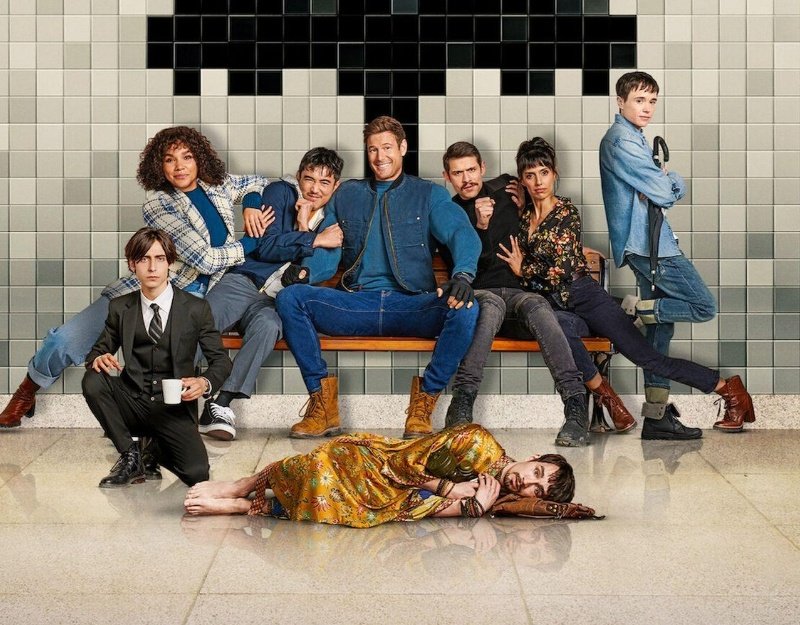
• The Umbrella Academy (2019–2024): Was the Real Villain Never the Apocalypse, but the Father Who Created the Family?

    The Umbrella Academy (2019–2024): Was the Real Villain Never the Apocalypse, but the Father Who Created the Family?

    TTK Original — Beyond the Headlines

    Spoiler Warning: This article discusses major character developments and the ending of all four seasons.

    At first glance, The Umbrella Academy looks like another superhero series about extraordinary people trying to save the world.

    Seven children are born under mysterious circumstances. An eccentric billionaire adopts them, gives them numbers instead of ordinary childhood identities, and trains them to become a superhero team. Years later, after their family has fallen apart, they reunite following their father’s death.

    Then the apocalypse begins.

    But beneath the time travel, superpowers, secret organizations, and repeated destruction of the world, there is a much more personal story.

    What happens when children are raised to save humanity but are never taught how to love themselves?

    And what if the greatest damage in their lives was not caused by the apocalypse, but by the man who prepared them to fight it?

    1. A Superhero Family That Never Learned How to Be a Family

    The Hargreeves siblings are not a conventional superhero team.

    They have different abilities, personalities, emotional wounds, and ways of dealing with the past. Some seek approval, others run away from responsibility, and some desperately want to be loved.

    Their father, Sir Reginald Hargreeves, treated them less like children and more like an experiment designed to produce extraordinary results.

    This distinction defines the entire series.

    Traditional superhero stories often ask whether extraordinary people can protect ordinary society. The Umbrella Academy asks a more uncomfortable question:

    Can people who were never properly loved become capable of protecting one another?

    The siblings repeatedly fail to communicate, trust, and cooperate. Yet they continue returning to each other, even when every reunion seems to create another disaster.

    Their greatest weakness is also their strongest connection.

    2. Reginald Hargreeves: The Father Who Created the Damage

    Reginald Hargreeves is one of the most important figures in understanding the series.

    He adopted seven children with extraordinary abilities, but his parenting was based on discipline, control, and expectations rather than affection.

    He assigned numbers to the children, trained them for dangerous missions, and created an environment in which their value seemed connected to their usefulness.

    The emotional consequences were different for each sibling.

    Luther became desperate for his father’s approval. Diego developed a constant need to prove himself. Allison struggled with the consequences of controlling others. Klaus escaped into addiction and distraction. Five became obsessed with survival and control.

    Viktor’s story is especially painful because his exclusion and isolation became central to the family’s destruction.

    Reginald did not create every problem his children would eventually face. Their decisions and circumstances also mattered. But he established the emotional environment in which their problems developed.

    That is why the series becomes more interesting when viewed through the lens of childhood trauma rather than superhero mythology.

    3. Luther: The Child Who Never Stopped Seeking Approval

    Luther, Number One, was raised to believe that he was the leader of the family.

    He received the most responsibility and appeared to be the closest to fulfilling Reginald’s expectations.

    But his position came with a hidden cost.

    Even as an adult, Luther struggles to separate his identity from his father’s judgment. His loyalty to Reginald survives long after the family has discovered how deeply their father manipulated them.

    His physical transformation also reinforces the difference between appearance and identity.

    Luther looks like a powerful superhero, but emotionally he is often still the abandoned child who wants his father to recognize him.

    His character raises an important question:

    If someone spends their entire childhood trying to become the person their parent wants, how do they discover who they actually are?

    4. Diego: The Rebel Who Still Wants to Be Recognized

    Diego, Number Two, appears to be the opposite of Luther.

    He rejects authority, challenges his siblings, and often acts as though he does not need anyone’s approval.

    But his rebellious personality is not necessarily freedom.

    Much of Diego’s behavior can be understood as another attempt to establish his worth in a family where he never felt sufficiently recognized.

    His relationship with Lila adds another dimension to this struggle.

    Their relationship is complicated by mistrust, secrets, affection, and competing needs. Diego wants to become a dependable husband and father, but his old insecurities continue influencing his decisions.

    He is not simply a rebellious superhero.

    He is someone trying to build a normal family after growing up in a deeply abnormal one.

    5. Allison: When the Power to Control Others Becomes a Personal Curse

    Allison, Number Three, possesses an ability that makes her especially dangerous.

    By using the phrase “I heard a rumor,” she can influence the behavior of other people.

    But this power creates a disturbing moral question.

    If someone can make other people do what they want, how can they know whether anyone genuinely loves them?

    Allison’s power is not just a convenient superhero ability. It reflects the temptation to control the world when ordinary human relationships feel uncertain.

    Her decisions become increasingly complicated as she experiences loss, anger, and desperation.

    She wants to protect the people she loves, but her methods sometimes damage the very relationships she is trying to preserve.

    Allison’s story demonstrates that having the ability to control an outcome does not mean having the wisdom to choose the right one.

    6. Klaus: The Most Fragile Character May Be the Most Emotionally Honest

    Klaus, Number Four, is one of the most distinctive characters in the series.

    His ability to communicate with the dead might sound like an advantage, but it also makes his life emotionally overwhelming.

    He uses humor, eccentric behavior, and addiction to avoid confronting pain.

    At first, he can appear to be the comic relief of the family.

    However, his humor often hides fear and loneliness.

    Klaus is constantly surrounded by people, including the dead, yet he struggles to feel safe and understood.

    His character is important because the series refuses to treat emotional suffering as something that disappears simply because someone has extraordinary abilities.

    Sometimes the funniest person in a family is also the one carrying the greatest amount of pain.

    7. Five: The Child Who Became an Old Man Before He Could Grow Up

    Five is arguably one of the most fascinating characters in The Umbrella Academy.

    His ability to travel through space and time creates one of the series’ most unusual character situations.

    He disappears as a child and becomes trapped in a post-apocalyptic future. When he eventually returns, his body is still that of a teenager, but his mind carries the experiences of an old man.

    Five has spent years surviving alone.

    He is intelligent, impatient, cynical, and frequently frustrated by his siblings’ inability to understand the seriousness of their situation.

    His obsession with preventing the apocalypse is not simply a heroic mission.

    It is also the result of someone who has experienced the end of the world and cannot accept watching it happen again.

    Five understands time better than almost anyone.

    But understanding time does not necessarily mean understanding people.

    That contradiction makes him compelling.

    8. Viktor: The Consequences of Being Treated as the Family’s Problem

    Viktor’s story is central to the emotional structure of the first season.

    For much of his childhood, he is treated as ordinary and excluded from the family’s superhero identity.

    His isolation becomes increasingly important as the story reveals the relationship between his abilities, his memories, and the decisions made by Reginald.

    The tragedy is not simply that Viktor possesses an extraordinarily destructive power.

    It is that the family repeatedly fails to understand the person behind that power.

    The series invites viewers to consider how rejection and secrecy can transform a person’s relationship with themselves.

    Viktor’s journey also challenges the assumption that the most powerful person in a family is necessarily the person with the most control over their life.

    Power can become a burden when someone has never been given the emotional support to understand it.

    9. The Apocalypse Is a Symptom of a Broken Family

    The apocalypse is the central external threat of the series.

    But the repeated destruction of the world is also a narrative reflection of the Hargreeves family’s inability to resolve its internal conflicts.

    Secrets are kept. Important conversations happen too late. Siblings make decisions without consulting one another. Old resentments repeatedly return.

    The family attempts to prevent the end of the world, but its members often struggle to prevent their own relationships from collapsing.

    This is one of the show’s most effective ideas.

    The biggest threat is not always an enemy standing outside the family.

    Sometimes it is the unresolved conflict inside the family itself.

    The science fiction elements give this idea an enormous scale, but the emotional problem remains recognizable.

    10. Why Season 1 Felt So Different

    The first season established the distinctive identity of The Umbrella Academy.

    Its unusual mixture of dark humor, family drama, superhero action, mystery, and carefully selected music created a tone that was difficult to confuse with other superhero productions.

    The siblings were not presented as a perfectly coordinated team.

    They were damaged adults forced to return to the place where many of their problems began.

    The story also introduced the mystery surrounding Reginald’s death and the possibility of an approaching apocalypse.

    But the most memorable moments were often the smaller ones: awkward conversations, arguments, strange reunions, and scenes in which the characters appeared unable to express what they really felt.

    The series was never at its most interesting when the siblings simply used their powers.

    It was most interesting when they were forced to live with one another.

    11. Why the Final Season Divided the Audience

    Season 4, released on August 8, 2024, brought the story to an end with six episodes.

    The shorter final season became one of the most discussed aspects of the conclusion.

    Many Reddit viewers complained that important character developments and unresolved mysteries were compressed into too little time.

    The relationship between Five and Lila was another major source of criticism.

    For many viewers, this development felt inconsistent with the emotional history of the characters and created unnecessary damage to existing relationships.

    Other complaints focused on the reduced roles of certain characters, the handling of Ben and Jennifer, and the speed at which the final conflict was resolved.

    One particularly important criticism concerned the show’s original emotional message.

    If the Hargreeves children were victims of Reginald’s abuse and manipulation, why should their existence ultimately be treated as the cause of the world’s suffering?

    That question became central to the debate surrounding the ending.

    The criticism was not simply that viewers wanted a happy conclusion.

    Many viewers felt that the final season had weakened the emotional meaning of the journey they had followed for years.

    12. The Ending: Did the Family Finally Save the World by Disappearing?

    The final season reveals that the existence of the Hargreeves siblings, through the Marigold connected to their origins, is tied to the repeated destruction of timelines.

    The ultimate solution requires the siblings to allow themselves to be absorbed by the Cleanse, removing their existence from the timeline.

    They sacrifice themselves so that the original timeline can survive.

    From the creators’ perspective, this is presented as the ultimate act of heroism.

    The siblings who repeatedly failed to save the world finally make a sacrifice that allows others to live in peace.

    But the ending creates an uncomfortable philosophical problem.

    If the family was responsible for so much destruction simply because it existed, does that mean the children were always the problem?

    Or were they victims of circumstances created by forces far beyond their control?

    This distinction matters.

    The Hargreeves siblings did make mistakes. They repeatedly caused damage through their choices. But their childhoods were shaped by manipulation, neglect, and secrets they never fully understood.

    A tragic ending can be powerful.

    However, tragedy becomes more difficult to accept when the emotional responsibility appears to shift from the people who created the damage to the children who suffered from it.

    13. What Reddit’s Reaction Reveals About the Series

    Discussions on Reddit reveal an interesting difference between what viewers appreciated about the series and what many disliked about its conclusion.

    The first season’s family dynamics, unusual humor, and emotionally damaged characters remain important parts of the show’s appeal.

    By contrast, many discussions about Season 4 focus on rushed storytelling, character decisions, and the feeling that several years of emotional development were not adequately rewarded.

    Not every viewer rejected the ending.

    Some considered the final sacrifice consistent with the series’ repeated apocalypse narrative. Others appreciated the idea that the siblings could finally save the world without receiving recognition.

    But the disagreement reveals something important.

    Fans did not become attached to the Hargreeves siblings simply because they possessed extraordinary abilities.

    They became attached because, despite their dysfunction, they continued trying to become a family.

    The final season challenged that emotional connection.

    And that is why its conclusion became such a divisive subject.

    Conclusion: They Were Trained to Save the World, but Never Taught How to Save Each Other

    The Umbrella Academy began with a strange family, an extraordinary set of abilities, and the possibility that the world would end.

    But its most meaningful story was never really about stopping an apocalypse.

    It was about children who were raised without the emotional security they needed, and adults who continued carrying those wounds into every relationship they built.

    Reginald Hargreeves gave them extraordinary powers, but he never gave them a healthy childhood.

    The siblings spent years trying to repair the world while struggling to repair themselves.

    That is what makes the series more interesting than a conventional superhero story.

    And it is also what makes its ending so difficult for some viewers to accept.

    Perhaps the greatest tragedy of the Hargreeves family was not that they eventually disappeared from history.

    It was that they spent almost their entire lives trying to earn the love of a father who had never truly understood what children needed.

    The Umbrella Academy leaves us with one question that is much more human than any superhero mystery:

    If a family is broken by the people who raise it, should the children spend the rest of their lives paying for that damage?

    TTK Original — Beyond the Headlines
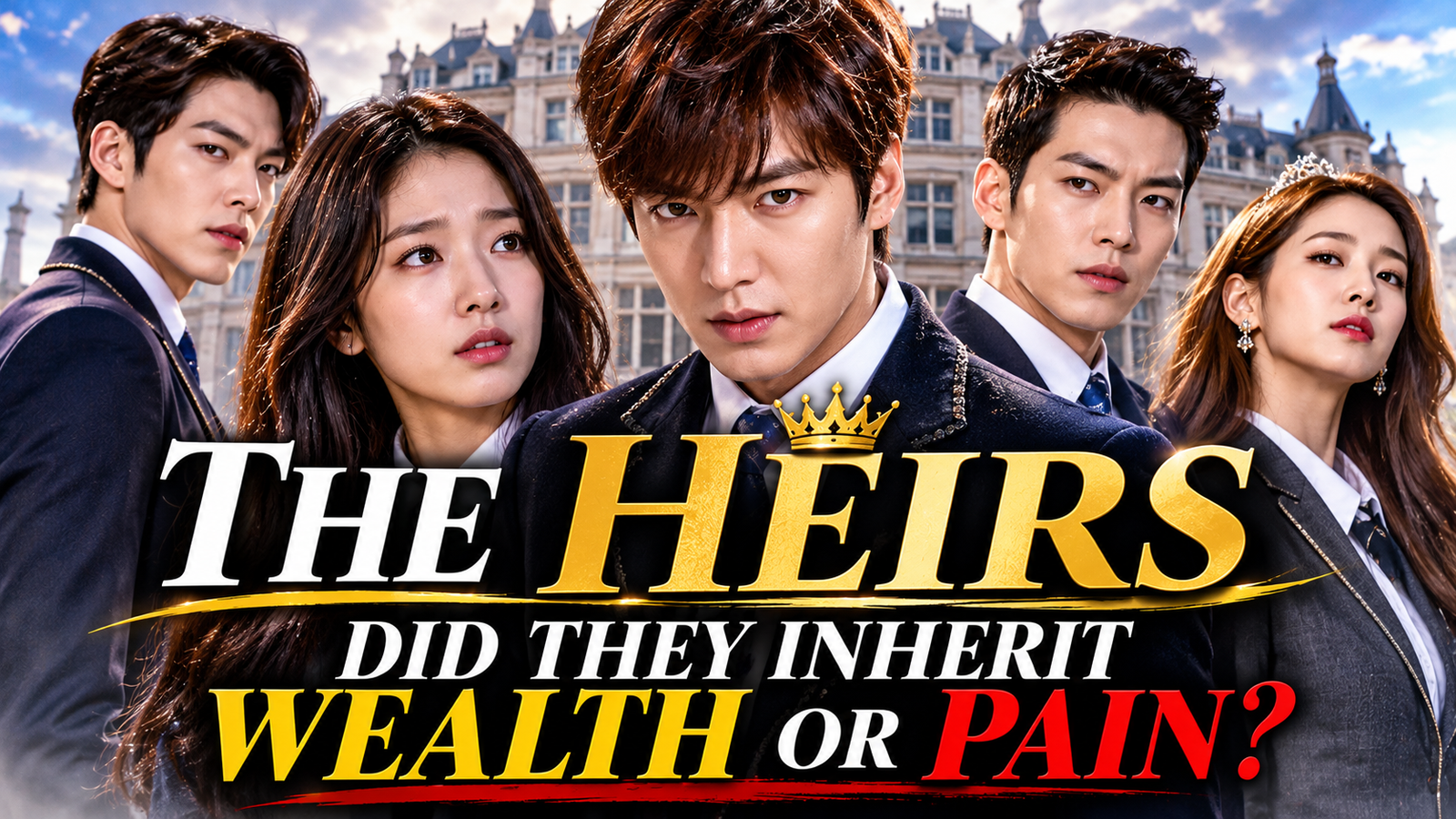
  • The Heirs Explained: Were These Rich Children Inheriting Wealth, or Their Parents’ Emotional Damage?

    The Heirs Explained: Were These Rich Children Inheriting Wealth, or Their Parents’ Emotional Damage?

    The Heirs is often remembered as a glamorous Korean high school romance filled with wealthy families, complicated relationships, jealousy, and unforgettable characters. Kim Tan and Cha Eun-sang became the central couple, while Choi Young-do developed a particularly devoted following among viewers.

    But the title of the drama points toward a much larger story.

    An heir does not inherit money alone. An heir also inherits expectations, family conflicts, social obligations, and the rules that determine who is allowed to hold power.

    In The Heirs, the younger generation appears to have everything: expensive homes, prestigious schools, influential parents, and futures already prepared for them. Yet many of these characters struggle to make even the most personal decisions without confronting the interests of their families.

    The drama’s most revealing conflict is therefore not simply between rich and poor students.

    It is between people who have inherited a system and those who are trying to decide whether they must continue living according to its rules.

    Kim Tan, Kim Won, and Choi Young-do represent three different responses to that inheritance. Cha Eun-sang and Yoo Rachel reveal how the same system treats people differently depending on the power their families possess.

    What if the real inheritance in The Heirs is not wealth, but the emotional damage and expectations that wealth protects and passes down?

    1. The Crown Is Already on Their Heads Before They Are Adults

    The Korean title of the drama contains an idea that is more revealing than the English title alone: the person who wants to wear the crown must endure its weight.

    This is not merely a warning about responsibility.

    The students at Jeguk High School are introduced as young people whose futures have already been influenced by their families. Their education, friendships, romantic relationships, and social positions are connected to the economic and political interests of their parents.

    They are not simply preparing for adulthood. They are being prepared to occupy positions inside an existing hierarchy.

    This creates a strange contradiction.

    They enjoy privileges that most people can only imagine, but their freedom is limited by expectations they did not create.

    A wealthy family can provide a child with almost every material advantage while simultaneously making that child’s personal choices feel like a family decision.

    The crown is attractive because it represents power. Its weight comes from the fact that the person wearing it may never be entirely free to choose what to do with that power.

    2. Kim Tan Inherits Privilege, but Not the Freedom to Use It

    Kim Tan initially appears to be the classic romantic hero who has everything except the person he loves.

    He is wealthy, handsome, and connected to the most powerful family in the drama. Yet his position inside Jeguk Group is complicated by his birth and his relationship with his half-brother Kim Won.

    His exile to the United States is especially important.

    It demonstrates that family wealth does not necessarily give him control over his own life. His father and brother can influence where he lives, how he is treated, and what position he is allowed to occupy.

    However, Kim Tan’s situation should not be confused with the experience of someone without privilege.

    Even when he suffers, he has access to resources, protection, and social influence that other characters do not possess.

    This distinction matters when interpreting his relationship with Cha Eun-sang.

    Kim Tan challenges the family structure because it threatens his freedom to love. But he does not begin by rejecting the entire structure of privilege.

    His struggle is personal before it becomes political.

    He wants the right to choose his own future, but the drama leaves a larger question open: does he want to dismantle the system, or does he mainly want the freedom to live differently within it?

    3. Kim Won Understands the Price of the Crown Better Than Kim Tan

    Kim Won is one of the most important characters for understanding the drama’s title.

    Unlike Kim Tan, he has already entered the world of corporate responsibility. He understands that controlling a major company requires more than being the chairman’s son.

    He must negotiate with adults who have their own interests, protect his position, and demonstrate that he can preserve the business.

    His conflict is not simply that his father does not love him enough.

    It is that he has learned to measure his future through the standards of the organization he is expected to lead.

    His relationship with Jeon Hyun-joo reveals the personal cost of this way of thinking.

    Hyun-joo represents a life that cannot be reduced to corporate strategy. Their relationship asks Won to make a choice that has no obvious business advantage.

    He ultimately prioritizes his position and responsibilities.

    It would be too easy to describe him as a man who simply chooses money over love. His decision is more complicated because he has already accepted the belief that his value depends on his ability to protect and maintain the family enterprise.

    Kim Won has inherited not only a business but also a definition of success.

    His tragedy is that he becomes increasingly capable of protecting the company while becoming less capable of protecting his own happiness.

    4. Kim Tan and Kim Won Are Two Different Products of the Same Father

    The brothers are often presented as rivals competing for the future of Jeguk Group.

    But their conflict becomes more interesting when viewed as two different responses to the same family structure.

    Kim Won responds by adapting.

    He understands the rules of power and tries to survive by becoming better at playing the game. His emotional sacrifices are part of that strategy.

    Kim Tan responds through resistance.

    He challenges the decisions that limit his personal freedom, particularly when those decisions interfere with his relationship with Eun-sang.

    Neither brother is completely outside their father’s influence.

    Won has internalized the system. Tan has learned to fight against the parts of the system that threaten him.

    This is why their conflict is more than a disagreement about inheritance.

    They are arguing over what it means to be a son in a family where affection, legitimacy, and corporate authority are constantly connected.

    The older brother believes survival requires compromise. The younger brother believes some compromises are unacceptable.

    The drama does not offer a simple solution to this conflict. Instead, it shows how the same family environment can produce two very different forms of emotional survival.

    5. Choi Young-do Is the Most Uncomfortable Example of Inherited Power

    Choi Young-do is arguably the character who makes the drama’s underlying social criticism most visible.

    He is the son of a powerful hotel owner, and he has learned that status can be used to intimidate other people.

    His behavior at school is often cruel. He humiliates weaker students, uses fear to control social situations, and treats other people’s vulnerabilities as opportunities to demonstrate his superiority.

    It would be a mistake to excuse these actions simply because his father is abusive.

    Young-do is responsible for the harm he causes.

    But understanding the environment that shaped him makes his character more complicated.

    His relationship with his father reveals a household where power is expressed through intimidation and emotional domination. Young-do experiences the consequences of that behavior at home, yet reproduces elements of it in his relationships with others.

    This is one of the drama’s most uncomfortable patterns.

    A person can hate the way power is used against them and still learn to use power in the same way.

    Young-do does not simply inherit a hotel business. He inherits a model of masculinity in which control is confused with strength and vulnerability is treated as weakness.

    His story becomes compelling because viewers can see both the person he has been hurt by and the person he chooses to become.

    6. Why Reddit Viewers Often Prefer Young-do to Kim Tan

    A Reddit discussion about The Heirs contains a familiar reaction: viewers who expected to support the main male lead found themselves more interested in Choi Young-do.

    Some participants described Young-do as a more compelling character, while others felt that he had greater emotional depth than Kim Tan.

    This reaction is worth examining beyond the usual second-lead syndrome.

    Kim Tan’s romantic position is clear. He loves Eun-sang and fights to remain with her.

    Young-do’s emotional position is less settled.

    He is aggressive, insecure, proud, and frequently unpleasant. Yet the audience is allowed to see the conflict between his public behavior and private vulnerability.

    His feelings for Eun-sang do not automatically make him a better person. In fact, his treatment of others remains one of the most serious problems with his character.

    But he creates a more complicated dramatic question.

    Can someone who has learned to hurt others become capable of recognizing the harm they have caused?

    Viewers may find that question more interesting than a conventional romantic struggle.

    Young-do’s appeal is not proof that his behavior is justified. It is evidence that a flawed character can generate more interpretive tension than a character whose emotional direction is already clear.

    7. The Father-Son Relationship Is the Real Battle Behind Young-do’s Romance

    Young-do’s interest in Eun-sang is important, but it does not explain the deepest conflict in his story.

    His relationship with his father does.

    His father represents a form of authority that does not need to persuade. It can command, threaten, and punish.

    Young-do has grown up inside that environment.

    This helps explain why he often approaches other people through confrontation rather than conversation. He has learned that the person who controls the situation is less likely to be hurt.

    But the strategy creates a cycle.

    When Young-do feels powerless at home, he seeks control elsewhere. When he feels emotionally exposed, he returns to aggression. The behavior that protects him in one environment damages his relationships in another.

    This is not a justification.

    It is an explanation of how destructive family patterns can be repeated across generations.

    Young-do’s most meaningful development would not be winning Eun-sang’s affection. It would be recognizing that he does not have to become the person who hurt him.

    That is a much more difficult inheritance to reject.

    8. Cha Eun-sang Inherits Something the Others Cannot Understand: Poverty

    The drama makes an unusual choice by describing Eun-sang as an heir to poverty.

    Unlike the other students, she does not inherit a corporate position or a family empire.

    Her mother works as a housekeeper, and Eun-sang grows up understanding how financial insecurity shapes everyday decisions.

    Her social position is therefore fundamentally different from that of her classmates.

    For the wealthy students, the future is often a question of which privilege they will receive. For Eun-sang, the future involves whether she can escape the limitations imposed by her economic circumstances.

    Her presence exposes the difference between formal equality and actual opportunity.

    She enters the same school, wears the same uniform, and participates in some of the same social situations. But she does not possess the family resources that protect the other students.

    This makes her more than a romantic outsider.

    She is a reminder that the school is not a neutral environment. It is a place where social inequality is reproduced through everyday interactions.

    9. Does Kim Tan’s Love Give Eun-sang Freedom, or Another Kind of Dependence?

    Kim Tan’s love appears to offer Eun-sang a way out of her social isolation.

    He chooses her despite the objections of his family and the expectations surrounding his engagement to Rachel.

    But the relationship also raises a difficult question.

    When a powerful person chooses someone with less power, does that automatically create equality?

    Kim Tan can challenge his father because he belongs to the family. Eun-sang cannot confront the same system from an equivalent position.

    His declarations of love may be sincere, but sincerity does not erase the difference in their social resources.

    This is why Eun-sang’s agency matters.

    If her future depends entirely on Kim Tan’s protection, the romance risks reproducing the very hierarchy it appears to challenge.

    The strongest interpretation of their relationship is not that Kim Tan rescues a poor girl.

    It is that Eun-sang must remain a person capable of making her own decisions, even when the person who loves her has far more power.

    Love can create an opportunity for freedom. It cannot substitute for freedom itself.

    10. Yoo Rachel Is Also Trapped by the World That Privileges Her

    Rachel is often treated as the obstacle between Kim Tan and Eun-sang.

    She is wealthy, confident, and engaged to Kim Tan through the interests of their families.

    Her behavior can be cruel, particularly toward Eun-sang. Yet reducing her to a jealous rich girl ignores the structure surrounding her.

    Rachel’s engagement is not simply a personal romantic arrangement.

    It is connected to family business interests and the expectations of her social class.

    Her mother and the adults around her treat marriage as a strategic relationship. Rachel is expected to accept a future that has already been discussed and arranged by people with greater authority.

    She has privilege, but she does not have unlimited autonomy.

    This does not make her actions harmless. Her treatment of Eun-sang remains her responsibility.

    But her character reveals another side of inheritance: wealth can protect a person from economic insecurity while placing their personal relationships under intense family control.

    Rachel has more options than Eun-sang in some areas of life, but she is still expected to perform the role her family has prepared for her.

    11. The School Is a Smaller Version of the Corporate World

    Jeguk High School is not simply the setting for teenage romance.

    It functions as a miniature version of the society the characters are expected to inherit.

    Students are separated by family status, wealth, influence, and social connections. Their relationships often reflect the interests of their parents.

    The school hierarchy teaches them how power works before they enter the corporate world.

    Those with influential families can shape the environment. Those with less influence must adapt or face exclusion.

    The treatment of scholarship students is particularly revealing.

    Their presence creates the appearance that the institution offers opportunity to everyone. But being admitted does not mean being treated as an equal.

    This distinction is central to understanding the drama’s social structure.

    A system can allow a person to enter while still making it difficult for that person to belong.

    The school therefore becomes a training ground for inherited inequality.

    The students are not merely learning academic subjects. They are learning where they stand in relation to power.

    12. The Parents Are Not Just Background Characters

    The adults in The Heirs are often more influential than they initially appear.

    Their relationships, marriages, business interests, and conflicts shape the choices available to their children.

    Kim Tan’s family situation demonstrates how personal identity can become connected to corporate legitimacy.

    Rachel’s engagement illustrates how marriage can function as a business arrangement.

    Young-do’s father shows how authority can become abusive when there are no meaningful limits on power.

    The parents do not all behave in the same way, and the drama does not suggest that every wealthy family is identical.

    But their influence creates a shared environment in which the younger generation must negotiate expectations they did not choose.

    This is why the title applies to more than the children.

    The parents have already decided what they believe should be inherited.

    The real conflict begins when the children start questioning whether those expectations deserve to survive.

    13. The Crown Does Not Mean the Same Thing to Every Character

    The drama’s crown metaphor becomes more meaningful when the main characters are compared.

    For Kim Tan, the crown is connected to legitimacy and the right to choose his own life.

    For Kim Won, it represents corporate responsibility and the sacrifices required to maintain control.

    For Young-do, it represents power that can protect him from feeling weak.

    For Rachel, it is tied to family status and the expectations attached to her position.

    For Eun-sang, the crown is almost an entirely different concept. She is not trying to inherit a business empire. She is trying to secure the right to determine her own future.

    The same social world produces different definitions of success.

    This is why the characters’ conflicts cannot be understood simply as a competition for wealth or romantic partners.

    They are struggling over what kind of life their inherited positions will allow them to have.

    The crown is not only a symbol of achievement.

    It is also a symbol of the role each character is expected to perform.

    14. The Ending Resolves the Romance More Than the Inheritance

    The conclusion of The Heirs gives the central romance a hopeful direction, but it does not completely resolve the larger social questions raised by the story.

    Kim Tan and Eun-sang’s relationship receives the emotional focus.

    Yet the family structures, corporate rivalries, and unequal social positions that shaped their lives are not transformed overnight.

    This is an important distinction.

    A romantic ending can resolve the immediate emotional question without resolving the social system surrounding the characters.

    The drama’s ending therefore works better as a conclusion to the love story than as proof that the younger generation has defeated inherited privilege.

    The characters may have gained greater clarity about what they want, but the world they inhabit remains recognizable.

    That unresolved tension is part of what makes the series interesting to revisit.

    The romance offers emotional satisfaction. The social structure leaves viewers with questions.

    15. What the Heirs Really Inherit

    The most important inheritance in the drama is not a company, a hotel, or a family name.

    It is a set of expectations about how people should behave.

    Kim Won inherits the belief that responsibility requires sacrifice.

    Kim Tan inherits a privileged position that he wants to use without accepting every rule attached to it.

    Young-do inherits a destructive model of power and must decide whether to repeat it.

    Rachel inherits a social position that gives her advantages while limiting her personal choices.

    Eun-sang inherits the economic vulnerability of her family, but she also carries the possibility of defining her future outside the expectations of the wealthy families around her.

    These characters do not inherit the same things, and they do not have equal power to reject them.

    That is the central tension of The Heirs.

    The younger generation is not simply waiting to receive what the older generation has built.

    It is struggling to decide which parts of that inheritance should continue.

    Final Thoughts: The Hardest Inheritance to Refuse Is the One You Have Learned to Call Normal

    The Heirs may look like a glamorous high school romance, but its characters reveal a more complicated world.

    Money gives them opportunities, but it also places them inside family structures that influence their identities and relationships.

    Kim Tan wants to choose love without being controlled by his father’s decisions. Kim Won accepts sacrifice as the price of leadership. Young-do struggles with a model of power that he has experienced as both victim and participant. Eun-sang and Rachel reveal two very different forms of limitation within the same privileged environment.

    The drama does not offer a perfect solution to these conflicts.

    But it raises a question that remains relevant beyond its fictional world:

    When children inherit the wealth of their parents, do they also inherit the fears, expectations, and ways of hurting others that helped create that wealth?

    Perhaps the most important question is not who will wear the crown.

    It is whether the next generation can learn to carry something different.

    Because the hardest inheritance to refuse is often not money or status.

    It is the belief that the way things have always been done is the only way they can ever be.