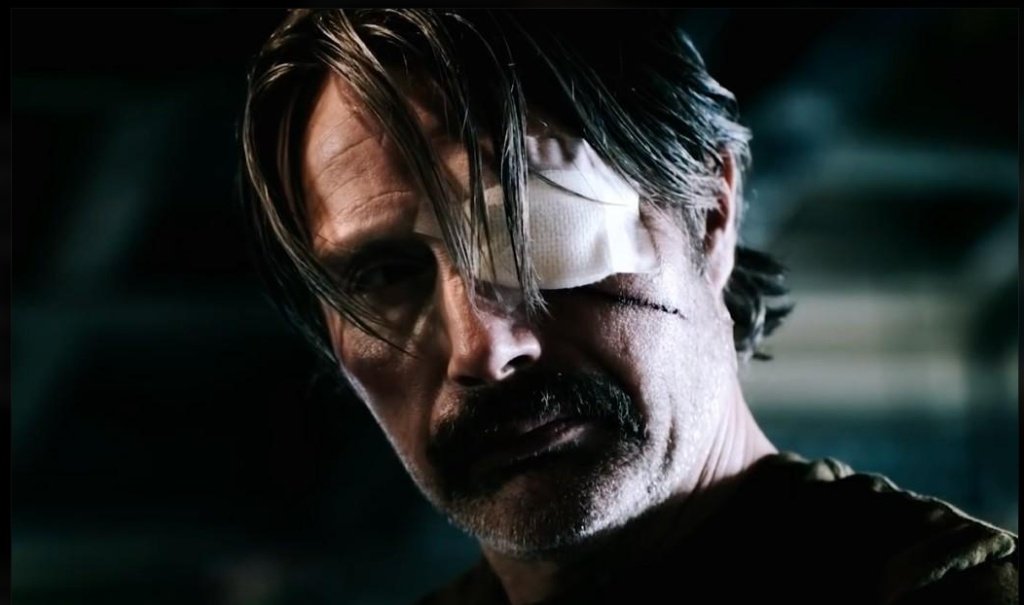
Spoiler Warning: This article discusses major plot developments and the ending of the 2019 Netflix film Polar.
1. An Assassin Wants to Retire, but His Organization Has Other Plans
Most action movies introduce a professional killer who is forced back into the world of violence.
Polar begins with a slightly different problem.
Duncan Vizla, known as the Black Kaiser, is approaching retirement. He has spent his life working as one of the most dangerous assassins in the business. Now he wants to leave that world behind.
But his employer does not see retirement as a personal decision.
The organization has a financial reason to eliminate him before his pension becomes payable. A man who has spent decades killing for the company is suddenly treated as an expensive liability.
This is the central irony of the film.
Duncan has been loyal to an organization that never intended to remain loyal to him.
The story uses an exaggerated assassin conspiracy to raise a surprisingly recognizable question:
What happens when the system that benefited from your work decides that you are no longer worth keeping alive?
2. Duncan Vizla: The Black Kaiser Who Has Forgotten How to Be Ordinary
Duncan is not introduced as a typical retired professional.
His reputation precedes him. He is feared by other killers, and his history suggests that he has spent most of his life operating through violence.
But retirement creates a problem that professional success cannot solve.
He knows how to eliminate targets. He understands danger. He can survive situations that would overwhelm ordinary people.
What he does not seem to know is how to live without the identity that made him valuable.
His isolated lifestyle suggests that he has already lost much of the ordinary world.
There is no established family life waiting for him, no familiar community, and no obvious future beyond the work he has always performed.
Duncan’s problem is therefore bigger than the threat of assassination.
He must discover whether a person who has spent a lifetime being useful as a weapon can become something else.
3. Blut: When an Organization Treats Human Beings as Financial Liabilities
Blut represents the corporate logic behind the assassination plot.
He is not primarily motivated by a personal rivalry with Duncan. His decisions are tied to money, business calculations, and the desire to protect the organization’s interests.
The retirement system creates an incentive for the company to eliminate older assassins before their benefits become payable.
It is a grotesque business model, but its logic is easy to understand.
The organization does not evaluate Duncan according to his years of service, achievements, or loyalty.
It evaluates him according to the cost of keeping him alive.
This is where the film’s premise becomes more interesting than its action sequences.
Duncan spent years creating value for the organization. Yet the moment he becomes financially inconvenient, his history means nothing.
Blut does not need to hate Duncan to betray him.
He only needs to believe that removing him is good business.
4. Is Loyalty Meaningless When Only One Side Honors It?
Duncan’s relationship with his employer exposes a contradiction.
He has followed orders, accepted dangerous assignments, and built his reputation through years of service.
But loyalty is meaningful only when there is some degree of mutual responsibility.
If an organization demands absolute commitment from its employees but abandons them when they become inconvenient, is that loyalty or simply exploitation?
The film does not present Duncan as an innocent office worker.
He has participated in an industry built around killing. His own history is full of violence.
Nevertheless, the betrayal reveals the difference between professional obligation and genuine allegiance.
Duncan believed he had completed his service.
The organization believed he was still disposable.
The conflict begins when those two understandings of the relationship finally collide.
5. The Other Assassins: A Younger Generation Built on the Same System
Blut’s team of younger killers adds another dimension to the story.
They are skilled, violent, and confident in their abilities.
They represent the generation that will continue the business after older assassins disappear.
But they are also products of the same system that has decided Duncan is no longer useful.
Their assignments are not simply personal battles against a legendary killer.
They are part of a corporate decision to remove an expensive generation and replace it with a cheaper one.
This creates an uncomfortable possibility.
The younger assassins may believe they are benefiting from the organization’s favor. Yet they are working inside a system that can eventually treat them in exactly the same way.
Today they are the company’s valuable weapons.
Tomorrow they may become its unwanted expenses.
6. Camille: The Possibility of a Life Beyond Violence
Camille provides the emotional contrast to Duncan’s isolated existence.
She lives in a different world from the professional killers surrounding him.
Her presence gradually creates an opportunity for Duncan to experience ordinary human connection.
Their relationship is important because it introduces something that cannot be measured by his reputation.
For once, Duncan is not being evaluated according to how efficiently he can kill someone.
He is simply a person interacting with another person.
But the relationship is not a magical cure.
Camille cannot erase Duncan’s past, and affection cannot automatically remove the habits formed through decades of violence.
Her importance lies in representing a possible alternative.
Duncan may have spent most of his life as the Black Kaiser, but that does not necessarily mean he must remain that person forever.
7. Can a Professional Killer Become a Different Person?
This is one of the most interesting questions raised by the film.
Duncan’s skills are extraordinary, but they are also deeply connected to his identity.
He understands the world through threats, targets, weapons, and survival.
Ordinary life requires a different set of abilities.
It demands patience, trust, emotional openness, and the willingness to accept vulnerability.
The problem is that Duncan has spent decades developing almost the opposite instincts.
The film does not spend enough time exploring this psychological transformation in depth, but its premise creates an interesting tension.
Can someone leave behind a profession that has shaped every part of their personality?
Or does the person who wants to escape violence inevitably return to the only environment where he knows how to survive?
Duncan’s retirement is therefore not simply a change of employment.
It is an attempt to discover whether another version of himself is still possible.
8. Violence as Entertainment: Why Polar Looks Like a Graphic Novel
The visual style of Polar is deliberately exaggerated.
Its colors, compositions, characters, and action sequences often feel closer to a violent graphic novel than to a realistic crime thriller.
This is not accidental.
The film is based on the graphic novel Polar: Came from the Cold by Víctor Santos.
The exaggerated violence and unusual character designs help preserve the source material’s distinctive visual identity.
Some viewers appreciate this approach because it gives the film a recognizable personality.
Others find it excessive and distracting.
The problem is that visual excess can become repetitive when it is not supported by equally strong storytelling.
The film frequently asks viewers to enjoy the spectacle rather than think deeply about the consequences of each violent encounter.
That approach works for some audiences, but it also explains why the movie received such divided reactions.
9. Mads Mikkelsen: The Actor Who Gives Duncan His Weight
Mads Mikkelsen is one of the film’s most important strengths.
Duncan is not a character who explains his emotions through long speeches.
His personality is communicated through his physical presence, expressions, movements, and moments of silence.
Mikkelsen understands how to make restraint feel threatening.
He can suggest a history of violence without constantly displaying it.
This is particularly useful for a character whose reputation is larger than his everyday behavior.
Duncan does not need to prove that he is dangerous in every scene.
The audience already understands that other characters fear him.
Mikkelsen’s performance also gives the film a degree of emotional seriousness that contrasts with its exaggerated violence.
Even when the surrounding story becomes ridiculous, Duncan remains a character whose exhaustion and loneliness are recognizable.
10. The Difference Between Revenge and Self-Defense
Once Duncan understands that the organization wants him dead, the conflict becomes unavoidable.
He must protect himself against people who have been sent to eliminate him.
But this raises a question about the nature of his response.
Is Duncan fighting because he wants revenge?
Or is he simply trying to survive after discovering that the people who employed him have betrayed him?
The distinction matters.
Revenge is driven by the desire to punish someone for a past wrong.
Self-defense is driven by the need to prevent further harm.
Duncan’s actions move between these motivations.
He is not a peaceful man who suddenly discovers violence. He is someone whose professional identity has always been connected to violence, and whose former employer has given him another reason to use it.
This is why the film’s conflict is morally complicated even when its action is straightforward.
The organization created the conditions for the violence, but Duncan remains responsible for the choices he makes.
11. Why the Film’s Weaknesses Are Also Important
Polar received a mixed critical response.
Some viewers enjoyed its distinctive style, Mikkelsen’s performance, and exaggerated action.
Others criticized its thin characterization, uneven storytelling, and excessive violence.
These criticisms are worth taking seriously.
The film introduces ideas about corporate exploitation, aging, loneliness, and identity, but it does not explore all of them with equal depth.
Some characters exist primarily to create violent confrontations.
Some plot developments feel designed to shock rather than to reveal something meaningful.
The relationship between Duncan and Camille also receives less psychological development than its importance to the story might suggest.
As a result, the film often feels like a collection of striking moments rather than a fully developed character study.
Yet that weakness does not erase the interesting premise at its center.
The story of a retired assassin being eliminated by the company he served remains a strong foundation for a more thoughtful examination of loyalty and disposability.
12. The Ending: Can Duncan Really Escape His Past?
The ending reinforces the film’s central contradiction.
Duncan has been trying to leave the organization and the violent life associated with it.
But his escape does not simply erase everything that happened before.
His history follows him into the present, and the consequences of his decisions continue to shape his future.
The final developments also leave the audience with a question about whether his connection with Camille can survive the violence surrounding them.
The film does not offer a conventional resolution in which the protagonist defeats every enemy and returns to a completely peaceful life.
Duncan may have defeated the people who wanted him dead, but he cannot simply undo the person he has become.
His past is not an external problem that can be eliminated like another target.
It is part of his identity.
This is what gives the ending its lingering unease.
Surviving an organization is not the same as escaping the world that created you.
13. Why Reddit Viewers Disagree About Polar
Reddit reactions to Polar reveal a clear divide between viewers who enjoy its exaggerated style and those who find its storytelling weak.
Some viewers treat it as a deliberately excessive action film.
They appreciate Mikkelsen’s presence, the visual style, the graphic-novel atmosphere, and the absurdity of its violence.
Others believe the movie has a promising central character but wastes that potential through inconsistent writing and unnecessary shock value.
A recurring positive reaction is that Mikkelsen makes the film worth watching even when the story becomes uneven.
A recurring negative reaction is that the action does not compensate for the lack of emotional and narrative depth.
The discussion also reveals something important about genre expectations.
A viewer looking for a realistic assassin thriller may find Polar frustrating.
A viewer looking for a stylized, violent, and somewhat ridiculous graphic-novel adaptation may enjoy it considerably more.
These Reddit comments represent individual audience reactions rather than a comprehensive survey.
But the disagreement helps explain why the film has developed a particular kind of following among viewers who enjoy unconventional action movies.
14. Can a Killer Ever Retire When His Own Organization Wants Him Dead?
The most interesting question in Polar is not whether Duncan can defeat the assassins sent after him.
It is whether he can ever become something other than the weapon his organization created.
For years, his value was measured by his ability to kill.
His employer rewarded that ability, depended on it, and built a business around it.
But when Duncan approaches retirement, the organization changes its evaluation.
The man who once generated enormous value becomes an expense.
This is the cruel logic of a system that values people only while they remain useful.
Duncan’s situation is extreme, but the underlying question is recognizable.
What happens when a person’s identity becomes so closely connected to their usefulness that they no longer know who they are without it?
The organization believes Duncan can be replaced.
But Duncan must confront a more difficult question:
Can he replace the life that made him the Black Kaiser?
Perhaps the real challenge of retirement is not simply leaving a profession.
It is learning how to live when the world no longer needs the person you spent your entire life becoming.
Final Thought
Polar is far from a perfect action film.
Its excessive violence, uneven storytelling, and underdeveloped characters prevent it from reaching the full potential of its premise.
But Duncan Vizla remains an interesting protagonist because his conflict goes beyond revenge.
He is a man who dedicated his life to an organization that ultimately considers him disposable.
His former employer does not care about his loyalty, experience, or achievements. It only cares about the cost of keeping him alive.
The tragedy is that Duncan may have spent so much of his life becoming the perfect assassin that he never learned how to become an ordinary human being.
If an organization spends your entire life teaching you how to be useful, what happens when you are finally no longer useful to it?
That is the question that makes Polar more interesting than its violence alone.