• The Warlords: When a Blood Oath Becomes a Death Sentence

    The Warlords: When a Blood Oath Becomes a Death Sentence

    Spoiler Warning: This article discusses major plot developments and the ending of the 2007 film The Warlords.

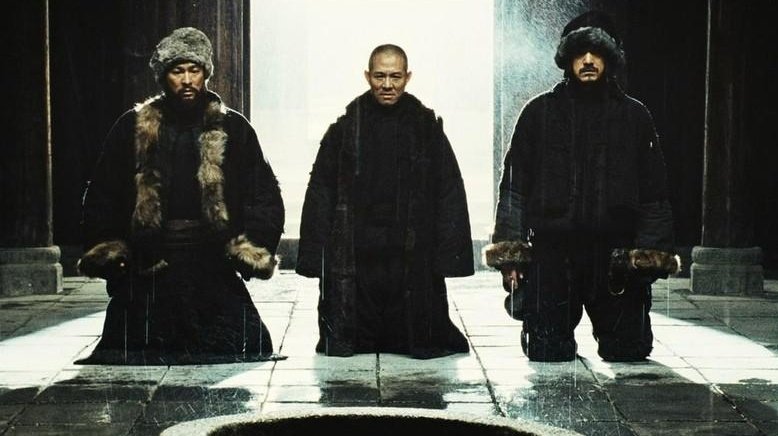
    1. Three Brothers, One Oath, and a Tragedy Waiting to Happen

    At first glance, The Warlords appears to be a historical war epic about soldiers, rebellion, and the struggle for power.

    But beneath its battlefield spectacle lies a much more personal story.

    Three men become brothers through a blood oath. They promise to share their lives, their victories, and their deaths. Their relationship begins with trust and a common desire to survive.

    Yet the same oath that unites them eventually becomes the foundation of their destruction.

    The tragedy is not simply that one brother betrays another.

    It is that all three men believe they are protecting something important, even when their choices make it impossible for them to remain brothers.

    The film raises a difficult question:

    Can a promise made in the name of brotherhood survive when power gives each person a different reason to break it?

    2. The Original Title: Why The Warlords Is More Than a War Story

    The film’s Chinese title is ๆŠ•ๅ็‹€ (Tรณumรญngzhuร ng), commonly associated with a pledge of loyalty made by people entering a dangerous alliance.

    The English title, The Warlords, emphasizes military power and political conflict.

    But the original title points toward the emotional center of the story: a commitment that binds people together through blood and shared responsibility.

    This difference matters.

    The movie is not merely asking who will win the war.

    It is asking what happens when people who have sworn to die together discover that they no longer agree on what is worth dying for.

    The blood oath gives the story its moral structure.

    Every later decision is measured against the promise the three men made at the beginning.

    3. Pang Qingyun: The Man Who Wants to Turn Survival into Power

    Jet Li plays Pang Qingyun, a military commander whose ambition and determination drive much of the story.

    He understands that survival requires more than courage.

    It requires strategy, discipline, resources, and the ability to make decisions that others may find unacceptable.

    Pang is not simply a villain who secretly wants power.

    His ambition is connected to his belief that he can create order in a world destroyed by rebellion and political instability.

    This is what makes his character interesting.

    He can present his choices as necessary sacrifices for a greater objective.

    But the more power he gains, the more difficult it becomes to distinguish between serving a cause and serving himself.

    Pang’s tragedy is that he gradually begins to treat the people closest to him as pieces in a larger political calculation.

    He may believe he is protecting the future.

    But he increasingly decides that the people who once stood beside him must accept whatever price he considers necessary.

    4. Zhao Erhu: The Brother Who Refuses to Forget the Human Cost

    Andy Lau plays Zhao Erhu, whose sense of loyalty is deeply connected to the people around him.

    He is not interested in power in quite the same way Pang is.

    His understanding of leadership is tied to responsibility, brotherhood, and the lives of ordinary people.

    This creates an important contrast between the two men.

    Pang increasingly thinks in terms of military objectives and political outcomes.

    Erhu remains more sensitive to the human consequences of those decisions.

    Neither man exists in a simple moral category.

    Erhu is not automatically right because he values loyalty, and Pang is not automatically wrong because he pursues power.

    The conflict becomes tragic because the two men begin to define responsibility in incompatible ways.

    For Pang, a sacrifice may be necessary to secure a larger victory.

    For Erhu, the people being sacrificed are precisely the reason the victory should matter.

    5. Jiang Wuyang: The Brother Who Believes the Oath Still Means Something

    Takeshi Kaneshiro plays Jiang Wuyang, the third member of the brotherhood.

    His relationship with the other two men gives the film another emotional dimension.

    While Pang becomes increasingly concerned with power and Erhu struggles to preserve his moral principles, Wuyang remains closely attached to the original bond between the three brothers.

    He believes in the promise they made.

    But a blood oath cannot guarantee that the people who made it will remain the same.

    Wuyang’s position becomes increasingly painful because he is caught between two men whose understanding of brotherhood has changed.

    He wants to preserve the relationship.

    Yet preserving a relationship becomes impossible when its members no longer share the same values.

    Wuyang represents the belief that loyalty can hold people together.

    The tragedy is that loyalty alone cannot resolve a conflict over power, justice, and personal ambition.

    6. The Blood Oath: A Promise That Becomes a Prison

    The oath is initially a symbol of trust.

    The three men choose to become brothers in a world where ordinary social structures have failed them.

    They believe that their bond will provide the security and purpose they cannot find elsewhere.

    But the promise also creates an expectation that becomes increasingly difficult to fulfill.

    What does it mean to share life and death when one brother’s decisions put the others in danger?

    Does loyalty require obedience?

    Can a brother refuse another brother’s order without becoming a traitor?

    And if one person believes that a sacrifice is necessary for the greater good, does the original oath require everyone else to accept it?

    The film’s central tragedy grows out of these questions.

    The oath does not disappear.

    Instead, its meaning changes as the brothers’ interests diverge.

    What once protected them becomes something they use to judge, accuse, and ultimately destroy one another.

    7. The Difference Between Brotherhood and Political Alliance

    One of the film’s most important ideas is that personal loyalty and political cooperation are not the same thing.

    The three men begin as brothers.

    But their military success places them inside a political world where alliances are constantly changing.

    They must deal with rulers, armies, officials, competing interests, and decisions that affect thousands of lives.

    The more influential they become, the less freedom they have to act only according to personal affection.

    Pang increasingly sees the brotherhood through the demands of leadership.

    Erhu continues to judge decisions through the responsibilities created by their original promise.

    Wuyang struggles to understand how the bond can survive the pressure surrounding them.

    Their relationship is therefore transformed by the very success they once pursued together.

    They become powerful enough to influence history, but they lose the ability to preserve the personal relationship that gave their struggle meaning.

    8. Lian: When Personal Desire Enters the Brotherhood

    Lian introduces another source of tension into the story.

    Her relationship with the three men is not simply a romantic subplot.

    It exposes the emotional vulnerabilities that exist beneath their military identities.

    The conflict surrounding Lian becomes particularly significant because it reveals that the brothers are not equally capable of separating personal desire from loyalty.

    Pang’s feelings and ambitions become entangled with the political and emotional world around him.

    The resulting tension contributes to the collapse of trust between the men.

    However, reducing the entire tragedy to jealousy would be too simple.

    Lian is part of the emotional conflict, but the deeper problem already exists.

    The brothers have different ideas about power, sacrifice, and responsibility.

    Personal desire intensifies those differences rather than creating them from nothing.

    9. The Nanjing Campaign: When Victory Becomes a Moral Question

    The military campaign against Nanjing brings the film’s central conflict into sharper focus.

    The brothers are no longer simply fighting to survive.

    Their decisions affect the fate of soldiers, civilians, and entire communities.

    Military victory becomes connected to political legitimacy and the question of who has the right to rule.

    Pang increasingly believes that difficult decisions are necessary to achieve a larger objective.

    But the film forces viewers to consider the consequences of that reasoning.

    If victory requires the abandonment of the people who trusted you, what exactly have you won?

    The battlefield becomes a place where the brothers’ different moral systems are tested.

    Their conflict is no longer private.

    It becomes a struggle over the meaning of leadership itself.

    10. Can a Greater Good Justify the Sacrifice of Others?

    Pang’s decisions raise one of the oldest questions in political and military history.

    Can a leader justify terrible actions by claiming that they serve a greater purpose?

    This question is difficult because real leadership often involves painful choices.

    A commander may have to choose between outcomes that are all destructive.

    But the film introduces a more dangerous possibility.

    What happens when a leader begins to use the language of necessity to protect his own ambitions?

    Once that happens, the distinction between sacrifice and exploitation becomes unclear.

    The people being sacrificed may no longer be participants in a shared cause.

    They become instruments of someone else’s vision.

    This is the moral tension at the heart of The Warlords.

    The film does not offer an easy answer about leadership.

    Instead, it shows how the pursuit of a greater objective can destroy the personal responsibilities that originally gave that objective meaning.

    11. The Historical Background: Rebellion and the Collapse of Order

    The Warlords takes place against the backdrop of the Taiping Rebellion during the late Qing Dynasty.

    The rebellion was one of the most devastating conflicts in nineteenth-century Chinese history.

    It involved enormous military campaigns, political instability, and catastrophic human suffering.

    The film uses this historical environment to create a world in which ordinary people struggle to survive while military leaders compete for influence.

    However, the characters and their relationships should not be treated as a straightforward historical record.

    The movie is a dramatic reconstruction inspired by historical events, not a documentary account.

    Its main interest is not explaining every political development of the rebellion.

    It uses the historical crisis to examine the behavior of people who gain power when established institutions are breaking down.

    That distinction is important for understanding the film.

    Its emotional truth lies in the conflict between loyalty and ambition, not in treating every dramatic event as a literal historical fact.

    12. Why the Three Performances Make the Tragedy Work

    The casting is one of the film’s greatest strengths.

    Jet Li, Andy Lau, and Takeshi Kaneshiro bring three different screen identities to the same brotherhood.

    Jet Li gives Pang Qingyun a controlled intensity.

    His character often appears to be thinking several moves ahead, even when the emotional consequences of his decisions become increasingly destructive.

    Andy Lau brings emotional weight to Zhao Erhu.

    His performance helps communicate the pain of a man who cannot easily abandon the principles that originally defined his relationship with the others.

    Takeshi Kaneshiro gives Jiang Wuyang a different kind of vulnerability.

    His character’s attachment to the brotherhood makes the growing distance between the three men especially painful.

    Together, the performances create a conflict that is more interesting than a simple struggle between a hero and a villain.

    Each man represents a different response to the same promise.

    13. Why Reddit Viewers Still Remember The Warlords

    Reddit discussions about The Warlords often highlight the performances of its three leading actors, the scale of the battles, and the emotional conflict between the brothers.

    Some viewers particularly appreciate Jet Li’s dramatic performance, seeing the film as an example of his ability to move beyond conventional martial arts roles.

    Others remember the combination of historical warfare and personal tragedy.

    There is also criticism of the film’s complicated storytelling and uneven pacing.

    For some viewers, the political and emotional developments are not always as clear as the film’s dramatic ambitions require.

    Nevertheless, the central relationship between the three men remains a memorable part of the film.

    The Reddit discussions available are limited and should not be interpreted as a representative survey of all viewers.

    But they point toward a useful distinction: the film is remembered not only for its action, but also for the painful question of whether brotherhood can survive when its members no longer believe in the same things.

    14. When a Blood Oath Becomes a Death Sentence

    The tragedy of The Warlords is not simply that three brothers betray one another.

    It is that they begin with a shared promise but gradually develop incompatible definitions of loyalty.

    Pang Qingyun believes that power and difficult decisions can create a greater future.

    Zhao Erhu believes that leadership must remain connected to human responsibility.

    Jiang Wuyang believes that the original bond should remain stronger than the conflicts surrounding them.

    Each man has something he refuses to surrender.

    And that is precisely why the brotherhood cannot survive.

    The film suggests that a promise is not protected merely because it was made with sincerity.

    It must be renewed through choices.

    When those choices begin to contradict the original promise, the oath becomes an accusation rather than a source of unity.

    Perhaps the most painful lesson of The Warlords is that people do not always betray one another because they never cared.

    Sometimes they destroy a relationship because they care about different things more.


    Final Thought

    The Warlords is a historical tragedy about the distance between the promise people make and the person they become after gaining power.

    Its battles are large, but its most important conflict takes place between three men who once believed they could share everything.

    Pang wants to build a future through power.

    Erhu wants to preserve the human meaning of their struggle.

    Wuyang wants to believe that brotherhood can remain unchanged.

    Their tragedy comes from the fact that none of these desires can easily coexist.

    The blood oath was supposed to protect them from the chaos of the world.

    Instead, the world changed them until the oath itself became impossible to keep.

    Can three people remain brothers when they no longer agree on what brotherhood is supposed to protect?

    That is the question that gives The Warlords its lasting emotional force.

  • Casino Raiders (1989): Two Men Chose Brotherhood. Two Women Paid the Price.

    TTK Original โ€” Beyond the Headlines

    When I was young, I admired the friendship in Casino Raiders. Years later, I began to wonder whether that friendship was worth everything it destroyed.

    There are films we remember differently as we grow older.

    The scenes remain the same. The characters make the same choices. The ending never changes.

    But we do.

    When I first watched Casino Raiders (1989), known in Hong Kong as ่‡ณๅฐŠ็„กไธŠ and in Korea as Jijon Musang (์ง€์กด๋ฌด์ƒ), I saw a magnificent story about two men whose friendship was stronger than fear, money, and even death.

    Andy Lau’s sacrifice was heartbreaking, but it also seemed heroic. Alan Tam’s determination to avenge his friend felt like the natural conclusion to a story about loyalty.

    I admired them.

    Watching the film through older eyes, however, leaves me with a very different feeling.

    One man dies. Another survives but loses the woman he loves. And the two women caught in their world lose the futures they might have shared with the men they loved.

    The friendship may be sincere.

    The sacrifice may be courageous.

    But when everything is over, what has anyone truly gained?

    That question transforms Casino Raiders from a glamorous Hong Kong gambling thriller into something far more unsettling.

    A tragedy about the people who pay for other people’s ideas of honor.

    Spoiler warning: This article discusses the major deaths and final scenes of Casino Raiders (1989).

    The Friendship We Admired When We Were Young

    Released in 1989, Casino Raiders stars Andy Lau as Crab Chan and Alan Tam as Sam Law, two professional gamblers whose partnership extends far beyond the casino table.

    They are not merely colleagues.

    Their lives are connected by trust, shared danger, and a sense of loyalty that seems almost unbreakable.

    Crab is impulsive, proud, and deeply attached to the world of gambling. Sam eventually sees the possibility of a different future through his relationship with Koyan, played by Idy Chan.

    Their paths begin to separate.

    Yet the dangers of their former lives refuse to disappear.

    The Japanese gamblers Kung and Taro become increasingly dangerous enemies. Crab suffers a serious injury while protecting Sam, damaging the hand on which his gambling career depends.

    Already, the film is asking its characters to sacrifice something important.

    But the greatest losses are still to come.

    For a younger viewer, these developments reinforce the strength of the friendship.

    Crab risks himself for Sam. Sam remains bound to Crab.

    Their loyalty seems admirable precisely because it survives circumstances that would destroy ordinary relationships.

    But perhaps there is another way to understand what we are watching.

    What if the very loyalty that makes these men admirable also prevents them from recognizing the value of the lives they could still have?

    Andy Lau’s Sacrifice: Heroism or a Life That Never Had to End?

    Crab’s final ordeal is one of the film’s most devastating sequences.

    When Koyan is kidnapped, Crab goes to rescue her while Sam is away.

    Crab’s girlfriend, Bo Bo, played by Rosamund Kwan, becomes another victim of the violence. Taro kills her during the confrontation.

    Crab is then forced into a cruel gamble involving three glasses of wine, two of which contain poison.

    He survives long enough to escape with Koyan, but the poison ultimately takes his life.

    On one level, the scene is an extraordinary demonstration of courage.

    Crab does not abandon the woman his friend loves.

    He risks everything to save her.

    It is easy to understand why viewers remember his final act as the ultimate expression of brotherhood.

    And yet, as I have grown older, the scene has become harder to celebrate.

    Because Crab is not merely a symbol of loyalty.

    He is a human being.

    He had a girlfriend. He had plans. He had a future that might have taken him away from the violence surrounding his life.

    The film establishes that Crab and Bo Bo were preparing to leave for Brazil.

    That detail matters.

    Crab was not a man with nothing left to live for. He was a man who might have begun another life.

    Instead, Bo Bo is killed, and Crab dies shortly afterward.

    Two lives end.

    The tragedy is not that Crab lacked courage.

    It is that courage could not save the future he and Bo Bo might have shared.

    The First Woman: Bo Bo Never Gets Her Future

    When people discuss Casino Raiders, they often remember Andy Lau’s death before anything else.

    His sacrifice is dramatic, emotionally powerful, and central to the film’s legend.

    But what about Bo Bo?

    Her death should not be treated merely as another event that makes Crab’s story more tragic.

    She is a person whose own life ends because of the violent conflict surrounding these men.

    She does not get to escape.

    She does not get to grow older with Crab.

    She does not get to discover whether their relationship could survive outside the dangerous world they inhabit.

    Her future disappears before Crab makes his final sacrifice.

    That sequence changes the meaning of the tragedy.

    It is tempting to say that Crab gives up his happiness for friendship.

    But the loss is even greater.

    The possibility of happiness has already been taken from both Crab and Bo Bo.

    When I was younger, I concentrated on the man who died for his friend.

    Now I find myself thinking about the woman who never had the chance to live the life she wanted.

    This is not an argument that Crab’s courage was meaningless.

    Saving Koyan was a morally significant act.

    But we can respect that act without romanticizing every circumstance that made it necessary.

    And we can mourn Crab without forgetting Bo Bo.

    The Second Woman: Koyan Survives, but Love Does Not

    Koyan’s fate is different from Bo Bo’s.

    She survives.

    She is rescued from her kidnappers, and later she helps Sam achieve his final victory.

    Yet her survival does not mean she receives a happy ending.

    At the beginning of their relationship, Koyan represents something that might have changed Sam’s life.

    Through her, he has an opportunity to leave gambling behind.

    Her family offers him a place in a more stable world.

    Marriage, work, and a life beyond the casino all seem possible.

    Sam is not simply choosing between gambling and love.

    He is choosing between two ways of living.

    One is built around danger, pride, and the obligations of his past.

    The other offers the possibility of an ordinary future with someone who loves him.

    But Crab’s death changes everything.

    Sam returns to the gambling world to seek revenge.

    And in doing so, he gradually sacrifices the very future he once seemed ready to embrace.

    Koyan stands beside him during the final confrontation.

    She contributes her family’s financial resources to the wager and ultimately takes Sam’s place at the table.

    She helps deliver the victory.

    But the truth she discovers afterward destroys their relationship.

    Casino Raiders Ending Explained: Why Does Koyan Leave Sam?

    The final twist is essential to understanding the film.

    During the climactic gambling confrontation, Sam appears to be shot by an attacker.

    His injury prevents him from continuing the game, so Koyan takes his place.

    Following Sam’s instructions, she makes a wager designed to force Taro into an impossible position.

    She wins.

    Taro’s defeat leads to a violent confrontation in which he kills his father and others before being shot dead himself.

    Sam’s revenge appears complete.

    But the film has one final revelation.

    At the hospital, Koyan overhears Sam speaking with the man who shot him.

    She discovers that Sam arranged the attack himself.

    His apparent injury was part of a calculated plan.

    He had manipulated the circumstances of the final game, anticipating that Taro’s defeat would lead to further violence.

    Sam also intended to conceal the truth from Koyan.

    After hearing the conversation, she removes her engagement ring, leaves it outside his hospital room, and walks away.

    The ring is one of the most important images in the entire film.

    No gunfire.

    No dramatic gambling trick.

    No triumphant speech.

    Just a woman quietly deciding that she cannot continue the relationship.

    Sam wins the game but loses the person with whom he was supposed to share his life.

    That is the film’s final and perhaps most devastating reversal.

    Why Koyan’s Ring Matters More Than the Winning Hand

    The final gambling victory is spectacular.

    Sam’s strategy works. His enemies are defeated. The revenge plot reaches its conclusion.

    A conventional revenge thriller could have ended there.

    But Casino Raiders continues.

    And the scene that follows changes how we understand everything that came before it.

    Koyan discovers that Sam did not merely seek justice for his dead friend.

    He carefully orchestrated a violent outcome and used deception to carry out his plan.

    She had participated in the final wager without knowing the full truth.

    This distinction matters.

    Koyan was not simply an innocent observer who disliked gambling.

    She was willing to help Sam. She stood beside him when the stakes were enormous.

    Her decision to leave therefore cannot be reduced to the idea that she was unwilling to support him.

    A more troubling explanation emerges.

    She discovers that the man she loves has become someone who can manipulate her trust in pursuit of revenge.

    The ring represents a future built on that trust.

    When she leaves it behind, she is not rejecting the importance of Crab’s death.

    She is rejecting what Sam has chosen to become.

    And perhaps she recognizes something Sam himself cannot.

    His revenge has ended.

    But the life he wanted to build with her has ended too.

    Two Men Chose Brotherhood. What Did the Two Women Choose?

    The title of this essay contains an uncomfortable accusation.

    Two men chose brotherhood. Two women paid the price.

    But the story is more complicated than saying the men were selfish and the women were helpless.

    Crab genuinely saves Koyan’s life.

    Sam has legitimate reasons to grieve his friend’s death.

    Neither man’s loyalty is necessarily false.

    And Koyan is not powerless. She participates decisively in the final game and ultimately chooses to leave.

    The problem is not friendship itself.

    The problem is what happens when friendship, pride, and revenge become more important than every other human relationship.

    Bo Bo is killed by the enemies surrounding Crab and Sam.

    Koyan survives but discovers that Sam’s commitment to revenge has undermined the trust on which their future depended.

    Their experiences are different.

    One loses her life.

    The other loses the relationship she believed she was building.

    Yet both stories expose the human cost hidden beneath the film’s celebration of masculine loyalty.

    When the men speak through courage, sacrifice, and revenge, the women are left to confront what those actions have destroyed.

    And this raises a question that I never asked when I first watched the film.

    If a friendship is so great that everyone around it suffers, should we still call its consequences beautiful?

    Was Crab’s Sacrifice Really Worth It?

    This question deserves more than a simple yes or no.

    Crab’s final action saves Koyan from immediate danger.

    That matters enormously.

    A person who risks his life to protect someone else is not automatically foolish because the outcome is tragic.

    It would be unfair to dismiss his courage merely because he dies.

    But we must distinguish between two questions.

    Was saving Koyan worthwhile?

    And was the entire chain of loyalty, pride, gambling, violence, and revenge worth the lives and relationships it destroyed?

    Those are not the same question.

    The first concerns an act of rescue.

    The second concerns the world of values that brought everyone to that moment.

    Crab’s courage may deserve admiration.

    But that does not mean his death should be celebrated as the ideal expression of friendship.

    Sam’s grief may deserve sympathy.

    But that does not mean revenge was the only meaningful way to honor Crab.

    Perhaps the deepest tragedy is that these men understand how to risk their lives for one another but struggle to imagine a future in which they simply live.

    They know how to prove loyalty through sacrifice.

    They are less successful at protecting happiness through restraint.

    And the women they love suffer alongside them.

    The Meaning of Casino Raiders Changes as We Get Older

    I do not believe that my younger self was wrong to admire Casino Raiders.

    The friendship is emotionally compelling.

    Andy Lau brings warmth and vulnerability to Crab, while Alan Tam gives Sam’s determination a powerful sense of purpose.

    The film understands why loyalty can feel more valuable than money or safety.

    That emotional appeal is real.

    But getting older changes what we notice.

    When we are young, a heroic death can seem like the highest proof of devotion.

    Later in life, we may begin to value something quieter.

    The ability to survive.

    The courage to walk away from violence.

    The chance to spend another ordinary day with someone we love.

    We begin to understand that an ordinary future is not an inferior reward.

    It may be the most precious thing a person has.

    That is why Crab’s planned departure with Bo Bo now feels so important to me.

    And why Koyan’s abandoned ring feels more devastating than the final gambling showdown.

    The men win and lose according to the rules of their dangerous world.

    But the women reveal what those rules cost in ordinary human terms.

    A life together.

    A marriage.

    A future.

    Trust.

    These are not small things.

    They are the things that make victory worth having in the first place.

    Final Interpretation: Everyone Lost Something That Could Not Be Won Back

    At the end of Casino Raiders, the enemies are defeated.

    Crab’s death has been avenged.

    Sam’s strategy succeeds.

    But there is no true restoration.

    Crab is dead.

    Bo Bo is dead.

    Koyan walks away.

    Sam survives, but the relationship that once promised him a different life is broken.

    The final outcome makes it difficult to describe the story as a simple triumph of brotherhood.

    It is also a story about the limits of loyalty.

    A story about revenge that cannot reverse death.

    And a story about two women whose love is overshadowed by a conflict they did not create.

    I once watched Casino Raiders and admired the man who died for friendship.

    Years later, I find myself wishing that he and Bo Bo had made it to Brazil.

    I wish Sam had found a way to honor his friend without destroying his future with Koyan.

    Of course, that would have been a different movie.

    Perhaps a less spectacular one.

    But perhaps a happier life.

    When I was young, I saw two men whose friendship was worth dying for.

    Now I see two women who deserved a love worth living for.

    And that, more than any winning hand or act of revenge, is what makes Casino Raiders so heartbreaking when I watch it today.


    Frequently Asked Questions

    Why does Crab die in Casino Raiders (1989)?

    Crab drinks from one of three glasses of wine during a confrontation with Taro’s group. Two glasses contain poison. He manages to rescue Koyan, but the poison eventually kills him.

    What happens to Bo Bo in Casino Raiders?

    Bo Bo, Crab’s girlfriend, is killed by Taro during the confrontation. She and Crab had been preparing to leave for Brazil, making their deaths especially tragic.

    Why does Koyan leave Sam at the end?

    Koyan overhears a conversation revealing that Sam secretly arranged his own shooting as part of his revenge strategy. After discovering his deception, she leaves her engagement ring outside his hospital room and walks away.

    Does Sam win the final gambling game?

    Koyan completes the final wager on Sam’s behalf and wins. However, the victory leads to further violence, and Sam ultimately loses his relationship with Koyan.

    What is the deeper meaning of Casino Raiders?

    One interpretation is that the film exposes the destructive cost of loyalty and revenge. Crab’s courage saves Koyan, but the wider conflict destroys lives and relationships. The ending invites viewers to question whether avenging a friend is the same as honoring the life that friend lost.


    TTK Original โ€” Beyond the Headlines

    At True Taste Korea, we revisit the films we remember not only to ask what happened, but to explore why their meaning changes as we do.