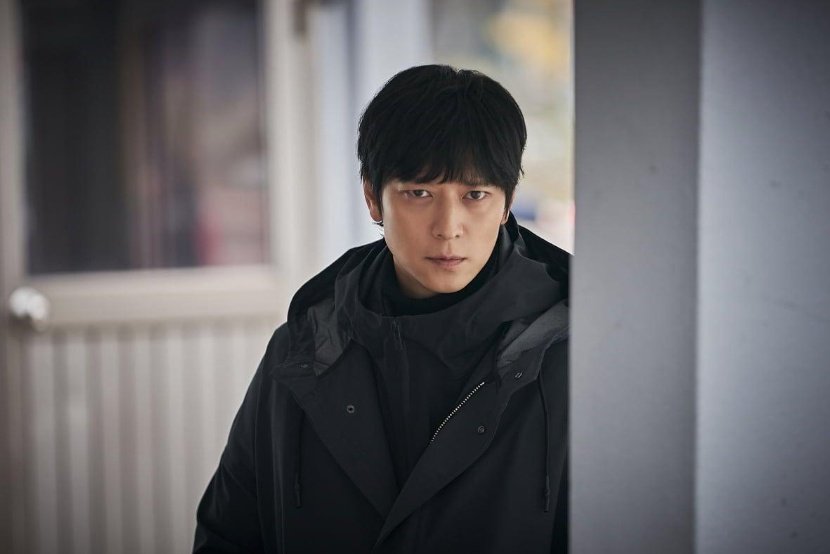
He knows how to make murder look like an accident. He understands timing, evidence, and human behavior. But when someone close to him dies, the man who once controlled every detail begins to wonder whether his own life has been carefully arranged by someone else.
1. The Man Who Could Turn Murder Into an Accident
Most crime thrillers begin with a murder and ask the audience to discover who committed it.
The Plot begins somewhere else.
Its central character, Young-il, is not a detective trying to solve a crime. He is a professional who designs murders so that they appear to be ordinary accidents.
A fall, a traffic collision, or an unexpected incident can become a carefully constructed death. The goal is not simply to kill someone. It is to create an explanation that everyone else will accept.
This premise immediately changes the audience’s relationship with the story.
Instead of watching investigators reconstruct a crime, viewers watch the people responsible for constructing the crime itself.
Young-il and his team treat death as a technical problem. They study circumstances, identify weaknesses, and calculate how an incident can unfold without attracting suspicion.
The disturbing part is how ordinary their work can appear.
The victim dies. The authorities investigate. The public accepts an accident.
And the people responsible move on to their next assignment.
2. Young-il: A Designer Who Believed He Controlled Everything
Young-il’s professional identity depends on control.
He must understand the environment, anticipate unexpected variables, and prepare for possibilities that ordinary people would never consider.
His work requires him to believe that almost every event can be planned.
This belief also shapes his personality.
Young-il is cautious, emotionally distant, and constantly attentive to details. He does not approach the world as a place where things simply happen. He looks for hidden causes and possible intentions.
That mindset makes him exceptionally effective at his job.
But it also creates a weakness.
A person who spends years turning unpredictable events into controlled outcomes may eventually struggle to accept genuine randomness.
For Young-il, an accident is not simply an accident. It is a possibility that someone might have designed.
This becomes the psychological foundation of his eventual crisis.
3. The Death of Jjacknoon: The Incident That Broke His Reality
The death of Jjacknoon becomes a turning point in Young-il’s life.
Until then, the team operates according to a system that appears reliable. Each member has a role, and their combined expertise allows them to execute complicated assignments.
But when a colleague dies under suspicious circumstances, Young-il begins questioning the explanation.
What if the death was not an accident?
What if someone had designed it?
And what if the person responsible understood the team’s methods well enough to make the incident appear completely ordinary?
These questions change the direction of the film.
Young-il is no longer simply a professional designing accidents for other people. He becomes someone trying to determine whether he and his colleagues have become targets.
The psychological reversal is powerful.
The man who once observed the world from the position of the designer is now forced to experience the helplessness of someone who may have been designed into a tragedy.
4. When a Professional Killer Starts Suspecting a Conspiracy
Young-il’s suspicions gradually begin to influence how he interprets everything around him.
People he once trusted become potential threats. Ordinary incidents acquire suspicious meanings. Coincidences become possible evidence of a larger plan.
The audience is placed inside this uncertainty.
Is Young-il discovering a genuine conspiracy, or is his professional experience turning against him?
This is the most interesting psychological question in The Plot.
His occupation has trained him to search for hidden patterns. He understands that seemingly unrelated details can be connected through careful planning.
But that ability has a dangerous consequence.
The more he searches for evidence of a conspiracy, the easier it becomes to interpret every new event as confirmation.
The film therefore creates two competing possibilities.
Young-il may be the only person who understands what is happening.
Or he may be losing his ability to distinguish genuine danger from his own growing paranoia.
5. Can a Perfectly Planned Accident Ever Be Truly Accidental?
The title The Plot carries more than one meaning.
It refers to the plans created by Young-il and his team, but it also suggests a larger question about the relationship between intention and coincidence.
When an accident occurs, people usually search for an explanation.
Was it carelessness? Bad luck? Mechanical failure? A deliberate act?
Young-il’s profession turns those questions into a business.
He understands that the appearance of an accident can be more important than the actual circumstances surrounding it.
This creates a disturbing philosophical problem.
If a murder is designed so perfectly that nobody can distinguish it from an accident, what ultimately determines the truth?
The intention of the person responsible?
The evidence available to investigators?
Or the explanation that society chooses to believe?
The film suggests that truth can become difficult to recognize when the people controlling the evidence also control the story surrounding an event.
6. The Empty Cans: A Family Built on Survival and Crime
Young-il’s team is more than a collection of professional criminals.
The members share an unusual identity as people who exist outside ordinary social structures. They are described through the idea of being empty cans: individuals whose lives and identities are difficult to recognize within the conventional world.
Their work gives them a purpose and a structure.
They depend on one another because their assignments require different abilities. Their survival depends on trust, coordination, and the belief that each person will perform their role.
This creates something resembling a family.
But it is not a conventional family built around affection and shared memories.
It is a community built around secrecy and survival.
That distinction becomes important when Young-il starts questioning the people closest to him.
When trust disappears, the team loses more than its professional efficiency. It loses the foundation that made its existence possible.
7. Jackie, Wol-cheon, and Jeom-man: The People Behind the Design
The supporting members of Young-il’s team contribute different personalities and abilities to the operation.
Jackie, Wol-cheon, and Jeom-man are not simply background characters who assist the protagonist.
They represent the collective intelligence behind the team’s carefully constructed accidents.
Their relationships with Young-il also reveal that his control is never absolute.
A successful operation depends on multiple people making the right decisions. No single individual can completely control every variable.
This is an important contradiction in Young-il’s worldview.
He sees himself as the central designer, but his plans depend on people whose actions he cannot always predict.
The team’s internal relationships therefore become part of the larger suspense.
Can they continue functioning when their leader no longer trusts them?
And can Young-il protect the people around him when he cannot even determine who might be responsible for the danger?
8. Why Young-il Could No Longer Trust His Own Team
Trust is particularly important in a profession built on deception.
Young-il and his colleagues must conceal their identities from the outside world, but they also need to believe that their own group operates according to shared rules.
Once Young-il begins suspecting that someone has deliberately targeted them, that internal trust becomes unstable.
Every conversation can contain hidden meaning.
Every decision can be interpreted as an attempt to manipulate him.
Even a colleague’s attempt to help may look suspicious.
This is where the film’s psychological tension becomes more interesting than its criminal mechanics.
The greatest threat to Young-il may not be the person planning the next accident.
It may be his inability to distinguish between people who are genuinely protecting him and people who are using him.
His professional instincts, once his greatest advantage, become a source of isolation.
9. The Cleaner: A Real Threat or a Product of Paranoia?
The Cleaner is one of the film’s most important sources of uncertainty.
The character represents the possibility that the world of professional accident design is larger and more dangerous than Young-il originally understood.
But the character also contributes to the film’s central ambiguity.
How much of what Young-il believes is supported by evidence?
How much is the result of fear and suspicion?
The uncertainty surrounding the Cleaner becomes part of the audience’s experience.
Rather than receiving a straightforward explanation, viewers must evaluate the same fragmented information that Young-il encounters.
This approach can be effective in psychological thrillers.
However, ambiguity only works when the audience has enough information to construct meaningful interpretations.
If too many developments remain unclear, uncertainty can become frustration rather than suspense.
The Cleaner therefore embodies both the film’s strongest narrative possibility and one of its most difficult storytelling challenges.
10. When Every Coincidence Starts Looking Like Evidence
One of the most disturbing aspects of Young-il’s psychological transformation is how his perception of ordinary events changes.
A coincidence is no longer harmless.
A stranger’s behavior becomes suspicious. An unexpected encounter becomes a possible setup. A small inconsistency becomes evidence that something larger is happening.
This is the logic of paranoia.
Once a person believes that someone is manipulating their life, almost anything can be interpreted as confirmation.
The problem is that suspicion becomes difficult to disprove.
If someone denies involvement, that denial may appear to be another attempt at deception. If an explanation sounds reasonable, it may seem carefully prepared.
Young-il’s mind begins operating like the machinery of the crimes he once designed.
He searches for patterns, anticipates outcomes, and constructs explanations.
But this time, he cannot be certain whether the patterns are real.
The film’s psychological tension comes from watching a man lose confidence in the very system of reasoning that once made him successful.
11. The Political Conspiracy That Complicated the Original Idea
The Korean adaptation expands the original premise by introducing additional elements involving power, influence, and the manipulation of information.
These additions attempt to make the story larger than a criminal operation involving a small group of specialists.
They suggest that the ability to control how events are perceived can extend beyond individual murders.
Institutions, powerful individuals, and public narratives can also shape what people believe.
This is an interesting direction.
A murder designed to look accidental is one example of manipulating reality. A larger conspiracy that influences the interpretation of events operates through a similar principle.
However, expansion comes with a cost.
The more elements a thriller introduces, the more carefully it must connect them.
When the central story becomes crowded with additional explanations and competing mysteries, the original premise can lose some of its impact.
The film occasionally feels as though it is trying to become several different thrillers at once.
12. The Plot vs. Accident: Why the Remake Changed the Formula
<AsyncImage query=”Accident 2009 Hong Kong film Louis Koo Richie Jen original movie poster” aspectRatio=”16:9″ width=”100%”/>
The original Hong Kong film Accident (2009), directed by Soi Cheang, also follows a group of criminals who stage murders to resemble accidents.
The central idea is remarkably similar: a professional who believes he can control every detail begins to suspect that a seemingly accidental death may have been deliberately arranged.
The Korean version preserves that foundation but develops the story through a different set of characters and additional narrative elements.
The difference is important.
The original film’s strength lies in its relatively concentrated psychological structure. It uses the idea of an accident as the foundation for a story about suspicion, manipulation, and the fragility of control.
The Plot attempts to broaden that foundation.
But a bigger story is not necessarily a stronger story.
The expansion introduces more possibilities, yet it also creates more opportunities for the audience to lose track of the central psychological conflict.
The most compelling part of the original premise is not the number of people involved in the conspiracy.
It is the gradual destruction of the protagonist’s confidence in his own ability to understand reality.
13. Gang Dong-won’s Performance and the Problem of Emotional Distance
Gang Dong-won approaches Young-il with a restrained performance.
Rather than playing the character as an openly aggressive criminal, he emphasizes distance, observation, and internal tension.
This approach suits a man who has spent years studying other people’s behavior while avoiding emotional involvement himself.
Young-il rarely appears comfortable.
Even when he is surrounded by colleagues, there is a sense that he is observing rather than participating.
As his suspicions intensify, that emotional distance becomes increasingly important.
The audience watches him become more isolated, but the restrained characterization can also make it difficult to understand the full emotional depth of his transformation.
A psychological thriller needs to communicate what is happening inside its protagonist without explaining everything through dialogue.
Gang Dong-won’s controlled performance supports the atmosphere, although the screenplay does not always give the character enough opportunities to express the consequences of his growing fear.
The result is an interesting central performance within a story that sometimes struggles to translate psychological tension into sustained emotional engagement.
14. Why the Film’s Twists Left Some Viewers Confused
A thriller built around hidden plans naturally depends on revelations.
The audience expects earlier events to acquire new meanings as additional information becomes available.
A successful twist does not simply surprise viewers. It makes them reconsider what they have already seen.
The Plot attempts to create that effect through its shifting explanations and uncertain relationships.
However, there is a difference between a complicated mystery and a confusing narrative.
A complicated mystery gives viewers enough clues to form theories, even if they cannot immediately identify the correct answer.
A confusing narrative introduces so many possibilities that the audience struggles to determine which details deserve attention.
This is where the film’s structure becomes vulnerable.
Some viewers may enjoy the uncertainty and interpret it as part of the protagonist’s psychological experience. Others may feel that the story withholds too much clarity.
The criticism is not necessarily that the film contains too many twists.
It is that the emotional and logical connections between those twists do not always feel sufficiently developed.
The ending consequently leaves room for interpretation, but not every viewer will find that ambiguity satisfying.
15. What Happens When the Designer Becomes Part of the Design?
At its core, The Plot is about a man who believes that every event can be controlled.
Young-il’s profession depends on the assumption that people can be studied, circumstances can be manipulated, and death can be disguised as coincidence.
But when he begins questioning the circumstances surrounding his colleague’s death, his entire worldview starts collapsing.
He discovers that the person who designs an accident is not necessarily protected from becoming its victim.
That is the film’s strongest idea.
The designer can become part of the design. The observer can become the observed. The person who manipulates other people’s reality can lose confidence in his own.
The film has weaknesses. Its expanding plot sometimes dilutes the original psychological premise, and its complicated developments do not always produce the clarity needed for a satisfying thriller.
Yet its central concept remains compelling.
We often believe that understanding the system gives us control over it. We assume that enough information can protect us from uncertainty.
Young-il represents the extreme version of that belief.
He knows how to manufacture accidents, but he cannot guarantee that his own life is free from manipulation.
Perhaps the most frightening possibility in The Plot is not that someone has designed your death. It is that someone has designed your entire reality, and you no longer know which of your choices were ever truly your own.