Explore K-pop artists, music, fandom culture, relationships, controversies, and the stories behind the headlines. Discover the questions fans are asking and the deeper meaning behind the moments shaping K-pop.

  • Why BABYMONSTERโ€™s โ€œMOONโ€ Era Stood Out: Ahyeonโ€™s Transformation, Roraโ€™s Visuals, and the Vampire Concept

    Why BABYMONSTERโ€™s โ€œMOONโ€ Era Stood Out: Ahyeonโ€™s Transformation, Roraโ€™s Visuals, and the Vampire Concept

    BABYMONSTER did not need an entirely new album to show fans a different side of the group. With โ€œMOON,โ€ a B-side from their third mini album CHOOM, they created a visual identity that felt almost like a separate comeback.

    The change was immediately noticeable.

    Dark smoky makeup, naturally waved hair, mysterious expressions, and a cinematic atmosphere replaced the brighter image associated with โ€œI LIKE IT.โ€ Ahyeonโ€™s transformation became one of the most discussed parts of the visual campaign, while Rora attracted attention for a more restrained and mysterious look.

    But the interest did not stop with individual member photos.

    The โ€œMOONโ€ music video introduced a vampire-inspired fantasy world filled with coffins, fangs, bats, and a blood-red moon. Its performance video then extended that concept beyond the original music video.

    YG had turned one album track into a distinct visual event.

    So why did this particular concept attract so much attention? The answer goes beyond makeup or styling. โ€œMOONโ€ demonstrated how BABYMONSTER could create a different artistic identity without abandoning the musical direction of the same album.

    1. Why Did a B-Side Like โ€œMOONโ€ Receive Its Own Music Video?

    The first detail worth understanding is that โ€œMOONโ€ was not the title track of CHOOM.

    BABYMONSTER released their third mini album on May 4, 2026. The four-track record included:

    1. โ€œMOONโ€
    2. โ€œCHOOMโ€
    3. โ€œI LIKE ITโ€
    4. โ€œLOCKED INโ€

    YG described โ€œMOONโ€ as a Southern trap-style R&B hip-hop track with a dreamy and unusual atmosphere. This already separated it from the title track, โ€œCHOOM,โ€ which was built around a more energetic hip-hop dance sound.

    The company subsequently gave โ€œMOONโ€ its own music video, released on August 3.

    This was not simply an additional upload for fans who had already heard the song. It created another promotional moment for an existing album and gave the track a visual identity of its own.

    There is a strategic difference between releasing a B-side performance clip and developing a complete visual concept.

    A performance clip primarily highlights choreography and stage presence. A concept-driven music video can introduce characters, atmosphere, symbolism, and a fictional world.

    โ€œMOONโ€ was designed around the second approach.

    It gave listeners a reason to return to a song they already knew, while allowing the group to reveal a different side of its artistic range.

    2. Why Ahyeonโ€™s Transformation Became a Major Talking Point

    Ahyeon was one of the members who attracted immediate attention when the โ€œMOONโ€ visual photos began appearing.

    YG released the visual photos in stages, and the July 29 images of Ahyeon and Rora became a particularly noticeable moment in the campaign.

    Ahyeon’s styling was markedly different from the brighter image associated with โ€œI LIKE IT.โ€

    Her dark smoky makeup and naturally waved hair created a more dramatic appearance. The styling also worked with the mysterious atmosphere that YG had already described for the upcoming music video.

    The reaction on Reddit was enthusiastic.

    In the discussion thread dedicated to the two members’ visual photos, one fan wrote, โ€œAhyeon changed!โ€ Other comments highlighted her curly hair and praised the group’s ability to handle different concepts.

    These reactions are useful because they reveal what fans were responding to: not simply a new outfit, but a noticeable contrast with the image they had recently seen.

    The interesting point is that Ahyeon did not need an entirely different character or personality to make the transformation effective.

    The styling changed the way viewers interpreted her familiar features.

    That is one of the strengths of a successful K-pop concept. It can make an artist look new without making the artist feel unrecognizable.

    3. Roraโ€™s Visuals Created a Different Kind of Impact

    Rora’s contribution to the visual campaign was different from Ahyeon’s, and that contrast helped the two photos work together.

    In the official image, Rora looks directly toward the camera with her chin resting on her hand. Her expression is restrained rather than exaggerated.

    The result is a quieter kind of intensity.

    Ahyeon’s transformation is immediately noticeable because of the dramatic styling. Rora’s image relies more heavily on her gaze, expression, and the atmosphere created by the photograph.

    This difference is important.

    A group concept does not become visually interesting when every member is styled in exactly the same way. It becomes more memorable when the members express the same world through different visual personalities.

    In โ€œMOON,โ€ the dark atmosphere connects the members, but their individual photographs do not feel interchangeable.

    That gives fans different details to notice and discuss.

    It also makes the visual campaign more effective than a collection of identical portraits with different faces.

    4. The Vampire Concept Was More Than Dark Makeup

    The full music video, released on August 3, took the mysterious atmosphere much further.

    YG presented BABYMONSTER in a horror-fantasy setting. The members awaken inside coffins, display vampire-like fangs, and appear in scenes featuring bats and a blood-red full moon.

    These details create a recognizable visual universe.

    The distinction matters because a dark concept can easily become superficial. Black clothing, heavy makeup, and dramatic lighting do not automatically create a coherent story.

    โ€œMOONโ€ connects its imagery to the song’s mysterious atmosphere.

    The vampire references give viewers a visual language they can immediately recognize. The coffins suggest awakening, the fangs reinforce the supernatural identity, and the red moon provides a central image that ties the scenes together.

    The result feels closer to a short fantasy film than a conventional idol music video.

    YG also described the video as a cinematic interpretation of the song’s mysterious and dreamy mood.

    That approach gave the track an identity that could be discussed independently of the album’s title song.

    5. Why the Contrast With โ€œI LIKE ITโ€ Was So Effective

    One of the most important comparisons is between โ€œMOONโ€ and โ€œI LIKE IT.โ€

    Both tracks belong to the same mini album, but YG presented them through noticeably different moods.

    โ€œI LIKE ITโ€ was described as a dance track with bright and refreshing energy.

    โ€œMOON,โ€ by contrast, was built around a dreamy and unconventional Southern trap-style R&B hip-hop sound.

    The difference is not limited to the music.

    The visual presentation follows the same contrast:

    Elementโ€œI LIKE ITโ€โ€œMOONโ€
    Overall moodBright and refreshingMysterious and dreamy
    Visual directionYouthful and energeticDark and cinematic
    Main appealLightness and accessibilityFantasy and atmosphere
    Performance identityBright pop energyDarker, theatrical expression

    This contrast gives the album more than one emotional entry point.

    A listener who enjoys the brighter side of BABYMONSTER can connect with โ€œI LIKE IT.โ€ Someone who prefers darker imagery and a more theatrical atmosphere may find โ€œMOONโ€ more memorable.

    The group does not have to choose one permanent visual identity.

    Instead, it can use different musical styles to reveal different aspects of the same group.

    6. Fans Had Imagined a Horror-Inspired Concept Before the Video Arrived

    The fan discussion surrounding โ€œMOONโ€ did not begin only after the full music video was released.

    During the visual-photo rollout, some fans were already speculating about the direction of the concept.

    The Reddit discussion included comments about the members’ unusual appearance, possible fantasy elements, and comparisons with earlier dark BABYMONSTER visuals.

    This kind of speculation is common during a K-pop teaser campaign, but it becomes especially interesting when the final video delivers a recognizable concept rather than a collection of unrelated images.

    The official vampire imagery gave fans something concrete to connect with their earlier expectations.

    Still, it is important not to exaggerate the relationship between fan theories and the finished production. There is no evidence that YG developed the video in response to those particular Reddit discussions.

    A more reasonable interpretation is that the teaser campaign successfully encouraged viewers to imagine what kind of world the song would introduce.

    The finished music video then gave that curiosity a clear visual answer.

    7. The Performance Video Extended the โ€œMOONโ€ Identity

    The music video was not the final stage of the campaign.

    On August 5, YG released a separate performance video for โ€œMOON.โ€

    This mattered because the original music video and the performance video served different purposes.

    The music video established the fantasy setting. It introduced the vampire imagery and built the song’s atmosphere.

    The performance video placed more emphasis on the members’ movement, choreography, and stage presence.

    YG specifically highlighted the point choreography inspired by the lyric โ€œI’m the moon,โ€ along with the group’s synchronized dancing and vampire-inspired styling.

    According to the company, the performance video also reached No. 1 on YouTube’s Worldwide Trending chart.

    The original music video had already reached the top of the same global trending chart immediately after its release.

    Together, these two releases created a second wave of attention around the same song.

    The important lesson is that the visual concept was not limited to one carefully edited music video. It could also be carried into a performance-focused format without losing its identity.

    8. Why โ€œMOONโ€ Became More Than Another Album Promotion

    There is a promotional strategy behind the way YG presented the song.

    The company did not rely only on the May 4 album release. It continued releasing content connected to CHOOM, including individual visual photos, music video teasers, the full โ€œMOONโ€ video, and a separate performance video.

    The sequence created several opportunities for fans to return to the same track:

    1. Individual member visual photos introduced the concept.
    2. Teaser content built anticipation for the music video.
    3. The full video revealed the vampire-inspired world.
    4. The performance video shifted attention toward choreography.
    5. Making content gave fans another way to engage with the production.

    This is more than simply posting multiple videos.

    Each format gives viewers a different reason to pay attention.

    The individual photos encourage discussion about members. The music video creates a shared visual experience. The performance video allows fans to focus on dance and stage presence.

    For an album with only four tracks, that kind of extended content strategy can help individual songs develop their own identities.

    It also explains why a B-side can sometimes generate a separate promotional moment rather than remaining in the shadow of the title track.

    9. Does the Dark Concept Suit BABYMONSTER Better?

    There is no single answer because fans are drawn to different sides of the group.

    Some prefer the energetic hip-hop image associated with earlier releases such as โ€œSHEESH.โ€ Others enjoy the brighter atmosphere of โ€œI LIKE IT.โ€ The darker visual direction of โ€œMOONโ€ offers another option.

    The interesting question is not necessarily which concept is objectively best.

    It is whether BABYMONSTER can move between these styles while maintaining a recognizable group identity.

    โ€œMOONโ€ provides a strong example of how that can work.

    The song’s musical atmosphere, the individual visual photos, the vampire imagery, and the performance video all support the same general direction.

    The concept feels connected rather than assembled from unrelated styling decisions.

    That consistency is what allows a visual transformation to become an era that fans remember.

    A group does not need to repeat the same image to maintain its identity. It needs to make each change feel intentional.

    10. What โ€œMOONโ€ Reveals About BABYMONSTERโ€™s Future Visual Range

    The biggest takeaway from โ€œMOONโ€ is not simply that Ahyeon looked different or that Rora received praise.

    It is that BABYMONSTER demonstrated how much variety can exist within one album cycle.

    The group moved from a brighter concept to a darker fantasy setting without making the transition feel disconnected from the music.

    That creates more possibilities for future releases.

    A group that can convincingly handle contrasting moods has more room to experiment with music videos, performances, styling, and storytelling.

    But there is also a challenge.

    If every new concept relies only on a dramatic visual transformation, the novelty may eventually wear off. To keep these changes meaningful, the music and visual storytelling must continue to support each other.

    โ€œMOONโ€ worked because the concept was connected to the track’s sound and atmosphere.

    The vampire imagery was not just decoration. It gave the song a distinctive visual identity that could continue into the performance video and the broader promotional campaign.

    That is a stronger foundation than simply making the members look different for a few teaser photos.

    Final Answer: Why Are Fans So Interested in BABYMONSTERโ€™s โ€œMOONโ€ Era?

    The appeal of โ€œMOONโ€ comes from the combination of three elements.

    First, the individual transformations: Ahyeon’s dark styling attracted immediate attention, while Rora’s restrained expression added another dimension to the visual campaign.

    Second, the vampire-inspired world: The coffins, fangs, bats, and blood-red moon turned the song into a recognizable horror-fantasy concept.

    Third, the promotional execution: YG extended the track beyond the album through a separate music video and performance video, giving the B-side its own moment.

    The result was more than a styling experiment.

    โ€œMOONโ€ showed that BABYMONSTER could explore a darker, more cinematic identity without abandoning the group’s musical foundation.

    And perhaps that is the most interesting part of this era.

    The group did not have to become someone else to surprise its audience.

    It simply showed fans a side they had not seen in quite the same way before.

    The next challenge is whether BABYMONSTER can keep expanding that range while making every new concept feel just as distinctive.

    More K-Pop Stories

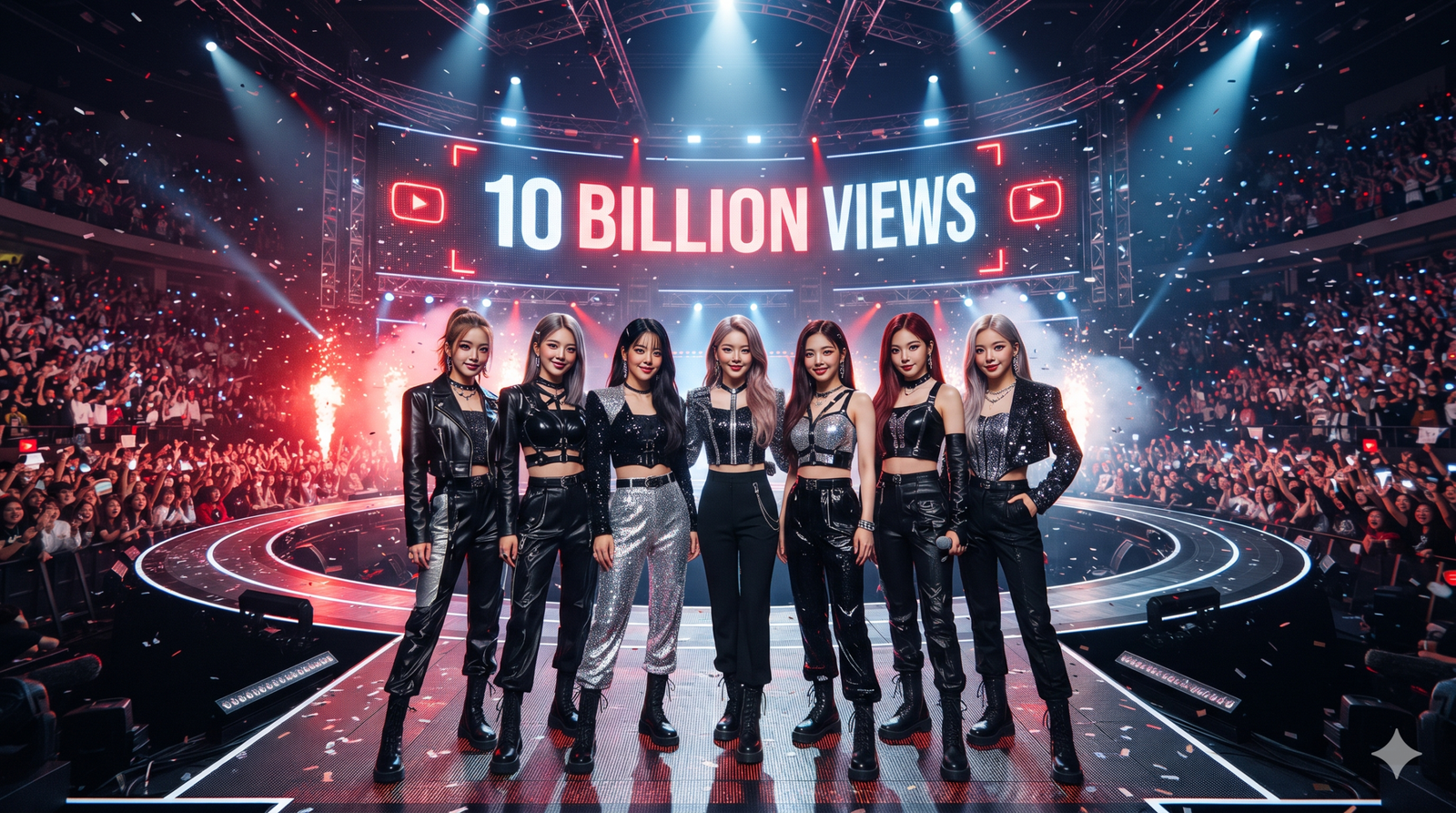
  • BABYMONSTER Hits 10 Billion YouTube Views: The Content Strategy Behind Its Record-Breaking Rise

    BABYMONSTER Hits 10 Billion YouTube Views: The Content Strategy Behind Its Record-Breaking Rise

    BABYMONSTER has crossed a YouTube milestone that places the group in rare company.

    On September 3, 2026, YG Entertainment announced that the cumulative views on BABYMONSTERโ€™s official YouTube channel had surpassed 10 billion. The channel reached the milestone approximately three years and eight months after its launch in December 2022.

    That made BABYMONSTER the second K-pop girl group to pass 10 billion views on a single official YouTube channel, following BLACKPINK. It also set the fastest record among K-pop girl groups to reach the figure.

    But the timeline deserves a closer look.

    BABYMONSTER officially debuted on April 1, 2024. That means the channel had already been operating for more than a year before the group’s official debut. The 10-billion milestone therefore reflects not only the success of its music releases, but also the value of the pre-debut audience that YG had been building.

    So how did BABYMONSTER accumulate such an enormous number of views in such a short period?

    The answer lies in a content strategy that gives viewers several different reasons to return to the same channel.

    1. The 10 Billion Figure Measures an Entire YouTube Channel

    The first thing to understand is what the milestone actually represents.

    The 10 billion figure is the cumulative view count of BABYMONSTERโ€™s official YouTube channel. It is not the total for one music video, and it should not be interpreted as 10 billion views generated exclusively by the group’s songs.

    The channel contains different types of official content, including:

    • Official music videos
    • Dance and performance videos
    • Behind-the-scenes footage
    • Original promotional content
    • Other videos featuring the members and their activities

    This distinction is central to understanding the achievement.

    A viewer might discover BABYMONSTER through a music video, then watch a choreography video to see the performance more clearly. Another viewer might become interested in a particular member and continue watching behind-the-scenes footage.

    These are different viewing experiences, even when they involve the same song or the same group.

    Instead of depending on a small number of major releases, BABYMONSTER has built a substantial video library in which individual videos can attract their own audiences.

    The 10 billion milestone is therefore better understood as the result of a growing content ecosystem than as the success of a handful of hit songs.

    2. The Pre-Debut YouTube Channel Gave BABYMONSTER a Head Start

    One detail makes BABYMONSTERโ€™s growth especially interesting: its YouTube channel existed long before the group’s official debut.

    YG introduced the project in late 2022 and began releasing introductory and member-focused content before the group officially entered the music market.

    That meant potential fans could become familiar with the members, their skills and the group’s identity before the first official album arrived.

    This is a meaningful difference from a traditional debut strategy.

    In a conventional launch, an agency introduces a group and then tries to attract an audience through its debut song. BABYMONSTER had an additional stage: it could develop curiosity and familiarity before the official debut.

    By the time โ€œSHEESHโ€ arrived in April 2024, the channel already had an established audience.

    This does not mean the groupโ€™s later success was guaranteed. Pre-debut attention can disappear if the music and performances fail to meet expectations.

    However, it gave BABYMONSTER an important advantage: the group did not have to build its entire YouTube audience from zero on the day of its official debut.

    The distinction also explains why the milestone should be described accurately. The channel reached 10 billion views three years and eight months after opening, while the group had been officially active for approximately two years and five months.

    Both timelines matter, but they measure different things.

    3. โ€œSHEESHโ€ Turned Pre-Debut Attention Into a Major Debut Moment

    The release of โ€œSHEESHโ€ on April 1, 2024, demonstrated that the audience built before debut could translate into substantial interest in an official release.

    The music video surpassed 100 million views in approximately 10 days and 11 hours.

    YG announced that it had set a new record for the fastest K-pop girl-group debut-song music video to reach that milestone at the time.

    The timing was significant because โ€œSHEESHโ€ was BABYMONSTERโ€™s official debut song as a complete seven-member group, including Ahyeon.

    But the more important development was not simply the speed of the first 100 million views.

    The song helped establish a pattern that would continue with later releases: a major music video could become an entry point into a much larger collection of content.

    Viewers who arrived for โ€œSHEESHโ€ had other videos to explore. The group could continue attracting attention through performance clips, additional releases and member-focused content.

    By September 3, 2026, YG reported the following view counts for three of the group’s major music videos:

    Music videoReported views
    โ€œSHEESHโ€410 million
    โ€œDRIPโ€400 million
    โ€œBATTER UPโ€340 million

    These figures illustrate that the channel’s growth was not dependent on a single breakout video.

    Several major releases had developed substantial viewing audiences of their own.

    4. Performance Videos Give Fans a Different Reason to Watch

    One of the strongest explanations for BABYMONSTERโ€™s YouTube growth is the importance of performance-focused content.

    A music video and a performance video may feature the same song, but they do not necessarily serve the same purpose.

    A music video usually combines music with storytelling, visual effects, styling, editing and a particular concept.

    A performance video shifts attention toward the performers themselves.

    Viewers can concentrate more closely on choreography, facial expressions, synchronization, stage presence and individual member contributions.

    That difference matters for a group whose public image places considerable emphasis on performance skills.

    Someone who has already watched the โ€œSHEESHโ€ music video may still want to see how the choreography looks without the same narrative editing. Another viewer may prefer a performance-focused version because it makes the members’ movements easier to follow.

    In other words, the second video is not simply a duplicate of the first. It offers another way to experience the same musical material.

    YG reported that BABYMONSTER had 17 videos with more than 100 million views each by September 3, 2026.

    That figure is particularly revealing.

    A channel with 17 videos above the 100-million mark has multiple high-performing entry points. New viewers do not have to discover the group through one specific song, and existing fans have more than one reason to revisit the channel.

    For more on the commercial value of K-pop performance content, see our analysis of who gets paid when a K-pop dance goes viral.

    5. The BLACKPINK Connection Created Expectations, but BABYMONSTER Had to Deliver

    BABYMONSTER’s connection to YG Entertainment also played an important role in its early visibility.

    YG is the company behind BLACKPINK, one of the most internationally recognized K-pop girl groups. That history naturally created curiosity about the agency’s next girl group.

    The connection gave BABYMONSTER an advantage that a completely unknown independent act might not have enjoyed.

    Fans already knew the company’s production identity, and the introduction of a new YG girl group attracted attention before the official debut.

    However, the BLACKPINK connection should not be treated as a complete explanation for BABYMONSTER’s growth.

    A well-known agency can generate initial interest, but it cannot automatically produce years of repeat viewing.

    The new group still needed songs, performances and individual identities that gave audiences a reason to stay.

    There is also an important difference between inheriting expectations and inheriting an audience.

    BABYMONSTER benefited from the attention surrounding YG’s history, but its 10-billion-view milestone was achieved through its own official channel and its own expanding video catalog.

    BLACKPINK helped establish the scale of what a YG girl group could become internationally. BABYMONSTER now has to demonstrate its own staying power.

    6. Even a B-Side Can Become a Separate Content Event

    Another feature of BABYMONSTER’s strategy is the way the group can extend attention beyond title tracks.

    A conventional promotional cycle often concentrates most of its resources on one main song. Once the music video and major performances have been released, public attention may gradually move toward the next comeback.

    BABYMONSTER’s content strategy offers more possibilities.

    For example, โ€œMOONโ€ received its own music video and performance-focused content despite not being the title track of the group’s third mini album, CHOOM.

    That gives a B-side a visual identity and a promotional life of its own.

    It also allows different songs to appeal to different parts of the audience. A viewer who prefers a darker visual concept may respond more strongly to โ€œMOON,โ€ while another may be drawn to the group’s more aggressive hip-hop-oriented performances.

    This is not just about releasing more videos.

    It is about giving different songs and concepts distinct reasons to attract attention.

    We examined this approach in our article, BABYMONSTERโ€™s โ€œMOONโ€ Era: Why Fans Love Ahyeon and Roraโ€™s New Look.

    The broader lesson is that a group’s content library becomes more valuable when its videos do not all serve exactly the same purpose.

    7. Does 10 Billion Views Mean BABYMONSTER Is More Popular Than Other Girl Groups?

    Not necessarily.

    YouTube views are a powerful indicator of video reach, but they cannot measure every dimension of an artist’s popularity.

    For example, these indicators answer different questions:

    • YouTube views: How often has the channel’s video content been watched?
    • Subscribers: How many accounts have chosen to follow the channel?
    • Music streaming: How frequently are the songs played on audio platforms?
    • Album sales: How many physical or digital albums have been purchased?
    • Concert attendance: How many people are willing to attend live performances?
    • Long-term fandom: How consistently do fans support the group across different releases and activities?

    These measures overlap, but they are not interchangeable.

    A high cumulative view count can be influenced by the number of videos released, the popularity of individual videos, repeat viewing and the way fans discover content.

    It does not automatically prove that a group has the largest active fandom, the strongest album sales or the greatest overall musical influence.

    Still, BABYMONSTER’s other YouTube figures provide additional context.

    YG reported that the channel had surpassed 13 million subscribers by the time of the 10-billion-view announcement. That made it the third K-pop girl group to reach that subscriber level, following BLACKPINK and TWICE.

    The combination of 10 billion cumulative views and more than 13 million subscribers shows that BABYMONSTER has developed a substantial audience on the platform.

    The achievement is impressive on its own, even without turning it into an unsupported ranking of overall popularity.

    8. The Next Test: Can Online Attention Become Long-Term Global Influence?

    The next stage of BABYMONSTER’s development is not simply to accumulate more YouTube views.

    It is to demonstrate that its online audience can support the group across different forms of activity.

    The 2026โ€“27 BABYMONSTER WORLD TOUR [CHOOM] began in Seoul in June 2026. YG announced a schedule covering five continents, with 29 shows across 18 cities.

    A world tour creates a different kind of test from a YouTube milestone.

    Online viewers can watch a video from anywhere, often without making a financial commitment. Concert attendance requires fans to make more deliberate decisions involving tickets, travel and time.

    That is why the relationship between digital popularity and live performance is worth watching.

    If BABYMONSTER can turn its enormous online reach into sustained concert attendance, repeat album purchases and continued interest in future releases, the group will have demonstrated that its audience extends beyond YouTube.

    The tour is an opportunity to test that connection, not proof that the transition has already been completed.

    The group’s long-term position will depend on what happens after the excitement surrounding the 10-billion milestone fades.

    The Real Meaning of BABYMONSTERโ€™s 10 Billion Views

    The easiest explanation is that BABYMONSTER has several popular songs.

    But that does not fully explain the scale of the achievement.

    The more interesting story is how YG built a channel that could attract viewers at different stages of the group’s development.

    Pre-debut videos introduced the members. โ€œSHEESHโ€ converted early curiosity into a major official debut moment. Performance videos gave viewers another way to experience the music. Additional releases and B-side content expanded the reasons to return.

    Each format contributed something different to the channel.

    There is also a useful distinction between the group’s official career and the age of its YouTube channel. BABYMONSTER did not reach 10 billion views in three years and eight months solely through post-debut activity. The pre-debut period was part of the foundation.

    That does not make the achievement less impressive. It makes the growth story more understandable.

    BABYMONSTER’s 10-billion-view milestone is not simply evidence that people watched a few hit music videos. It shows how a K-pop group can build a large digital audience by treating YouTube as an ongoing platform for music, performance and artist identity.

    The next question is whether that audience will continue to growโ€”and whether BABYMONSTER can turn its remarkable digital reach into lasting global influence.


    Sources

    Editorial note: View counts and subscriber milestones in this article refer to figures reported by YG Entertainment on the stated dates. They are not presented as live, continuously updated totals.

  • BTS Closed iHeartRadio Festival With Just Four Songsโ€”Why Are Fans Still Talking About It?

    BTS returned to the iHeartRadio Music Festival stage on September 18, 2026, closing the first night at T-Mobile Arena in Las Vegas.

    All seven members performed together. The group brought a major festival night to a close, introduced music from its latest album, ARIRANG, and delivered a visually ambitious performance.

    But one detail quickly became the biggest talking point.

    BTS performed only four songs.

    The set lasted approximately 15 minutes, according to the published setlist record. For fans who had waited six years to see the group return to this festival, the performance felt remarkably brief.

    The reaction was not simply negative. Many viewers praised the members’ energy and the stage production, while others questioned the short set, broadcast sound, and abrupt ending.

    So why did BTS perform only four songs? Was the group given less time than other artists, or was the short appearance part of a deliberate creative plan?

    The distinction matters because the official explanation and the fans’ experience tell two different parts of the story.

    1. BTS Returned to iHeartRadio After Six Years

    BTS performed at the T-Mobile Arena in Las Vegas on Friday, September 18, closing the first night of the 2026 iHeartRadio Music Festival.

    All seven membersโ€”RM, Jin, Suga, J-Hope, Jimin, V, and Jungkookโ€”appeared together.

    The performance marked the group’s return to the festival after its previous appearance in 2020. That six-year gap made the moment especially meaningful for fans who wanted to see BTS back on a major American festival stage as a complete group.

    The timing also mattered.

    BTS arrived with a new musical chapter to present. Rather than building the entire performance around the songs that first introduced the group to mainstream American audiences, the members devoted most of their limited set to ARIRANG, their latest album.

    This was not simply a nostalgic return.

    It was an opportunity to show what BTS wanted its current musical identity to look and sound like.

    2. The Four-Song Setlist: What Did BTS Perform?

    The official iHeartRadio recap confirmed the order of the four performances:

    1. SWIM โ€” The lead single from ARIRANG opened the set.
    2. 2.0 โ€” Another track from the new album continued the group’s current musical direction.
    3. MIC Drop โ€” The 2017 track from Love Yourself: Her brought an older BTS hit into the performance.
    4. FYA โ€” The high-energy ARIRANG track closed the night.

    Three of the four songs came from ARIRANG.

    That ratio is important. BTS had a huge catalog of international hits to choose from, but the group did not use the festival appearance as a career-spanning greatest-hits performance.

    Instead, it gave the new album most of the available space and selected one established track to connect the present with the group’s earlier success.

    The sequence was deliberate in its effect:

    New identity โ†’ New direction โ†’ Established legacy โ†’ New-era finale.

    The four songs were not simply four unrelated tracks placed together. The stage presentation connected them through a changing visual world, giving the short performance a sense of progression.

    3. Why Did Four Songs Feel So Short?

    Four songs are not automatically too few for a festival appearance. Festival sets vary according to the event’s schedule, production requirements, and the time allocated to each performer.

    But the audience reaction shows why this particular set felt unusually brief.

    In a Reddit discussion following the performance, fans compared BTS’s appearance with other acts from the same night. Some viewers believed several earlier performers had received considerably longer sets, estimating roughly 25 to 30 minutes for some of them.

    Others said BTS seemed to leave the stage just as the performance was reaching its peak.

    One recurring reaction was that the audience expected another song after “FYA.” Some viewers even interpreted the ending as a possible fake-out before realizing the set was over.

    These comments reflect fan perceptions, not an official comparison of every artist’s allocated performance time.

    There is also an important point that changes how the situation should be understood: iHeartRadio’s official recap described the four-song selection as a set thoughtfully curated by the band. That supports the idea that the four-song format was part of the planned performance, rather than proof that the festival unexpectedly stopped BTS halfway through.

    However, a planned short set can still leave audiences disappointed.

    For fans who had waited six years to see BTS return to this stage, approximately 15 minutes was a very small amount of time. The frustration was not necessarily about the quality of the performance. It was about how quickly the opportunity ended.

    4. The Sound and Camera Work Became Another Point of Debate

    The set length was not the only issue discussed by viewers.

    Some fans also criticized the broadcast’s sound mix. In the Reddit discussion, viewers complained that the instrumental sometimes seemed louder than the members’ vocals. Others questioned the microphone levels and overall sound production.

    Lighting and visibility during “FYA” also attracted criticism.

    These reactions should be understood as comments about the viewing experience, not as evidence that the members performed poorly.

    There is a meaningful difference between hearing a performance inside an arena and watching its broadcast.

    The live audience experiences the venue’s sound system, physical atmosphere, and stage effects directly. Viewers at home depend on the broadcast mix, camera choices, and lighting captured by the production team.

    A problem in the broadcast mix can therefore affect the television or streaming experience without necessarily representing what every person inside the arena heard.

    This helps explain the apparently contradictory reaction: fans could be excited by BTS’s stage energy while still feeling that the broadcast did not present the performance as effectively as it could have.

    There is no verified evidence that the sound issues were deliberately directed at BTS. The more responsible conclusion is that some viewers were dissatisfied with the production they watched.

    5. Why Didn’t BTS Perform “Dynamite” or “Butter”?

    For an American radio festival, the absence of “Dynamite” and “Butter” was notable.

    Both songs played major roles in expanding BTS’s reach among mainstream American listeners. They are also among the group’s most recognizable English-language releases.

    Yet neither appeared in the four-song set.

    Instead, BTS chose three tracks from ARIRANG and one older song, “MIC Drop.”

    That choice suggests a different priority from simply repeating the group’s most familiar crossover hits.

    A festival audience is not made up entirely of dedicated fans. Some people know BTS through its English-language singles, while others follow the group’s Korean-language releases and wider discography.

    Performing “Dynamite” or “Butter” might have offered an immediate recognition moment for casual listeners. But it would also have taken time away from the new album.

    BTS appeared to prioritize introducing its current era.

    That decision carries both an opportunity and a risk. Longtime fans can hear where the group is heading, but casual listeners who expected the familiar American hits may have found the selection surprising.

    For an established global act, the question is no longer simply how to introduce its biggest songs. It is also how to keep moving forward without being defined only by its past success.

    6. Why Was “MIC Drop” the Only Older Song?

    The choice of “MIC Drop” deserves closer attention.

    Among BTS’s many older tracks, it is particularly effective in a festival setting. Its confident delivery and recognizable energy can communicate the group’s attitude even to listeners who do not know the full story behind the song.

    It also serves as a bridge between two periods of BTS’s career.

    The first two songs established the new ARIRANG chapter. “MIC Drop” then brought back a track associated with the group’s earlier international rise. Finally, “FYA” returned the performance to the present.

    The order matters:

    SWIM โ†’ 2.0 โ†’ MIC Drop โ†’ FYA

    BTS acknowledged its history without allowing the performance to become a retrospective.

    The group did not finish with its most familiar older hit. It ended with a song from the new album.

    That makes “MIC Drop” more than a nostalgic inclusion. It functions as a reminder of the group’s established identity before the performance moves forward again.

    For a deeper look at the song’s selection, read Why Did BTS Bring Back “MIC DROP” at the 2026 iHeartRadio Music Festival?.

    7. The Four Songs Were Connected by One Visual Story

    One detail that deserves more attention is the way the performance was staged.

    The four songs were not presented as completely separate musical moments. The visual production connected them through imagery associated with movement, expansion, and transformation.

    “SWIM” began with an underwater atmosphere, using images of rising water and waves to establish the opening world.

    For “2.0,” the setting shifted toward a vast industrial environment, with the visual space expanding as the performance progressed.

    “MIC Drop” moved into a more expansive cosmic setting. The members appeared in silhouette before the imagery opened into stars and galaxies.

    Finally, “FYA” brought the visual journey to a fiery conclusion, with comet imagery and flames intensifying the final stage.

    This progression gives the short set a different meaning.

    The four songs can be understood as one compact performance concept rather than four isolated tracks. The production moved from a confined underwater environment toward a larger, more explosive visual space.

    That does not make the limited duration irrelevant. A carefully designed 15-minute performance is still only 15 minutes.

    But it helps explain why BTS may have chosen to concentrate its resources on a connected stage experience instead of adding more songs.

    The creative objective appears to have been to present a coherent new-era statement within the available time.

    8. What Did the Closing-Night Position Actually Mean?

    BTS closed the first night of the festival, performing after a lineup that included Kenny Chesney, Weezer, Goo Goo Dolls, Cardi B, and Zara Larsson.

    The festival was also distributed through iHeartMedia radio stations across more than 150 markets, with Disney+ and Hulu serving as its official streaming destinations.

    That gave BTS a prominent position in a major American music event.

    However, being the closing act does not automatically mean receiving the longest performance slot. A festival’s running order and the duration of each artist’s set are separate considerations.

    This distinction is important because some online reactions treated BTS’s short appearance as evidence that the festival had undervalued the group.

    The available official information does not establish that conclusion.

    What can be said is that the contrast was striking: BTS had a high-profile closing position, but its four-song set felt shorter than many fans expected.

    That gap between the importance of the appearance and the amount of time on stage became a major reason the performance attracted discussion.

    9. Is BTS Still Trying to Prove Itself in America?

    The performance also raises a larger question about BTS’s position in the American music industry.

    In the group’s earlier years, major American appearances often carried the expectation that BTS would introduce K-pop to audiences who were unfamiliar with Korean music.

    That situation has changed.

    BTS has already established a substantial international audience. Its members can now use major stages to present new music rather than relying entirely on the songs that first brought them mainstream attention in the United States.

    But a festival audience creates a different challenge from a dedicated concert crowd.

    A BTS concert is built around the group’s catalog, its fans, and a much longer performance. A multi-artist festival has to accommodate different audiences and a fixed schedule.

    Within a short slot, BTS had to introduce its latest album, acknowledge its earlier success, and create a memorable finale.

    The group chose to give most of the set to ARIRANG, with “MIC Drop” as its connection to the past.

    Whether every fan agreed with that balance is another matter. But the selection suggests that BTS wanted the festival stage to represent where the group is now, rather than simply remind American audiences of its biggest previous hits.

    Final Thoughts: Four Songs Were Enough to Start a Much Bigger Conversation

    BTS’s 2026 iHeartRadio Music Festival appearance produced several different discussions.

    Fans questioned why the set contained only four songs. Others criticized the broadcast sound and lighting. Some wanted “Dynamite” or “Butter,” while others welcomed the decision to focus on ARIRANG.

    The most important distinction is that the four-song selection appears to have been planned as a compact performance, not proven to be an unexpected interruption. iHeartRadio itself described the set as thoughtfully curated by the band.

    That does not mean fans had no reason to want more.

    A planned performance can still feel too short, especially when the audience has waited years for the group to return.

    Ultimately, BTS used its limited time to make a clear statement: three new-era tracks, one established hit, and a visual progression that ended with “FYA.”

    Some fans wanted a longer set. Others were satisfied with the musical direction.

    Both reactions can be true.

    Perhaps the biggest story was not simply that BTS performed four songs.

    It was that even after a six-year gap, four songs were enough to leave fans asking for a full concert.

    What do you think? Should BTS have received a longer set, and which song would you have added?