When people think about K-Beauty, glowing skin, sunscreen, sheet masks and serums usually come to mind.
But in Korea, beauty does not stop at the face.
The scalp is increasingly being treated like skin.
For many Koreans, healthy-looking hair is not simply about choosing a stylish haircut. A clean, comfortable scalp and smooth, shiny hair are also important parts of personal appearance.
This approach is now attracting attention outside Korea.
Korean head spas, scalp treatments and scalp-focused hair products are becoming increasingly visible among international beauty travelers and K-Beauty fans.
Recent reporting on a Seoul head-spa business found that foreign customers made up around 80% of its head-spa clientele, while its overall foreign visitors had increased significantly from the previous year. Vogue has also recently explored the Korean scalp-spa approach and its focus on scalp-first hair care.
So why is Korean scalp care suddenly becoming the next K-Beauty experience?
Let’s take a closer look.
1. In Korea, Hair Beauty Starts With the Scalp
Korean skincare has long emphasized one simple idea:
Take care of the foundation before trying to hide the problem.
A similar philosophy is increasingly being applied to hair.
Instead of focusing only on shampooing the hair itself, Korean scalp care may include cleansing the scalp, removing buildup, maintaining hydration and choosing products according to scalp condition.
This is sometimes described as the “skinification” of hair care — treating the scalp with the kind of attention traditionally given to facial skin.
That is one reason scalp scalers, scalp tonics, ampoules and specialized shampoos have become a visible part of Korean hair-care routines.
Even Olive Young Global currently separates hair products by concerns including hair loss, weakened hair, scalp treatment, thickening, hydration and shine.
2. Why Hair Loss Is Such an Emotional Issue
Hair is closely connected with how people perceive their appearance.
And concerns about thinning hair are certainly not limited to older adults.
Young adults can worry about shedding, thinning hair, scalp condition and damage caused by coloring, perming or frequent styling.
Stress is also often mentioned when people talk about hair loss.
There is some medical basis for this connection, although it is important not to oversimplify it.
The American Academy of Dermatology explains that significant physical or psychological stress can trigger excessive hair shedding known as telogen effluvium. However, hair loss has many possible causes, including genetics, autoimmune conditions, medications and damaging hair-care practices.
This distinction matters.
A scalp spa is not a medical treatment for hair loss.
If someone is experiencing sudden, severe, patchy or persistent hair loss, a dermatologist or other qualified medical professional should evaluate the cause.
But concerns about hair and scalp condition help explain why scalp care has become such an important part of the wider Korean beauty conversation.
3. What Is a Korean Head Spa?
A Korean head spa is essentially a beauty and wellness experience centered around the scalp.
The exact procedure varies between salons, but a session may include:
scalp analysis → cleansing → exfoliation/scaling → shampoo → hydration or scalp treatment → massage → hair treatment → drying and styling
Some locations use magnifying scalp cameras to examine oil, buildup, dryness and the general condition of the scalp before treatment.
This creates one of the most interesting parts of the experience:
the before-and-after scalp check.
For international visitors, that can make a head spa feel very different from simply visiting a salon for shampoo and styling.
Recent coverage of Korean scalp spas has highlighted cleansing, exfoliation, scalp hydration, massage and scalp-focused products as central elements of the experience.
4. Korean Head Spa vs Regular Hair Salon
They are not quite the same thing.
A normal hair salon visit usually focuses primarily on the hair:
cutting, coloring, perming, styling and treatments for damaged strands.
A head spa focuses much more heavily on the scalp itself.
That can mean examining scalp condition, removing product buildup, cleansing excess oil, providing hydration and adding a relaxation component through scalp massage.
This is why Korean head spas sit somewhere between:
K-Beauty + hair care + wellness.
And that combination may be one reason they are becoming attractive to travelers.
5. Why Korean Head Spas Are Becoming Popular With Foreigners
For years, a typical K-Beauty itinerary in Seoul might have included:
Olive Young shopping, a dermatology clinic, a facial treatment and perhaps a Korean hair salon.
Now another experience is being added:
Korean Head Spa.
A September 2026 report on Juno Seoul said approximately 80% of its head-spa customers were foreigners, while foreign visitors to the company’s salons had risen 52% year over year.
That is an interesting signal.
Korean scalp care is moving beyond something Koreans do locally and becoming part of the K-Beauty travel experience itself.
There is another reason it works so well internationally:
It is extremely visual.
Scalp-camera examinations, cleansing, foaming, water treatments, massage and shiny hair at the end make excellent short-form video content.
You don’t need to understand Korean to understand the transformation.
6. The Korean Desire for Smooth, Shiny Hair
Korean beauty trends often emphasize a healthy-looking finish rather than simply dramatic styling.
For skin, that idea helped popularize terms such as glass skin.
Hair has a similar aspiration:
smooth texture, controlled frizz and visible shine.
You may increasingly hear this described online as:
Korean Glass Hair.
But beautiful-looking hair is not only about adding shine at the final styling stage.
The Korean scalp-care approach starts one step earlier:
Take care of the scalp and then take care of the hair growing above it.
That combination of scalp care and glossy hair may become an important extension of the global K-Beauty movement.
7. Can Korean Scalp Care Prevent Hair Loss?
This needs a careful answer.
Regular scalp cleansing and appropriate hair care can help maintain scalp cleanliness and comfort.
But a cosmetic scalp treatment should not be confused with medical diagnosis or treatment for hair loss.
Hair shedding can have many causes.
According to the American Academy of Dermatology, people normally shed around 50 to 100 hairs per day, while significantly increased shedding may occur after major stress, illness, surgery, childbirth and other physical or emotional stressors.
Hereditary hair loss, autoimmune disorders and other medical conditions require a different approach.
So think of Korean scalp care primarily as:
beauty + scalp maintenance + relaxation
rather than a guaranteed cure for hair loss.
8. Korean Scalp Care Products You May See
You don’t necessarily need to visit a Korean head spa to explore the trend.
Korean hair-care brands increasingly offer products designed specifically for the scalp.
Common categories include:
- scalp shampoo
- scalp scaler
- scalp tonic
- scalp ampoule
- cooling scalp treatments
- moisturizing scalp treatments
- hair masks
- protein treatments
The basic concept is very similar to skincare:
Cleanse → treat → moisturize → protect the hair.
Olive Young Global already categorizes products for scalp treatment, weakened hair, hair loss concerns, hydration, shine, thickening and other hair needs.
That makes Korean scalp care another interesting area to explore if you’re already interested in K-Beauty products.
9. Should You Try a Korean Head Spa When Visiting Korea?
If you enjoy K-Beauty experiences, it may be worth adding one to your Korea itinerary.
It can be especially interesting if you:
have never seen your scalp under a magnifying camera, use a lot of styling products, frequently color or perm your hair, are interested in Korean hair-care routines, or simply want a relaxing beauty experience during your trip.
However, travelers experiencing significant hair loss or scalp disease should distinguish between a salon head spa and medical dermatology treatment.
If medical evaluation is what you need, read our guide:
Dermatology in Korea for Foreigners 2026: Treatments, Costs & How to Book
This will help you understand how medical skin and scalp care in Korea differs from ordinary beauty services.
10. Is Scalp Care the Next Big K-Beauty Trend?
Korean skincare became globally influential by turning everyday skincare into a detailed beauty ritual.
Something similar may now be happening with hair.
The scalp is becoming part of the beauty routine.
Head spas are becoming part of Korean travel.
And smooth, shiny hair is becoming another visible expression of the Korean beauty aesthetic.
Perhaps the next chapter of K-Beauty will not begin with another face serum.
It may begin at the roots.
Final Thoughts
Korean beauty has always been about more than following a single product trend.
It is also about routines.
Just as Korean skincare encouraged people around the world to think differently about cleansing, hydration and sun protection, Korean scalp care is encouraging people to think about what happens underneath their hair.
For some people, the attraction is healthier-looking hair.
For others, it is scalp cleanliness or relaxation.
And for travelers visiting Seoul, the Korean head spa is quickly becoming another K-Beauty experience worth discovering.
If glass skin introduced the world to the Korean approach to skincare, perhaps Korean scalp care and glass hair will introduce the next generation of K-Beauty.
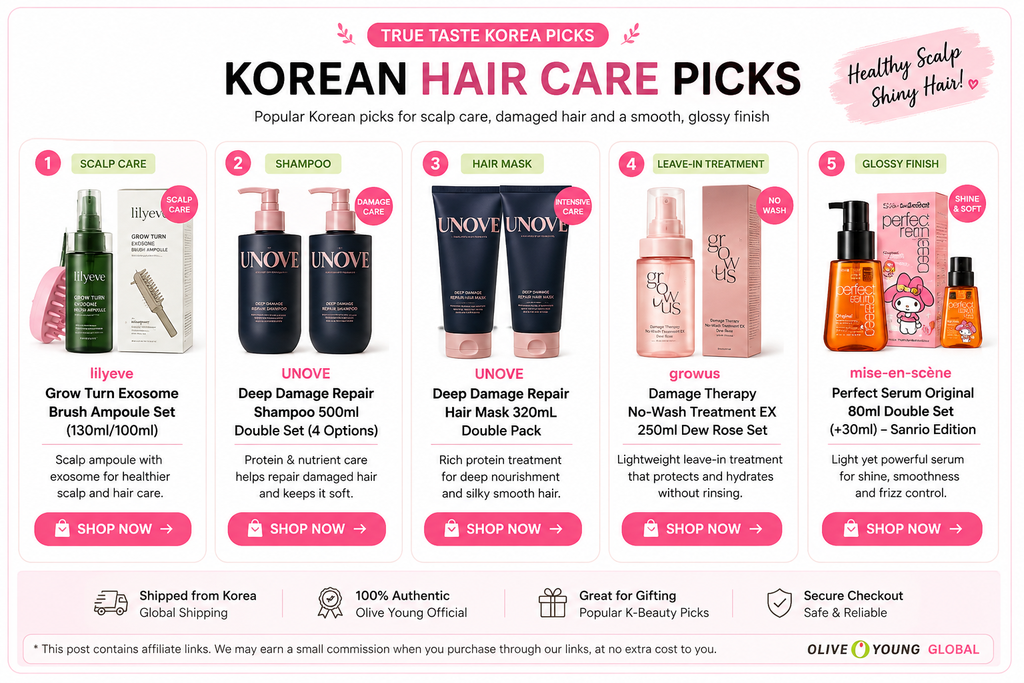
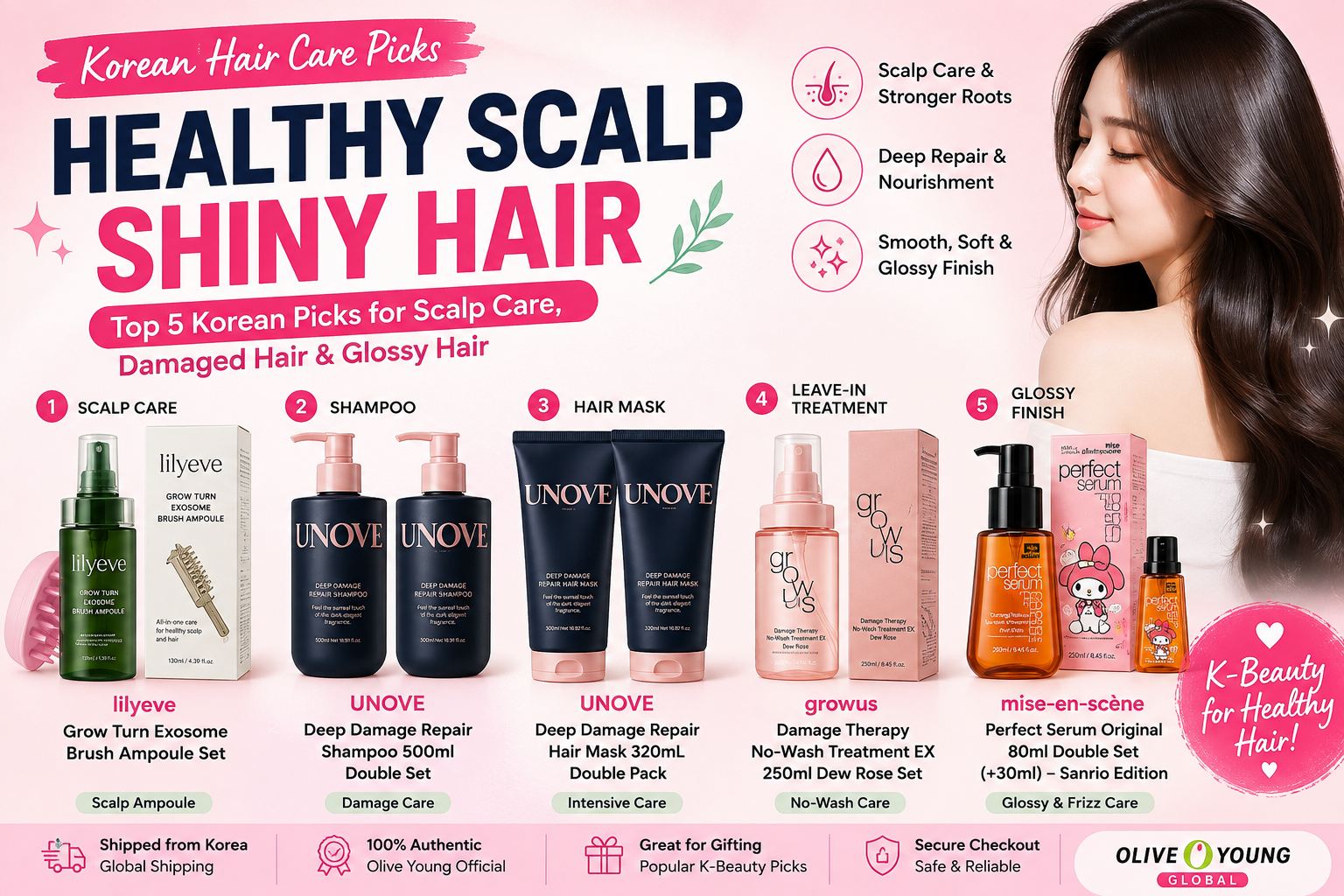
✨ Korean Hair Care Picks
Popular Korean picks for scalp care, damaged hair and a smooth, glossy finish.
Grow Turn Brush Ampoule
Deep Damage Repair Shampoo
Deep Damage Repair Mask
No-Wash Treatment EX
Perfect Serum
Affiliate links included. Product availability and prices may change.